





Description
Product Introduction & Engineering Value
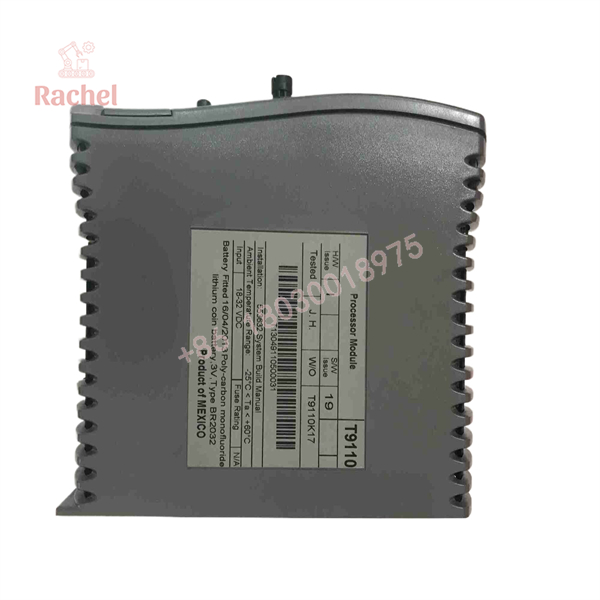
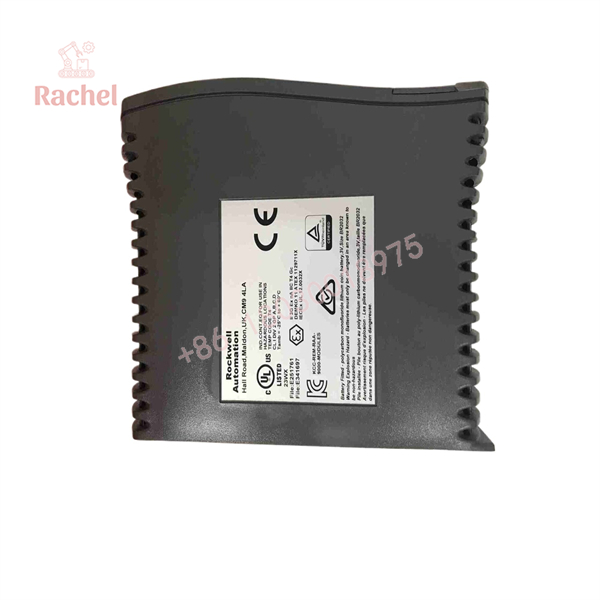
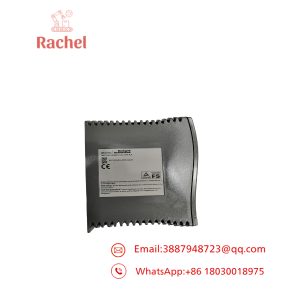
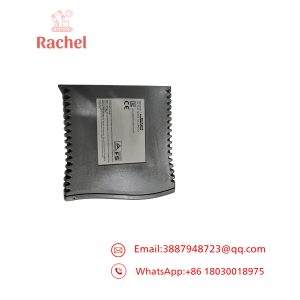
The ICS Triplex 9110 is the processor module at the center of an AADvance controller. It executes the AADvance Safety Kernel, processes I/O data, performs controller diagnostics, communicates with other processors, and provides communications with external systems. Rockwell documentation supports simplex, duplex, and triplex processor arrangements depending on the required architecture.
For a replacement project, the processor’s firmware revision is a critical compatibility item. Rockwell documentation states that processor modules installed in the same controller must use the same firmware build. The module also contains battery-backed memory associated with retained variables, diagnostic logs, and the real-time clock.
Technical Specifications
| Parameter | Specification |
|---|---|
| Processor Role | Central AADvance processor module |
| System Platform | ICS Triplex AADvance |
| Module Designation | 9110 / T9110 |
| Processor Configuration | Simplex, duplex, or triplex |
| Safety Architecture | 1oo2D and 2oo3D configurations are documented for T9110 |
| Programming Environment | AADvance Workbench / AADvance-Trusted SIS Workstation |
| Programming Standard | IEC 61131-3 |
| Ethernet | Processor communication through the AADvance processor base unit |
| Serial Communication | Up to two serial ports per installed 9110 processor |
| Serial Baud Rates | 1,200 to 115,200 baud, depending on configuration |
| Supply Voltage | Nominal 24 VDC; documented processor feed monitoring range is 18–32 VDC |
| Operating Temperature | Up to 60°C for the 9110 module; hazardous-location requirements can impose additional limits |
| Backup Battery | BR2032-type 3 V lithium coin cell for RTC/retained data functions |
The AADvance documentation specifies up to two serial ports for each 9110 processor and lists RS-485 operating modes including full-duplex and half-duplex configurations. The documented 9110 environmental rating is 60°C in the cited safety documentation.
Important: Do not substitute generic online specifications for the exact hardware revision. 9110 documentation has changed across product generations, and current firmware, certification, and system-architecture requirements should be checked against the installed AADvance system.
Field Application & the “Trench” Experience
A refinery has an AADvance controller operating an emergency shutdown function. One processor begins reporting a critical fault and enters Recovery Mode. The plant cannot treat the replacement as a generic PLC swap: the incoming 9110 has to match the existing controller architecture and firmware requirements.
During the replacement, the technician records the identification information before installation, checks the coding arrangement on the 9100 processor base, installs the processor, and verifies synchronization with the other processor modules. Rockwell’s maintenance procedure specifically calls for checking the module before installation and ensuring that multiple processors use the same firmware build.
Typical applications include:
- Refinery emergency shutdown logic — processor replacement in an AADvance ESD controller.
- Boiler and burner protection — safety logic requiring redundant processor operation.
- Chemical reactor interlock systems — processing discrete and analog safety inputs while communicating status to supervisory systems.
- Turbomachinery auxiliary protection — integration of AADvance safety logic with external control and monitoring equipment.
The 9110 also provides built-in Modbus Master functionality for non-safety communication applications; Rockwell documentation specifically notes that this functionality is SIL 0 and must not be treated as a safety function.
9110
9110
Transparency SOP: QA & Testing
For a New Surplus 9110, a sensible incoming-stock verification sequence is:
1. Physical inspection
Check the housing, connector interfaces, coding features, labels, battery area, and PCB for visible damage or contamination.
2. Identification verification
Record the exact model designation, hardware revision, serial information, and firmware information where accessible.
3. Power-up verification
Install the processor in an appropriate AADvance test configuration and observe the processor status indicators during startup.
4. Controller synchronization test
Where a compatible test system is available, verify that the processor can enter the expected synchronized/online state with its processor peers.
5. Communication check
Verify the applicable Ethernet and serial communication functions against the test configuration.
6. Final documentation
Record test results and distinguish clearly between New Surplus, Used, and Refurbished condition. “New Surplus” should mean unused stock originally manufactured for the industrial supply chain, not automatically “newly manufactured.”
Rockwell’s troubleshooting documentation notes that a newly installed processor performs self-education and synchronization with other processors, while the module’s status indicators provide useful information during startup and fault diagnosis.
The Veteran’s Tech Trap Guide
⚠️ Trap #1 — Firmware mismatch
This is the one to check before ordering. Rockwell explicitly states that processor modules in the same controller must have the same firmware revision/build. A physically identical-looking processor is not necessarily a plug-in replacement if its firmware is incompatible.
⚠️ Trap #2 — Ignoring the backup battery
The 9110 uses a backup battery for the real-time clock and portions of retained memory. Rockwell specifies a BR2032-type lithium coin cell and notes that battery life is affected by temperature, humidity, power cycling, and whether the module remains powered.
PRO TIP: If a spare has been sitting unpowered in warehouse inventory for an extended period, do not assume the battery condition from the module’s unused appearance.
⚠️ Trap #3 — Treating Modbus as a safety channel
The 9110 can provide Modbus Master functionality, but Rockwell explicitly classifies that functionality as SIL 0. Do not use a standard Modbus communication path as though it were a safety-rated signal path.
Dynamic FAQ
Is the ICS Triplex 9110 a CPU module?
Yes. The 9110/T9110 is the central processor module for the AADvance controller. It executes safety logic, processes controller I/O, performs diagnostics, and handles communication functions.
Can one 9110 be used by itself?
A 9110 can operate in a simplex configuration, but the required architecture depends on the safety application. Rockwell documentation describes single, dual, and three-processor configurations, with additional processor modules providing higher fault tolerance.
Can I install a 9110 with a different firmware revision?
Do not assume compatibility. Rockwell’s installation guidance states that when more than one processor is installed, the processor modules must have the same firmware build. Verify the existing system revision before purchasing a replacement.
Does the 9110 have battery-backed memory?
Yes. The backup battery supports the real-time clock and retained-variable/diagnostic-log functions when system power is unavailable. Rockwell specifies a BR2032-type battery for the processor.
Is New Surplus 9110 the same as factory-new production?
Not necessarily. New Surplus normally refers to unused original inventory that has entered the secondary market. It should not automatically be represented as recently manufactured by the OEM. For procurement, verify the physical condition, date/traceability information, firmware revision, and testing documentation.
What warranty should I expect?
Warranty terms depend on the supplier and stock condition. A purchase quotation should explicitly state the warranty period, condition classification, test coverage, return/RMA terms, and whether accessories such as the backup battery are included.

 Start Chat


