





Description
Product Introduction & Engineering Value
Managing field switch contacts in high-density safety enclosures often turns into a cable-management nightmare when separate terminal blocks, interposing relays, and I/O processors are required. The GE IS420TBCIS2C streamlines this layout by combining 24 contact input channels, field loop excitation, and network processing into a single, compact DIN-rail form factor.
Engineered for GE’s Mark VIe and Mark VIeS functional safety platforms, this module accepts 24V DC dry contacts directly from field switches, trip landings, and breaker status contacts. Onboard optical isolation and high-frequency noise filters shield internal digital processing logic from field line surges, while dual IONet Ethernet connections route real-time contact states straight to central safety controllers without signal degradation.
Technical Specifications
| Parameter | Specification Details |
| System Compatibility | GE Mark VIe Control & Mark VIeS Functional Safety Platforms |
| Input Channels | 24 Group-Isolated Discrete Contact Inputs |
| Excitation Voltage | 24 VDC Nominal (Group S2 low-voltage specification) |
| Channel Current Load | Inputs 1–21: ~2.5 mA per point; Inputs 22–24: ~10 mA per point (Higher wetting current) |
| Field Wiring Interface | Integrated dual 36-point removable Euro-style screw terminal blocks |
| Network Interfaces | 2x 10/100 Mbps RJ45 ports (Redundant IONet network architecture) |
| Mounting Style | Standard 35 mm DIN-rail mount |
| Power Supply Input | Dual 28 VDC nominal power inputs (18–32 VDC operating range) |
| Isolation & Protection | 1500 Vrms optical channel isolation, onboard MOV surge protection |
| Operating Temperature | -30°C to +65°C (-22°F to +149°F) ambient |
Field Application & The “Trench” Experience
A high-pressure gas compressor station in Texas encountered intermittent emergency shutdown trips traced to contact bounce on a vibration switch wired into an older remote rack. Space inside the explosion-proof local junction box was extremely limited, making standard baseboard-plus-pack upgrades impossible. The control engineer selected an IS420TBCIS2C module. Snapping directly onto the existing 35 mm DIN rail, the module consolidated all 24 local contact inputs into a single footprint. Its onboard hardware filtering eliminated false contact-bounce trips, and the dual Ethernet links restored clean Sequence of Events (SOE) time-stamping to the main station historian.
Niche Application Scenarios:
- Turbine Trip Landings & Emergency Stop Buttons: Interfacing critical safety-interlock pushbuttons directly into SIL 2/3 safety loops.
- Compressor Anti-Surge Switch Monitoring: Capturing high-speed valve position limits and auxiliary switch states with millisecond precision.
- Fire & Gas System Zone Contacts: Managing dry-contact inputs from optical flame detectors and gas concentration relays across hazardous plant areas.
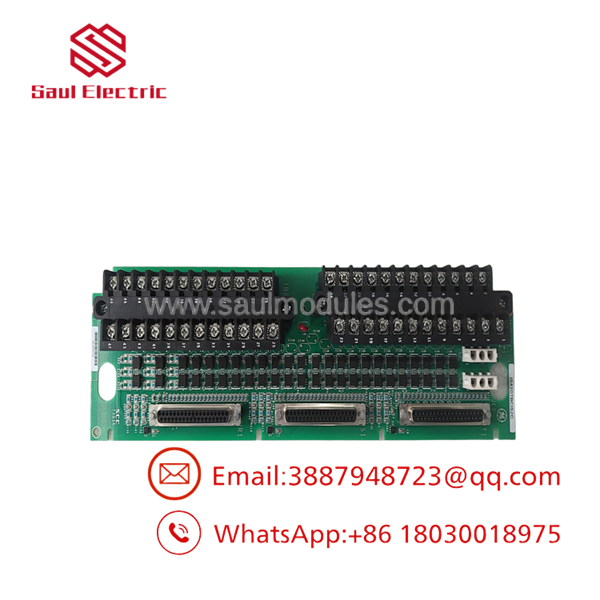
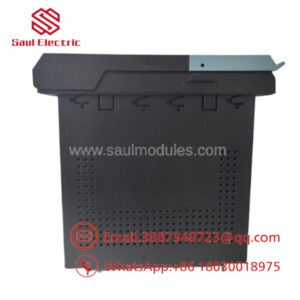
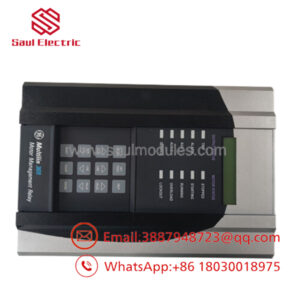
- IS420TBCIS2C
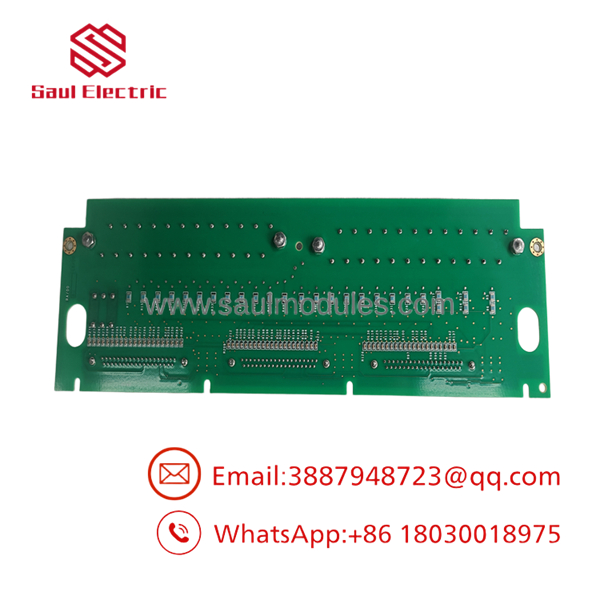
- IS420TBCIS2C
Transparency SOP: QA & Testing
- Step 1: Mechanical & Connector Latch Check — Every unit undergoes physical inspection of the DIN-rail locking clips, Euro-style terminal block retention screws, and RJ45 port pins.
- Step 2: 24VDC Excitation & Channel Sweep — The 24V DC excitation bus is powered on a test bench to verify uniform voltage delivery across all 24 terminal points without cross-channel leakage.
- Step 3: High-Speed Signal Loopback & SOE Test — Simulated contact closures are cycled across all 24 channels while capturing output data across both IONet ports to verify millisecond-accurate Sequence of Events time-stamping.
- Step 4: Thermal Chamber Burn-In — The module is subjected to full-load operation across a -30°C to +65°C thermal sweep to ensure optical isolator stability under harsh ambient conditions.
The Veteran’s Tech Trap Guide
- ⚠️ Channels 22–24 Higher Wetting Current: Remember that Channels 22, 23, and 24 draw roughly 10 mA compared to the 2.5 mA on Channels 1–21. Use Channels 22–24 for long field wiring runs or dry contacts prone to oxidation—the higher wetting current keeps physical contact surfaces clean and prevents false “open circuit” readings.
- PRO TIP (Removable Euro Block Latching): When swapping a module under maintenance, make sure the two removable 36-point Euro terminal strips click fully into their side locking tabs. A partially seated terminal block will cause intermittent contact dropouts across multiple channels simultaneously.
- ⚠️ Simplex vs. Redundant System Architecture: The
TBCIS2Cis a Simplex module (indicated by theSin the part number). If your hardware configuration in ToolboxST specifies a TMR (Triple Modular Redundant) contact input block, installing an IS420TBCIS2C will cause a system hardware mismatch fault.
Dynamic FAQ
Q: What is the primary difference between an IS200TBCIH2C terminal board and an IS420TBCIS2C module?
A: The IS200 board requires a separate plugged-in I/O pack (like a PDIA) and a baseplate, whereas the is a self-contained, DIN-rail-mounted module with built-in network processing and terminal blocks.
Q: Can I hot-swap the module in an active Mark VIe rack?
A: Yes. The module supports hot-swapping under power. Once the new module is mounted and connected to the IONet network, the controller will automatically detect the unit and push matching firmware via ControlST if auto-reflash is enabled.
Q: What excitation voltage does this module supply to field dry contacts?
A: The S2 variant provides internal 24V DC loop excitation to field contacts connected across its terminals.
Q: What testing and warranty protection come with New Surplus units?
A: Every module passes complete optical, power sweep, channel loopback, and thermal bench testing, backed by a full 12-month replacement warranty.

 Start Chat


