





Description
Product Introduction
The JDSU 2213-75TSLKTB is a high-performance, air-cooled argon-ion laser system engineered for demanding biomedical, metrology, and scientific inspection applications. Operating at the primary 488 nm blue wavelength, this laser assembly features a cylindrical Beryllium Oxide (BeO) ceramic tube design that delivers exceptional thermal stability, pointing accuracy, and long operational life under constant power conditions.
Designed specifically for OEM integration into flow cytometers, confocal microscopes, and semiconductor wafer inspection tools, the 2213-75TSLKTB combines a tight TEM_{00} spatial mode with ultra-low optical noise. The integrated internal mirrors eliminate external cavity contamination risks, while the accompanying switching power supply precisely regulates tube current and fan cooling to preserve resonator alignment.
Key Technical Specifications
| Parameter | Value |
| Output Wavelength | 488 nm (Single Line Blue) |
| Beam Quality / Spatial Mode | TEM_{00} (M^2 < 1.2) |
| Beam Diameter at Aperture | 0.65 mm \pm 0.05 mm |
| Beam Divergence | < 1.0 mrad (Full angle) |
| Power Stability (Light Control Mode) | \pm 0.5\% over 2 hours |
| Optical Noise (20 Hz to 2 MHz) | < 0.5\% RMS |
| Cooling Mechanism | Forced Air (Integral high-efficiency cooling fan) |
| Operating Tube Current | 4.0A to 10.0A DC (Nominal) |
| Input Power Requirements | 100–120V AC or 200–240V AC, 50/60 Hz |
| Tube Construction | Beryllium Oxide (BeO) Ceramic metal-sealed tube |
| Warm-Up Time (to 95% power) | < 10 minutes |
| System Weight | Head: ~12 lbs (5.4 kg) | Power Supply: ~15 lbs (6.8 kg) |
Application Scenarios & The “Trench” Experience
Imagine a clinical diagnostics laboratory running high-throughput cell sorting on a Friday afternoon. A legacy flow cytometer suddenly drops its 488nm excitation channel due to a hard “tube ignition failure” on its original JDSU laser head. The lab faces a backlog of hundreds of patient blood samples, and buying a brand-new solid-state laser retrofit requires a $30,000 optical deck redesign and weeks of FDA re-validation. Swapping in a pre-tested, low-hour JDSU 2213-75TSLKTB drops right onto the existing kinematic mounts, restoring exact beam height, focal distance, and fluorescence excitation within two hours.
- Flow Cytometry & Cell Sorting: Serves as the primary 488nm excitation light source for FITC and GFP fluorophores in clinical and research cell analyzers.
- Confocal Laser Scanning Microscopy: Provides high-spatial-coherence blue light for multi-channel fluorescence imaging in biological laboratories.
- Semiconductor Wafer Defect Inspection: Utilized in dark-field optical tools where short wavelengths are required to resolve surface particulate contamination down to sub-micron scales.
- DNA Sequencing Instrumentation: Acts as a stable, low-noise excitation beam for laser-induced fluorescence (LIF) detection capillary arrays.
Transparency SOP: Quality Assurance & Testing
Gas lasers require strict validation before shipment—we don’t just check for power; we measure beam quality and plasma tube health. Here is how every JDSU 2213-75TSLKTB is qualified:
- Visual & Structural Audit: Inspection of the BeO ceramic envelope, optical output window cleanliness, high-voltage umbilical cable stress points, and fan shroud integrity.
- Cold High-Voltage Pre-Ignition Test: Verification of the cathode heater circuit and trigger transformer pulse generation to ensure immediate plasma arc ignition.
- Power Output & Spectral Profiling: Unit is powered up on an optical bench with a thermal power head and spectrometer to confirm single-line 488nm wavelength emission and verify rated optical output.
- Noise & Stability Logging: Continuous 4-hour burn-in while monitoring output power stability (\pm 0.5\%) and optical noise (< 0.5\% RMS) on a wide-bandwidth photodiode and oscilloscope.
- Beam Mode & Divergence Measurement: CCD beam profiler scan to confirm pure TEM_{00} Gaussian beam profile without higher-order transverse spatial modes or distortion.
- Custom Shock Isolation Packaging: Packaged in dual-wall ESD foam-cushioned crates designed to protect internal cavity mirrors from shock during transport.
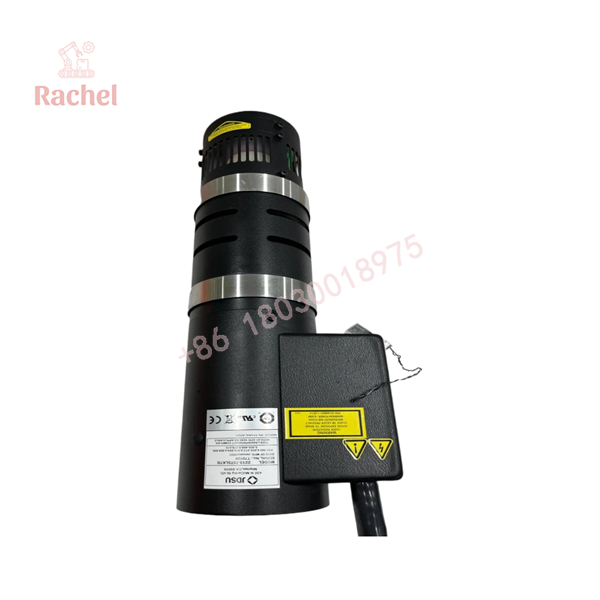
2213-75TSLKTB
The Veteran’s Tech Trap Guide (Crucial Value-Add)
In our field experience, gas lasers are delicate precision instruments. Watch out for these operational traps:
- ⚠️ Thermal Shock & Airflow Restrictions: Never block the exhaust cowl on the laser head or shut off AC mains power while the tube is hot. The cooling fan must run for several minutes after the plasma discharge is turned off to prevent thermal soak from cracking the BeO ceramic tube seals.
- ❗ Cathode Warm-Up Protocol: Respect the 30-to-60 second pre-ignition warm-up delay. Attempting to force immediate plasma arc ignition before the cathode filament reaches operating temperature will sputter metal onto the cathode, permanently shortening tube life.
- ⚠️ Do Not Touch Output Window Optics: Never attempt to wipe or clean the output window with standard lens paper or dry cotton swabs. The optics are hard-coated for 488nm; use only spectroscopic-grade methanol and drop-and-drag lens tissue techniques if cleaning is required.
- ❗ Interlock Loop Bypass: The power supply features a multi-pin interlock connector. If your system enclosure safety switches are open or the remote interlock plug is missing, the power supply will sit in an idle state and refuse to strike the arc.
Frequently Asked Questions (FAQ)
Q: Is the 2213-75TSLKTB a solid-state or gas laser?
A: This is a classic air-cooled argon-ion gas laser. It uses an energized gas plasma discharge tube to emit 488nm light, offering distinct advantages in spatial coherence and raw mode quality for specific optical instruments.
Q: Can I run this laser off a standard 120V AC wall outlet?
A: Yes, the matching power supply for the 2213 series is designed to operate on standard 110–120V AC single-phase power, provided the circuit is rated for at least 15A to handle peak tube current during ignition and operation.
Q: How do I monitor the remaining tube life on an argon laser?
A: Tube wear is indicated by the operating voltage and current needed to maintain lasing power. As the gas depletes or cathode wears out, the tube current required to reach rated output power will rise toward the maximum limit (around 9.5A–10A).
Q: Why buy verified surplus JDSU argon lasers instead of retrofitting to DPSS or diode lasers?
A: Sourcing a direct drop-in JDSU laser avoids thousands of dollars in mechanical redesign, optical alignment changes, driver software updates, and regulatory recertifications required when changing laser types in medical and diagnostic machinery.
Q: What warranty is provided with this unit?
A: We supply this laser head and power supply system with a full 12-month operational warranty. If the tube fails to ignite or loses power under normal operating parameters within one year, we repair or replace it immediately.


 Start Chat


