





Description
Product Introduction & Engineering Value
The MKS Instruments 122AA-00010AB-S belongs to the 122A Baratron capacitance manometer family, designed for absolute pressure measurement in vacuum and process applications. Unlike thermal-conductivity gauges, a capacitance manometer measures pressure through diaphragm deflection, making the measurement largely independent of gas composition.
That distinction matters in process control. When a pressure measurement is used to control deposition, etching, vacuum pumping, or gas delivery, a correctly ranged and calibrated transducer can be far more useful than simply finding a sensor with the same mechanical connection. The exact range, electrical output, connector, and calibration configuration must be matched.
Technical Specifications
- Manufacturer: MKS Instruments
- Part Number: 122AA-00010AB-S
- Product Family: 122A Baratron
- Measurement Principle: Capacitance manometer
- Pressure Type: Absolute pressure
- Sensing Element: Diaphragm-based capacitance sensor
- Nominal Range: Common 122A configurations include ranges from low vacuum through atmospheric-pressure ranges; verify the actual suffix/nameplate
- Reference: Absolute vacuum reference
- Output: Configuration-dependent; verify the specific unit
- Process Connection: Configuration-dependent
- Electrical Connection: Configuration-dependent
- Calibration: Factory/calibration configuration dependent
- Primary Applications: Vacuum measurement and semiconductor/process equipment
Why the full MKS code matters
The 122AA-00010AB-S designation should be treated as the procurement identifier. Do not order simply as an “MKS 122A.”
MKS 122A Baratron products are available with different pressure ranges, process connections, electrical configurations, and output options. A replacement that looks identical but has a different range or output can produce a serious control-system error.
Field Application & the “Trench” Experience
A vacuum process begins drifting. The pump checks out. The chamber pressure appears stable according to a second gauge, yet the recipe is repeatedly missing its process window.
The maintenance team replaces the pressure transducer.
The problem gets worse.
The replacement sensor had a different pressure range. The control system was still interpreting the output using the original transducer’s calibration scaling. The hardware was mechanically compatible, but the measurement chain was not.
That is the sort of mistake worth preventing when sourcing an MKS 122AA-00010AB-S. The pressure range and output configuration need to be confirmed before installation, not after the process starts behaving differently.
Specific application scenarios
- Semiconductor process chamber pressure control — Monitoring chamber pressure during vacuum process steps where stable absolute-pressure feedback is required.
- Thin-film deposition equipment — Providing pressure feedback for process-gas and chamber control.
- Vacuum load-lock monitoring — Measuring absolute pressure during pump-down and vent sequences.
- Gas delivery/process control — Providing pressure feedback where gas composition changes and a capacitance-based measurement method is advantageous.
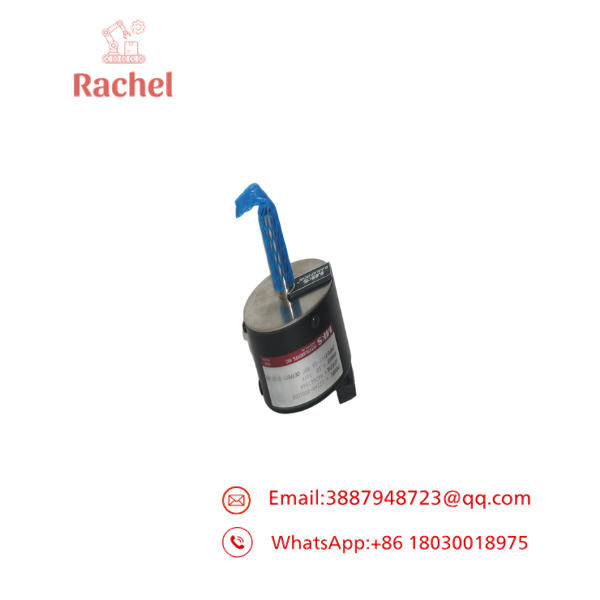
122AA-00010AB-S
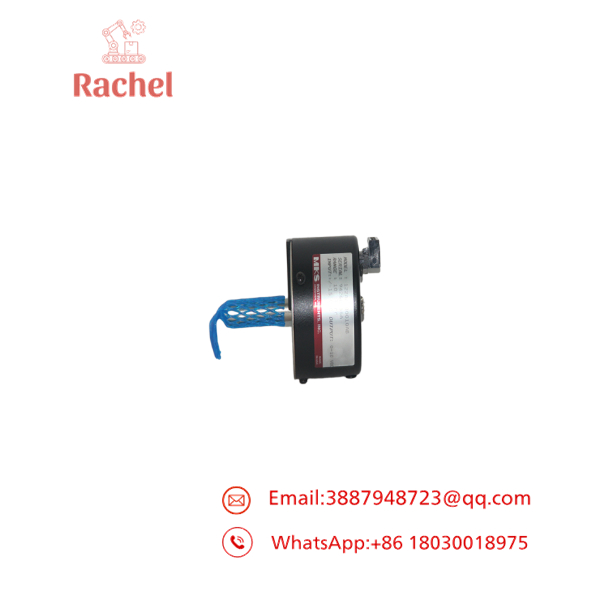
122AA-00010AB-S
Transparency SOP: QA & Testing
For a new-surplus or refurbished MKS pressure transducer, calibration status is as important as physical condition.
Recommended QA sequence:
- Nameplate verification — Confirm 122AA-00010AB-S and record the serial number.
- Configuration verification — Confirm pressure range, output, process connection, and electrical interface.
- Physical inspection — Check the body, connector, mounting interface, and diaphragm/process connection.
- Zero verification — Where appropriate, expose the transducer to a suitable reference vacuum and verify zero behavior.
- Pressure calibration test — Apply known reference pressures across the intended operating range.
- Linearity/hysteresis check — Compare ascending and descending pressure measurements.
- Output verification — Confirm that the electrical output corresponds to the applied pressure and configured range.
- Calibration documentation — Record test equipment, reference accuracy, measured points, and calibration date.
Important: A pressure transducer should not be described as “tested” merely because its electronics power up. For process-control applications, calibration verification is the meaningful test.
The Veteran’s Tech Trap Guide
⚠️ Trap #1 — Ignoring calibration history.
A used Baratron can look perfect while its calibration has drifted. For a process-critical application, request the latest calibration data or have the unit recalibrated before installation.
PRO TIP: If the transducer controls a recipe-critical pressure loop, treat calibration traceability as part of the spare-part specification.
⚠️ Trap #2 — Matching the connector instead of the electrical output.
Two MKS pressure transducers can have similar physical connections but different output configurations. Verify the actual signal expected by the controller or pressure-control instrument.
⚠️ Trap #3 — Installing the wrong pressure range.
A 10 Torr, 100 Torr, and 1000 Torr transducer are not interchangeable simply because the mechanical interface fits. The range affects measurement resolution and control-system scaling.
⚠️ Trap #4 — Contaminating the process connection.
Vacuum instrumentation can be sensitive to contamination introduced during handling. Keep the process connection protected until installation and follow the equipment’s cleanliness requirements.
Dynamic FAQ
What is MKS 122AA-00010AB-S?
It is an MKS Instruments 122A-series Baratron capacitance manometer pressure transducer designed for absolute-pressure measurement in vacuum and process applications.
Is the 122AA-00010AB-S a Baratron?
Yes. The 122A family is part of the MKS Baratron capacitance manometer product line.
What pressure range does 122AA-00010AB-S measure?
The specific range should be confirmed from the actual unit’s nameplate or calibration certificate before purchase. Do not infer the range from the generic 122A family designation.
Can I replace it with another MKS 122A?
Not automatically. Verify pressure range, output configuration, process connection, electrical connector, calibration requirements, and controller scaling before substitution.
What should I request when purchasing new-surplus stock?
Ask for a photograph of the actual nameplate, serial number, pressure range, electrical configuration, calibration status, and confirmation that the unit is unused. If the transducer has been previously installed, ask for its most recent calibration information.
Does a refurbished MKS transducer need recalibration?
For a critical vacuum process, recalibration is strongly advisable if the existing calibration status is unknown, expired, or unsupported by traceable documentation.
What warranty should I expect?
Warranty terms depend on the supplier and condition. For a pressure transducer, request both the hardware warranty and clarification regarding calibration accuracy at the time of shipment.



 Start Chat


