



Description
Product Introduction
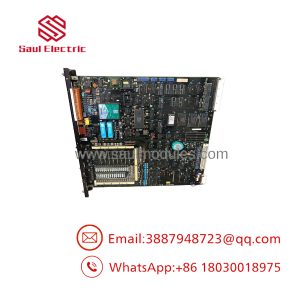
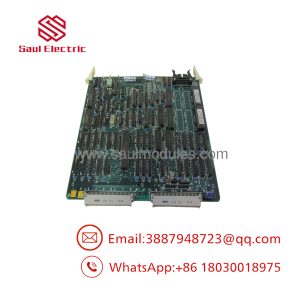
The Kawasaki 50999-0137R09 (often cataloged as the 50999-0137 motherboard) is the central processing unit motherboard for Kawasaki industrial robot control cabinets. Located in the primary card cage slot of the control enclosure, it acts as the “brain” of the entire robotic system.
This CPU motherboard handles high-level trajectory planning, executes user programs compiled in Kawasaki’s AS programming language, and Coordinates kinematic calculations across all main and auxiliary manipulator axes. The 50999-0137R09 board communicates directly with peripheral interface cards (like the 1TB-92 or power sequence boards) and sends real-time trajectory commands to downstream servo drive control cards (such as the 1GD-33 series) to execute smooth, millisecond-accurate arm movement.
Key Technical Specifications
| Parameter | Value |
| Part Number / Revision | 50999-0137R09 (Revision R09) |
| Manufacturer | Kawasaki Robotics |
| System Role | Main System CPU / Controller Motherboard |
| Primary Interfaces | Card-cage backplane bus, teach pendant serial link, system logic buses |
| Operating Voltages | Regulated DC rails provided via backplane power supply (+5 VDC / ±12 VDC) |
| Programming Language | Kawasaki AS Language engine native |
| Diagnostics | Multi-LED status array for CPU boot state, bus watchdog, and error codes |
| Operating Temperature | 0°C to +45°C (32°F to 113°F) |
| Mounting Format | Card cage slot insertion with front-panel retention screws |
Application Scenarios & The “Trench” Experience
When a main CPU motherboard experiences a fatal execution lockup, the entire robot controller goes offline. The teach pendant may display a blank screen or hang indefinitely on boot, bringing automated cell operations to a complete stop.
- Automotive Body-in-White (BIW): Managing complex multi-robot interlocks and high-speed spot welding sequence logic.
- Palletizing & Material Handling: Processing real-time dynamic acceleration algorithms based on variable payload mass inputs.
- Press Tending & Metal Stamping: Synchronizing robot entry and exit paths with external mechanical press press-stroke triggers.
- Precision Arc Welding: Performing high-frequency mathematical interpolation along 3D spatial curves.
Field Case Study: A spot-welding robot on a automotive assembly line threw a fatal “Bus Watchdog Error” during boot, holding the line in an active fault state. After confirming that the power supply rails were stable, maintenance technicians narrowed the issue down to a corrupted SRAM address controller on the main 50999-0137R09 CPU motherboard. A verified replacement board was swapped into the card cage. Technicians reloaded the system software and restored the application program backup. The controller initialized cleanly, cleared all bus alarms, and returned the cell to production in under 35 minutes.
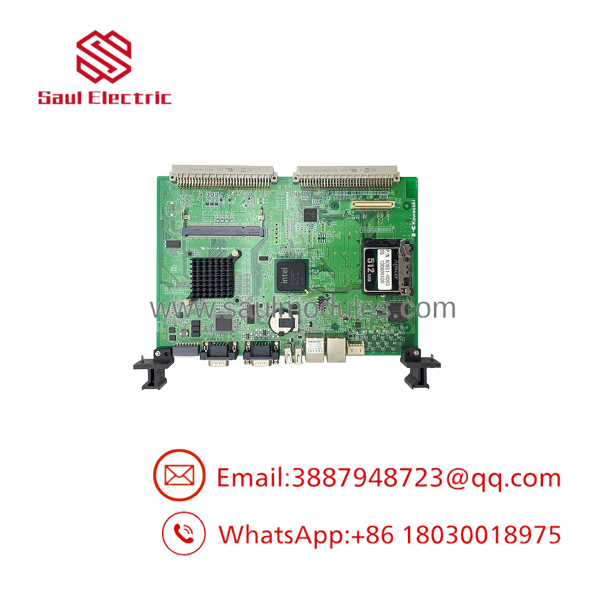
50999-0137R09
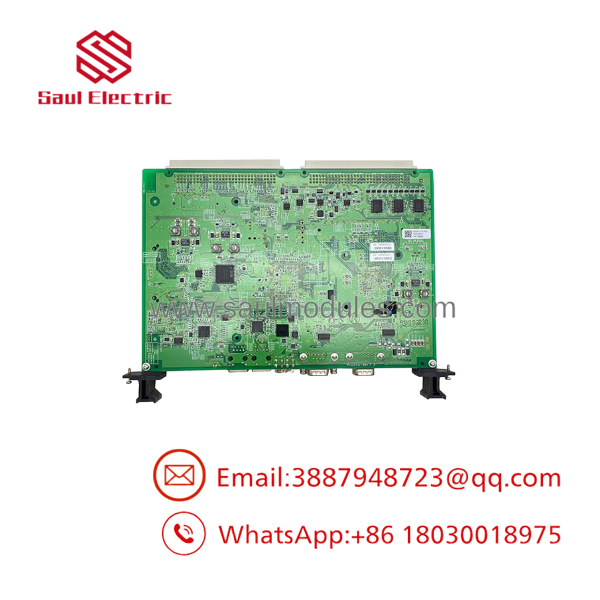
50999-0137R09
Transparency SOP: Quality Assurance & Testing
Every Kawasaki 50999-0137R09 motherboard undergoes a comprehensive testing procedure before warehouse shipment:
- Visual & Mechanical Inspection: Inspection of all surface-mount component solder joints, backplane multi-pin edge connectors, and PCB traces for corrosion or heat damage.
- Bench Power-On Self-Test (POST): Installation into an energized Kawasaki test cabinet to verify system clock execution, voltage regulation, and initial boot LEDs.
- Teach Pendant & System I/O Handshake: Verifying two-way communication with active teach pendants and peripheral card slots.
- Program Load & Execution Testing: Loading benchmark AS Language programs to stress-test processor clock speeds and onboard memory read/write cycles under load.
- Anti-Static ESD Packaging: Sealing the verified unit inside a heavy static-shielding bag with fresh desiccant prior to padded dispatch.
The Veteran’s Tech Trap Guide (Crucial Value-Add)
⚠️ CRITICAL WARNING: Never insert or remove the 50999-0137R09 motherboard while the controller cabinet is powered on. Hot-swapping will arc backplane pins and immediately destroy sensitive logic ICs on the motherboard and adjacent cards.
- ❗ Backup Memory Data Before Hardware Removal: The main CPU motherboard houses system variables, teaching points, and system software. Always perform a full system memory backup (
.asor.svfile dump) to an external drive before replacing the CPU card, or transfer non-volatile memory chips if applicable. - ⚠️ Match Revision Suffixes Carefully: While revision codes like
R09,R07, orR05share the base50999-0137model number, ensure that hardware jumper configurations or installed daughterboards match your specific cabinet’s firmware architecture. - ❗ Inspect Card Cage Cooling Fans: CPU motherboards generate noticeable heat during operation. If replacing a failed board due to thermal breakdown, inspect and clean the cabinet’s cooling fan assemblies to prevent thermal degradation on the replacement module.
Frequently Asked Questions (FAQ)
Q: What is the difference between 50999-0137 and 50999-0137R09?
A: “50999-0137” is the core assembly base number, while “R09” denotes the specific hardware revision build. Suffix updates typically include minor component changes or updated trace revisions while maintaining core functional compatibility.
Q: Is the 50999-0137R09 board hot-swappable?
A: No. Kawasaki robot controllers do not support hot-swapping for main CPU cards. Cabinet power must be completely isolated before installing or removing the module.
Q: Will installing a replacement 50999-0137R09 require reloading the robot’s software?
A: Yes, in most cases replacing the main CPU motherboard requires reloading the system software and restoring your cell’s application program backup file to restore home coordinates and program trajectories.
Q: What warranty coverage is provided with this module?
A: All Kawasaki 50999-0137R09 boards come backed by a full 12-month replacement warranty starting from the date of invoice.

 Start Chat


