





Description
Product Introduction
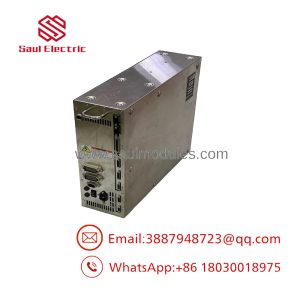
The Kawasaki 50999-1859R23 (cataloged under base part number 50999-1859) is a central processing and logic interface board designed for Kawasaki industrial robot control systems. Housed within the controller’s main card cage, this module plays a pivotal role in maintaining system-wide synchronization between host programming execution and peripheral hardware.
Built to perform in demanding manufacturing environments, the 50999-1859R23 decodes operator input commands from the teach pendant, routes I/O signal handshakes with external cell PLCs, and transmits real-time path interpolation data to downstream servo drive cards. Its high-reliability architecture minimizes bus latency, ensuring repeatable robot path trajectories and fast hardware safety interlock responses.
Key Technical Specifications
| Parameter | Value |
| Part Number / Revision | 50999-1859R23 (Revision R23) |
| Manufacturer | Kawasaki Robotics |
| System Function | Controller Logic & Processing Interface Board |
| Bus Architecture | Kawasaki multi-pin backplane rack interface |
| Operating Voltage | Regulated low-voltage DC rails (+5 VDC / ±12 VDC / +24 VDC) |
| Status Indicators | Multi-LED diagnostic array for power, CPU initialization, and fault states |
| Operating Temperature | 0°C to +45°C (32°F to 113°F) |
| Mounting Format | Rack slot insertion with faceplate retention screws |
Application Scenarios & The “Trench” Experience
A component degradation or bus transceiver failure on the 50999-1859R23 can cause the main controller to lock up on boot, halting all cell automation and triggering communication watchdog errors.
- Automotive Body-in-White (BIW): Managing multi-robot interlocks and high-speed spot welding sequence logic.
- Palletizing & Material Handling: Processing dynamic acceleration curves and heavy payload motion algorithms.
- Press Tending & Metal Stamping: Synchronizing robot arm entry and exit windows with mechanical press cycle signals.
- Precision Arc Welding: Performing high-frequency path calculations along complex 3D contours.
Field Case Study: An automated material handling cell experienced persistent “System Bus Synchronization Faults” during cold-start cycles, causing the teach pendant to freeze on the boot screen. Swapping external cables and power modules failed to fix the issue. Diagnostics isolated damaged bus transceivers on the primary 50999-1859R23 board inside the control enclosure. A bench-tested replacement board was installed into the card cage slot. Upon powering up, the controller completed its boot cycle without errors, restored full communication, and allowed the cell to return to full production in under 25 minutes.
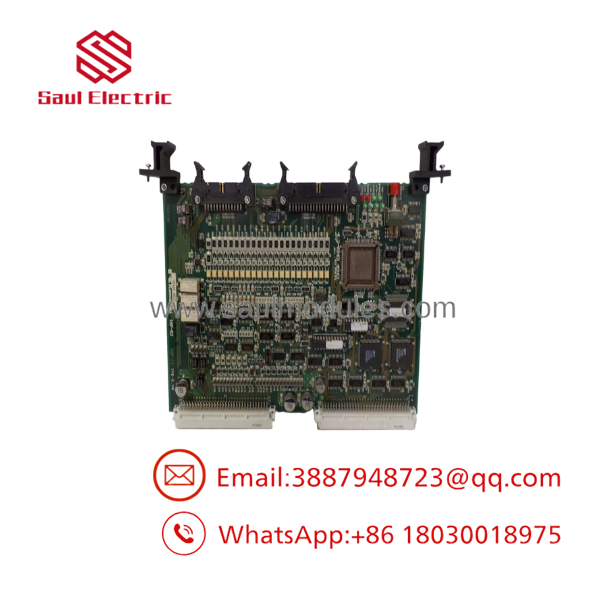
50999-1859R23
Transparency SOP: Quality Assurance & Testing
Every Kawasaki 50999-1859R23 logic board undergoes strict verification prior to warehouse dispatch:
- Visual & Mechanical Inspection: Detailed check of surface-mount component solder joints, backplane multi-pin edge connectors, and PCB traces for thermal stress or wear.
- Backplane Power-On Self-Test (POST): Installation into an energized test cabinet to confirm internal power regulation (+5V, ±12V, +24V) and clean boot sequences.
- Bus Communication & Loopback Test: Transmitting continuous command data packets across backplane channels to verify transceiver stability and signal integrity.
- Teach Pendant & System Interlocking: Verifying two-way communication handshakes to confirm zero signal latency or input processing delays.
- Anti-Static ESD Packaging: Sealing the verified module inside a heavy static-shielding bag with fresh desiccant packs before final foam-cushioned dispatch.
The Veteran’s Tech Trap Guide (Crucial Value-Add)
⚠️ CRITICAL WARNING: Always turn off and isolate main cabinet power before pulling or inserting the 50999-1859R23 board. Hot-swapping this card can arc backplane pins, instantly destroying sensitive bus logic ICs on this module and adjacent rack cards.
- ❗ Verify Hardware Jumpers & DIP Switches: Before sliding the replacement 50999-1859R23 board into the rack slot, compare every jumper block and DIP switch position with the original board. Align them position-for-position to ensure proper bus address mapping and baud rate selection.
- ⚠️ Inspect Internal Card Cage Connectors: If replacing this card due to intermittent communication faults, examine the internal backplane female connectors for bent pins, dust accumulation, or signs of arcing.
- ❗ Perform a System Software Backup: While this board primarily processes real-time logic, hardware replacements can sometimes require a system memory re-initialization. Always save a full backup of your system software and teaching points (
.asor.svfiles) before swapping internal boards.
Frequently Asked Questions (FAQ)
Q: What is the relationship between part number 50999-1859 and suffix R23?
A: “50999-1859” represents the core module part number, while “R23” denotes the specific hardware build/revision level. Suffix updates represent minor engineering revisions or component updates while preserving backwards functional compatibility within supported controller families.
Q: Is the Kawasaki 50999-1859R23 board hot-swappable?
A: No. Power to the robot controller cabinet must be completely shut off and locked out before installing or removing internal rack cards.
Q: Will replacing this board clear my robot’s taught program memory?
A: If system parameters or non-volatile RAM are stored on this card or cleared during replacement, restoring your facility’s saved .as backup file will quickly reload system teach points and kinematics.
Q: What warranty coverage is provided with this unit?
A: All Kawasaki 50999-1859R23 boards include a full 12-month replacement warranty starting from the invoice date.

 Start Chat


