





Description
Core Product Summary
The Leuze DDLS 200/200.1-60 is an optical data transmission unit from the DDLS 200 series. It enables contact-free, bidirectional infrared data exchange between fixed and moving machine parts using an Ethernet interface.
This model operates with transmission frequency F1 and supports a working range of 0.2 m to 200 m. It is designed for industrial bus systems based on TCP/IP and UDP protocols. The unit requires a matching counterpart with frequency F2 to form a complete transmission path. Supply voltage is 18–30 V DC. The metal housing is rated IP65 and includes a bar-graph display for alignment and signal quality.
Key Technical Specifications
| Parameter | Value |
|---|---|
| Product Type | Optical data transmission system (infrared) |
| Series | DDLS 200 |
| Working Range | 0.2 … 200 m (200 … 200,000 mm) |
| Transmission Frequency | F1 |
| Light Source | Infrared LED, wavelength 880 nm |
| Opening Angle | ± 0.5° (approx. 1°) relative to optical axis |
| Interface | Ethernet (10Base-T / 100Base-TX) |
| Transmission Speed (optical) | Up to 2 Mbit/s full duplex |
| Protocol Support | Protocol-independent for TCP/IP and UDP-based protocols |
| Supply Voltage | 18 … 30 V DC |
| Current Consumption (no heating) | Approx. 200 mA at 24 V DC (no load on switching output) |
| Switching Input | 1 (transmitter/receiver activation) |
| Switching Output | 1 (warning / performance reserve) |
| Housing Material | Aluminum die-cast, glass optics |
| Dimensions (W × H × L) | 89.25 mm × 196.5 mm × 111.8 mm |
| Net Weight | Approx. 1,245 g |
| Degree of Protection | IP65 |
| Operating Temperature | –5 °C … +50 °C (without optics heating) |
| Storage Temperature | –30 °C … +70 °C |
| Ambient Light Immunity | > 10,000 lux |
| Approvals | cULus |
Engineering Selection Highlights
- Frequency F1 designation requires a complementary F2 unit (DDLS 200/200.2-60) to establish a bidirectional optical link.
- 200 m maximum range and ±0.5° opening angle support long-distance, high-precision alignment on cranes, transfer cars, or storage-retrieval systems.
- Ethernet interface supports 10/100 Mbit/s with autopolarity and autonegotiation; the device does not occupy a MAC or IP address.
- Protocol-independent transmission of TCP/IP and UDP traffic allows use with Ethernet, Modbus TCP, PROFINET (non-IRT), and similar networks.
- Metal IP65 housing and infrared LED optics provide robust performance in industrial environments with high ambient light.
- Integrated bar-graph display and warning output simplify optical alignment and monitoring of signal reserve.
- Parallel light-axis operation capability permits multiple independent optical paths in the same area without mutual interference.
Detailed Product Overview
The Leuze DDLS 200/200.1-60 belongs to the DDLS 200 family of infrared optical data transmission systems. It transmits industrial network data over free space using modulated infrared light, eliminating mechanical wear associated with cables or slip rings.
A complete transmission path consists of two units operating on different frequencies: the .1 variant (F1) and the complementary .2 variant (F2). The 200 m range model uses an infrared LED at 880 nm with a narrow opening angle of approximately ±0.5°. This combination delivers reliable links over distances from 0.2 m to 200 m while remaining largely immune to ambient light levels above 10,000 lux.
The Ethernet interface supports both 10Base-T and 100Base-TX in half- or full-duplex mode. Autonegotiation and autopolarity simplify connection to switches or controllers. Effective optical data rate reaches 2 Mbit/s full duplex. The device operates as a transparent bridge and does not occupy a MAC or IP address, allowing any TCP/IP- or UDP-based protocol (including Ethernet, Modbus TCP, and non-IRT PROFINET) to pass through unchanged. An internal buffer of 16 kByte accommodates short message bursts.
Electrical supply is 18–30 V DC. Without optics heating the current consumption is approximately 200 mA at 24 V DC. A digital switching input enables or disables the optical transmitter and receiver; a switching output indicates when the received signal level falls into the warning or cut-off range. A ten-segment bar-graph LED display shows received signal strength for rapid alignment during commissioning.
The aluminum die-cast housing with glass optics is rated IP65 and measures roughly 89 mm × 197 mm × 112 mm. Operating temperature without heating is –5 °C to +50 °C. The unit carries cULus approval. Parallel-axis operation is supported, allowing multiple independent optical links to operate side-by-side without mutual interference.
Installation requires a clear line of sight, precise alignment of the optical axes, and correct pairing of F1 and F2 devices. Periodic cleaning of the optical windows maintains signal quality. The design is intended for industrial environments where continuous, maintenance-free data transfer to moving equipment is required.
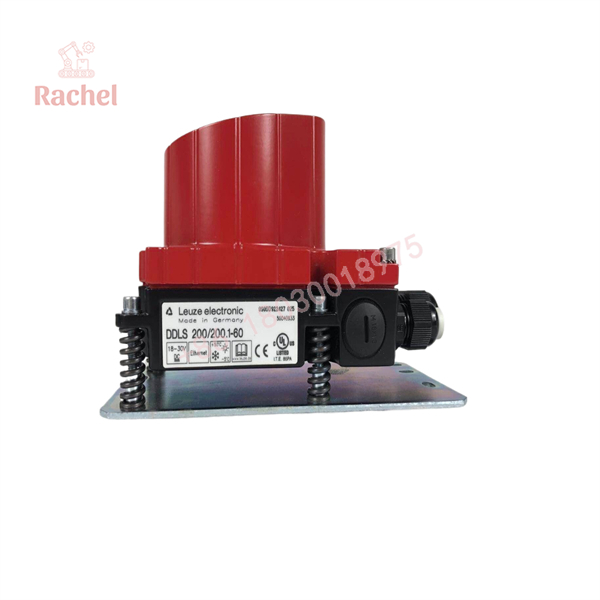
DDLS 200/200.1-60
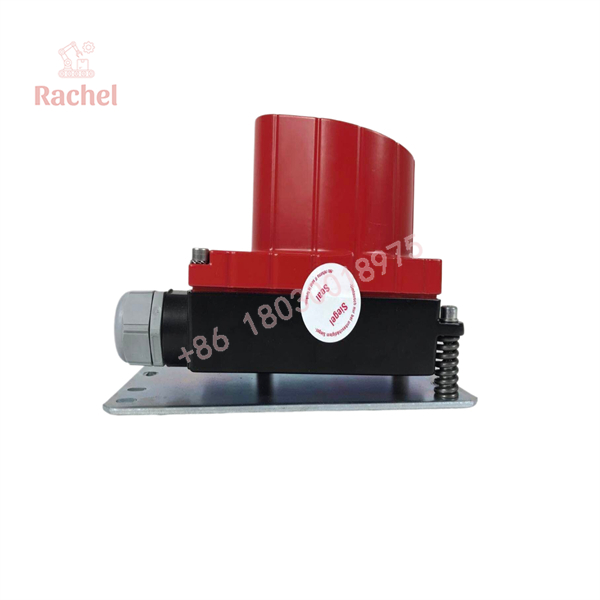
DDLS 200/200.1-60
Applications & System Role
The DDLS 200/200.1-60 functions as one half of a contact-free optical data transmission path. It replaces slip rings, trailing cables, or radio links where continuous, wear-free data exchange is required between stationary and moving equipment. Typical system roles include data communication on overhead cranes, automated storage and retrieval systems, transfer cars, and other linear or rotary axes that travel beyond practical cable lengths. The Ethernet variant supports industrial network protocols based on TCP/IP or UDP without requiring the optical link itself to hold a network address.
System Compatibility & Integration Requirements
| Item / Dependency | Verified Compatibility or Requirement | Practical Note |
|---|---|---|
| Counterpart Unit | DDLS 200/200.2-60 (frequency F2) | Complete system always consists of one F1 and one F2 device |
| Network Interface | Ethernet 10Base-T / 100Base-TX | Supports half- and full-duplex; autonegotiation available |
| Supply Voltage | 18 … 30 V DC | Current draw approximately 200 mA at 24 V DC without heating |
| Connection | Terminals with cable glands or M12 connectors (variant dependent) | RJ45 or M12 D-coded for Ethernet on applicable versions |
| Mounting | Fixed and mobile machine parts with clear line of sight | Optical axes must be aligned within the opening angle |
| Ambient Conditions | –5 °C to +50 °C, non-condensing | Optics heating versions available for lower temperatures |
| Network Address | None occupied by the DDLS unit | Transparent optical bridge; no MAC/IP configuration required |
Dimensions, Mounting & Connection Notes
Overall dimensions are approximately 89.25 mm (W) × 196.5 mm (H) × 111.8 mm (L). Net weight is about 1.245 kg. The aluminum die-cast housing with glass optical windows is rated IP65. Mounting must maintain a clear optical path between the paired units and keep the optical axes aligned within the specified opening angle. Connection variants include screw terminals with cable glands (M16) or M12 connectors. A switching input activates or deactivates the transmitter/receiver; a switching output signals reduced performance reserve.
FAQ
What is the Leuze DDLS 200/200.1-60?
It is an infrared optical data transmission unit from the DDLS 200 series that provides contact-free Ethernet data exchange over distances of 0.2 m to 200 m using frequency F1.
Does the DDLS 200/200.1-60 work alone?
No. A complete optical link requires a matching unit with frequency F2 (DDLS 200/200.2-60).
What network interface does the DDLS 200/200.1-60 provide?
It provides an Ethernet interface supporting 10Base-T and 100Base-TX with autopolarity and autonegotiation. The optical path itself does not occupy a MAC or IP address.
What is the maximum working range?
The verified working range is 0.2 m to 200 m.
What supply voltage is required?
The unit operates from 18 V to 30 V DC. Typical current consumption without optics heating is approximately 200 mA at 24 V DC.
What environmental protection does the housing offer?
The aluminum die-cast housing with glass optics is rated IP65.
Can multiple optical paths operate in the same area?
Yes. The design supports parallel light-axis operation so that several independent DDLS 200 pairs can function side-by-side without mutual interference.

 Start Chat


