





Description
Product Introduction
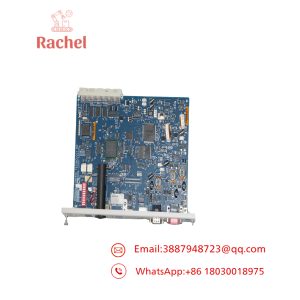
The Melec C-870V1 is a specialized industrial stepper motor controller designed to deliver accurate pulse-train generation and speed profiling for automation equipment. Built by Melec, this module integrates tight closed-loop or open-loop positioning logic, serving as a reliable command bridge between host controllers and physical drive stages in complex machinery.
Unlike generic pulse generators, the C-870V1 features hardware-level limit handling, homing sequence execution, and optically isolated digital I/O designed to survive electrically noisy factory floors. Its compact card format allows seamless integration into multi-axis control racks or dedicated instrument enclosures without requiring heavy cabinet redesigns.
Key Technical Specifications
| Parameter | Value |
| Manufacturer | Melec Inc. |
| Model Number | C-870V1 |
| Product Type | Stepper Motor Controller Module |
| Controlled Axes | 1 Axis |
| Control Interface | Pulse / Direction (PULSE / DIR) |
| Logic Power Supply | 5V DC (internal bus or external regulated) |
| I/O Isolation | Optically Isolated Digital Inputs / Outputs |
| Input Signals | Limit switches (CW/CCW), Origin/Home, Start, Stop |
| Output Signals | Pulse output, Direction output, In-position, Error/Alarm |
| Mounting Style | Rack / Card Edge Connector or Enclosure Mount |
| Operating Temperature | 0°C to 50°C Ambient |
Application Scenarios & The “Trench” Experience
An automated PCB routing machine on the night shift suddenly throws a hard-axis fault, freezing its primary material handling gantry. Maintenance pulls the failed controller rack and discovers a blown logic trace on an aging motion card. Scrambling to find an exact pin-compatible match to avoid a three-day line stoppage, the tech installs a pre-tested Melec C-870V1. Because the hardware profile and edge connector match the legacy slot perfectly, the system boots up, executes its homing sequence without re-engineering software, and brings the assembly line back to full throughput within minutes.
Specific Application Scenarios:
- PCB Assembly & Inspection: Controlling precision X-Y positioning stages and component placement heads.
- Medical Device Manufacturing: Managing fluid pump dosing rates and automated sample tray indexers.
- Laser Marking & Cutting: Regulating linear translation speeds for clean, repeatable vector paths.
- Legacy Machine Retrofits: Direct drop-in replacement for aging Melec controller racks in automated factory cells.
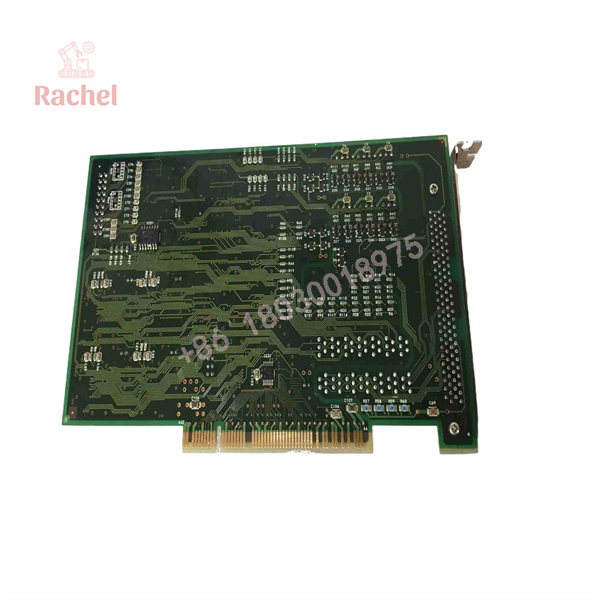
C-870V1
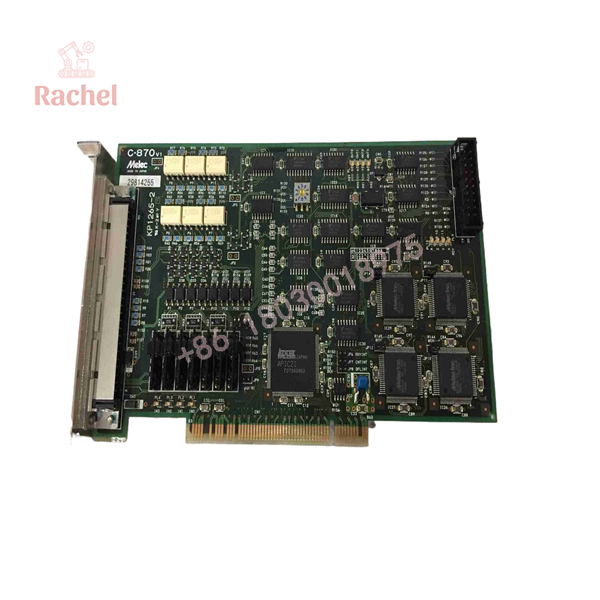
C-870V1
Transparency SOP: Quality Assurance & Testing
Every Melec C-870V1 unit pulled from our inventory undergoes a strict evaluation protocol before leaving our facility:
- Visual & Physical Inspection: Examining gold-finger edge connectors, solder joints, and electrolytic capacitors for signs of thermal stress, leakage, or physical oxidation.
- Static Bench Test: Checking internal power rail resistance against ground to verify zero short-circuits on the main 5V logic and discrete power planes.
- Dynamic Rig Validation: Inserting the card into a live Melec test rack to verify proper CPU boot sequences, register reads, and EEPROM communication.
- Pulse Train & I/O Verification: Simulating live command inputs, checking pulse/direction output frequencies on an oscilloscope, and cycling all opto-isolated limit and home inputs.
- Anti-Static Packaging: Sealed in high-grade conductive ESD bags surrounded by dense anti-static cushioning foam to prevent shipping damage.
The Veteran’s Tech Trap Guide
⚠️ 1. Verify Edge Connector Pin Alignment
When sliding the C-870V1 into a multi-slot backplane or cage, make sure the card is squared before applying pressure. Misaligning the edge connector by even one pin can short your 24V field power straight into low-voltage 5V logic lines, instantly frying onboard ICs.
❗ 2. Check DIP Switch and Jumper Configurations
Do not assume a surplus replacement card has the exact same address or pulse multiplier settings as your old unit. Always map out and match the physical DIP switches and jumper blocks from your failed card to the replacement before installing it into the rack.
⚠️ 3. Clean Backplane Contacts
氧化 (Oxidation) on older card cage bus bars is a silent killer. Use a clean, non-residue electronic contact cleaner and a lint-free swab on the backplane slot pins before seating the C-870V1 to prevent intermittent communication dropouts.
Frequently Asked Questions
Q: Is the Melec C-870V1 hot-swappable?
A: No. Never insert or extract this controller card while the rack’s main power supply is active. Always power down the enclosure and verify zero voltage on the bus before servicing.
Q: Can I use this controller as a direct replacement for other Melec series cards like the C-864V1?
A: While they share physical form factors within the Melec ecosystem, firmware versions, input mappings, and pulse output architectures vary between models. Always verify your exact system manual or part suffix before cross-substituting.
Q: Why is a surplus C-870V1 a better choice than upgrading the whole rack?
A: Upgrading a legacy Melec rack usually requires rewriting the PLC/host communication logic, changing cabinet wiring harnesses, and dealing with costly machine downtime. Dropping in an exact-matched, tested surplus C-870V1 gets your machine running instantly with zero software changes.
Q: What kind of warranty do you offer on this controller?
A: All our surplus and refurbished automation parts are backed by a comprehensive 12-month functional replacement warranty.

 Start Chat


