





Description
Product Introduction & Engineering Value
The C-870V1 is a four-axis stepping and servo motor controller designed for PC-based motion applications. Its role is to generate and manage motion-control pulses and associated machine I/O rather than directly supplying motor power. Melec documentation groups it with the C-87x family of stepping and servo controllers.
This distinction matters during replacement. The C-870V1 sits between the host computer and the motor-drive hardware, so the drive, pulse interface, limit inputs, origin sensors, and emergency-stop circuitry all need to be checked before commissioning. An Omron application manual, for example, documents an actual connection between a C-870V1 and an R7D-AP servo driver.
Technical Specifications
| Parameter | Specification |
|---|---|
| Manufacturer | Melec Inc. |
| Model | C-870V1 |
| Controller Type | Stepping & servo motor controller |
| Axis Count | 4 axes |
| Host Interface | PCI bus |
| Motion Output | Pulse output |
| Supported Motor Systems | Stepping motors and servo motors |
| Control Signals | CW/CCW pulse interfaces and associated control I/O |
| Position Inputs | Origin, limit, end, and related machine signals |
| Emergency/Stop Interface | Dedicated stop-related I/O |
| Software Environment | PC-based controller software |
| Documentation | Basic and applied-function manuals available |
| Product Status | Discontinued |
| Installation | PCI-based host computer |
The C-870V1 is also documented in an industrial application using an EDM453-00 DC stepping-motor drive, where the controller provided four-axis motor control for a scientific instrument.
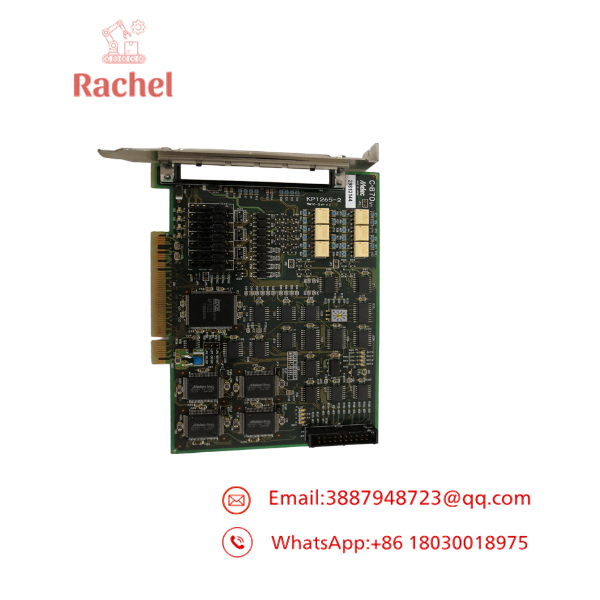
C-870V1
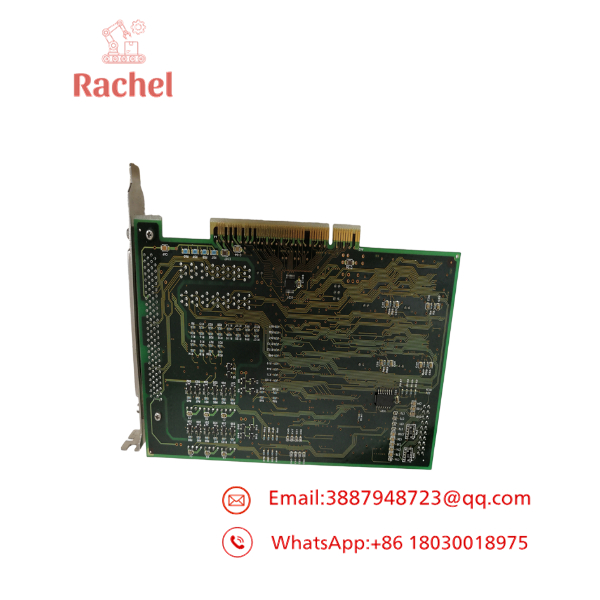
C-870V1
Field Application & the “Trench” Experience
A legacy inspection machine used a PC to coordinate several motorized mechanisms: one axis positioned the inspection stage, another controlled a rotary mechanism, and additional axes handled auxiliary positioning. When the C-870V1 failed, replacing the controller with a generic motion card was not a drop-in solution because the existing application software and field wiring were built around Melec’s signal assignments.
The maintenance approach was to preserve the existing drive architecture, document the C-870V1 I/O connections, install a compatible controller, and verify each axis independently before restoring coordinated operation.
A real-world academic instrument installation also used the C-870V1 as a four-axis controller for a vacuum-compatible motorized filter-wheel system, demonstrating that the controller was used beyond conventional factory automation.
Specific applications include:
- Multi-axis inspection stages requiring PC-based positioning
- Motorized optical/filter mechanisms with coordinated positioning
- Servo-driven machine tooling using pulse-command servo amplifiers
- Stepping-motor positioning systems requiring multiple independently controlled axes
- Legacy PC-based automation equipment where the original PCI motion architecture must remain operational
Transparency SOP: QA & Testing
For New Surplus or Refurbished C-870V1 inventory, testing should focus on both the PCI interface and motion I/O.
- Identity verification — Confirm C-870V1 marking, board revision, connector arrangement, and any available serial information.
- PCB inspection — Check the PCI edge connector, components, solder joints, connectors, and board surface for corrosion or physical damage.
- Host-interface test — Install the controller in a compatible test computer and verify PCI recognition.
- Pulse-output test — Verify representative CW/CCW pulse outputs on the required axes.
- I/O verification — Check origin, limit, emergency-stop, reset, and drive-status interfaces as applicable.
- Multi-axis test — Where suitable drive hardware is available, verify independent operation of all supported axes.
- Software verification — Confirm communication between the controller and the applicable Melec control software.
A controller that merely appears in the PC’s PCI device list has not necessarily passed a meaningful functional test.
The Veteran’s Tech Trap Guide
⚠️ Do not confuse the C-870V1 with a servo amplifier.
The C-870V1 generates motion-control signals. The actual motor power comes from an external servo or stepping-motor drive. Omron’s documented connection example shows the C-870V1 interfacing with an R7D-AP servo driver rather than replacing it.
⚠️ Preserve the original I/O mapping.
The documented interface includes dedicated signals such as +CW, -CW, +CCW, -CCW, origin, CW/CCW limits, end, reset, run, alarm, and encoder-related connections. Incorrect wiring can damage equipment or prevent correct axis operation.
PRO TIP: Photograph the complete connector wiring before removing the card, then record the axis-to-drive mapping. Do this even if the wiring appears obvious.
⚠️ Software compatibility is part of the replacement.
The C-870V1 belongs to an older PCI-based controller architecture. A physically correct replacement can still become a commissioning problem if the original application software, controller board settings, or host PC environment is unavailable.
Dynamic FAQ
Q1. What is the Melec C-870V1?
The C-870V1 is a four-axis stepping and servo motor controller from Melec’s C-87x family. It is intended to control external stepping-motor and servo-drive hardware.
Q2. Does C-870V1 directly power the motors?
No. It is a motion controller, not a motor power amplifier. It supplies motion-control pulses and I/O signals to compatible external drives.
Q3. What type of host interface does it use?
The C-870V1 is a PCI-bus controller, making the host computer and its software environment important considerations when replacing the board.
Q4. Can C-870V1 control servo drives?
Yes. Its pulse-output architecture can interface with compatible servo amplifiers. Omron’s documentation provides a specific C-870V1 connection example with an R7D-AP servo driver.
Q5. Is C-870V1 still manufactured?
Melec’s official website lists C-870v1 under its discontinued-product download section, along with the associated English manuals.
Q6. How should New Surplus C-870V1 stock be authenticated?
Verify the Melec model marking, PCB condition, connector configuration, and revision. Ideally, test PCI recognition and actual pulse/I/O operation using compatible hardware. New Surplus should mean unused original equipment, while refurbished units should have a documented functional test.
Warranty: Warranty coverage depends on supplier and stock condition. For refurbished C-870V1 boards, request written coverage for functional failure and confirmation of the test procedure before purchase.

 Start Chat


