





Description
Product Introduction & Engineering Value
A failed ACN CS node is more than a CPU replacement problem. The controller is responsible for executing the configured process applications, communicating with distributed I/O, and maintaining cyclic control tasks within the Metso DNA architecture. The documented ACN CS platform supports control cycles from 20 ms to 64 seconds for ACN I/O, with PROFIBUS DP cycles from 10 ms to 64 seconds.
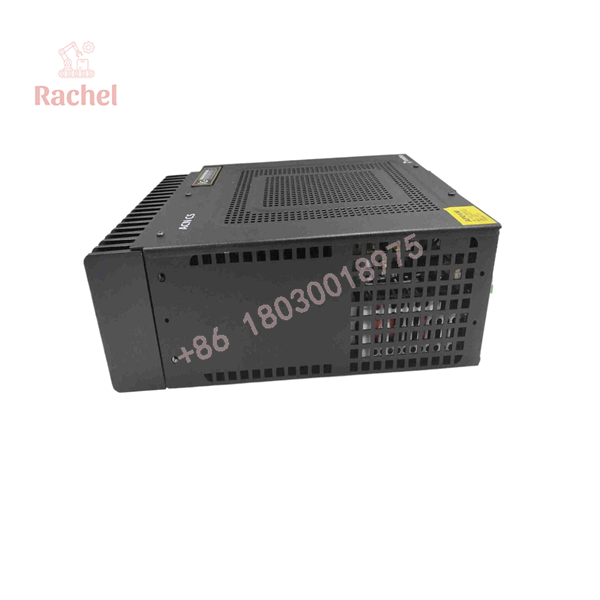
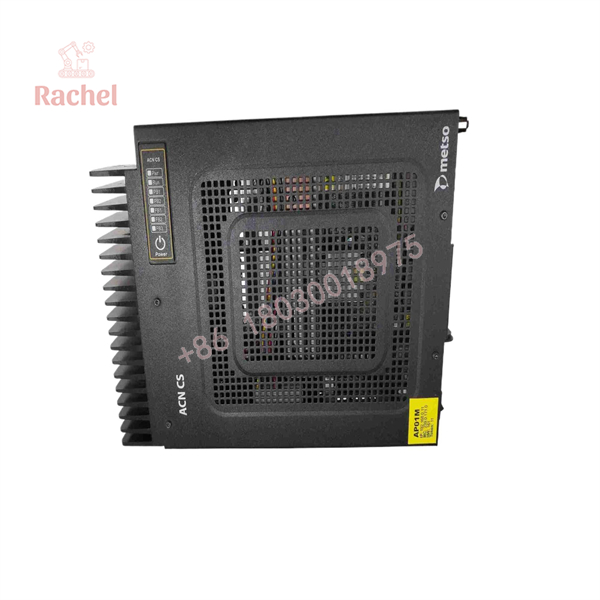
For spare-parts procurement, the critical point is identification. ACN CS is the controller family name; D201925 is a specific hardware reference associated with an ACN CS node. Current commercial documentation identifies D201925 as an embedded ACN CS industrial controller and lists it as discontinued by the manufacturer.
Technical Specifications
Controller Architecture
- Controller family: ACN CS
- System architecture: Metso DNA / Valmet DNA
- Controller class: Compact ACN process controller
- Typical hardware reference: D201925
- Maximum I/O channels: Up to 3,000
- Typical I/O loading: Approximately 2,000 channels, depending on application and control-cycle requirements
- ACN I/O control cycle: 20 ms to 64 s
- Typical ACN I/O cycle: Approximately 400 ms
- PROFIBUS DP control cycle: 10 ms to 64 s
- Typical PROFIBUS DP cycle: Approximately 400 ms
- ACN I/O field buses: Up to 3
- PROFIBUS DP buses: Up to 4
- Controller redundancy: Optional 1:1 redundancy
These capacity and timing figures come from Metso’s DNA technical overview rather than from a generic modern controller specification. Actual usable capacity depends on application size, fieldbus loading, execution cycles, and controller hardware.
D201925 Identification Data
For the commonly referenced D201925 ACN CS hardware:
| Parameter | Documented Information |
|---|---|
| Part number | D201925 |
| Description | Embedded industrial controller |
| System | ACN CS |
| Manufacturer | Metso Automation / Valmet |
| Input supply | 18–36 VDC |
| Nominal system supply | 24 VDC |
| Listed input current | Up to 10 A |
| Approximate weight | 3.93 kg / 8.66 lb |
| Status | Discontinued by manufacturer according to current commercial listings |
The 18–36 VDC and 10 A figures are specifically listed for D201925 by Radwell; they should not be confused with the complete cabinet-level power budget of an ACN CS installation.
ACN CS
ACN CS
How ACN CS Fits Into a Metso DNA System
The ACN CS operates as the process-control node within the DNA distributed architecture.
A typical control path is:
Field transmitter / actuator → ACN I/O → ACN CS → Metso DNA network → Operator / Engineering systems
The controller executes function-block-based control applications. Basic functions include measurement handling, PID control, motor and valve control, group starts, sequencing, and recipe functions. The DNA architecture also supports more advanced control strategies, including fuzzy logic, neural-network functions, Java programming, and multivariable control.
The ACN controller family supports multiple independently defined control-task execution times, allowing different process functions to operate at different cyclic rates. This is important when a single controller handles both relatively slow process loops and faster machine-control functions.
Field Application & Trench Experience
Consider a legacy paper-machine section running on Metso DNA. The ACN CS controller is communicating with ACN I/O and PROFIBUS DP devices while executing multiple process loops. A controller failure can leave field I/O physically intact but prevent the application from executing normally.
The practical replacement procedure is therefore not simply “remove old controller, install new controller.” The technician needs the correct hardware identification, application/software image, controller configuration, network parameters, and—where applicable—redundancy configuration.
Niche Applications
Pulp and paper production
ACN CS controllers can form part of distributed control architectures covering stock preparation, paper machines, utilities, drives, valves, and process instrumentation.
Power and energy systems
ACN CS hardware has been documented in installations containing ACN I/O modules, PROFIBUS-DP networks, and other process-control equipment.
Centralized and field control cabinets
Metso documentation specifically positions ACN CS for both field and centralized installations, unlike the smaller ACN SR1, which is intended for more limited embedded applications.
QA & Testing SOP
For a New Surplus ACN CS, verification should begin with identification rather than functional power-up.
Step 1 — Hardware Identification
Record:
- ACN CS designation
- Complete part number
- Hardware revision
- Serial number
- CPU/controller identification
- Installed memory or boot media
- Communication interfaces
- Any installed expansion or fieldbus hardware
For a D201925 replacement, verify that the physical identification corresponds to the customer’s existing controller rather than assuming every ACN CS node is equivalent.
Step 2 — Physical Inspection
Inspect:
- DC power connector
- Network connectors
- I/O or fieldbus interfaces
- PCB and internal connectors
- Cooling surfaces
- Mounting hardware
- Labels and revision markings
Check for corrosion, oxidation, impact damage, contamination, and evidence of previous repair.
Step 3 — Controller Test
Where a compatible Metso DNA test environment is available:
- Apply the specified DC supply.
- Verify startup diagnostics.
- Check controller status indicators.
- Confirm network communication.
- Verify boot-media recognition.
- Establish communication with the engineering environment.
- Verify application loading.
- Confirm I/O communication.
- Test controller-to-controller communication where redundancy is involved.
New Surplus vs. Refurbished
New Surplus: Original equipment that has not been placed into operational service but may have been held as excess inventory.
Refurbished: Previously used or otherwise non-new equipment that has been inspected, repaired or reconditioned as necessary, and function-tested.
For a legacy ACN CS, the supplier should clearly identify which condition applies. Current market listings show both unused and refurbished/used D201925 units, so condition should not be inferred from a product photograph alone.
Veteran’s Tech Trap Guide
⚠️ Trap 1: Treating “ACN CS” as the complete part number
It is not.
ACN CS is a controller family. D201925 is one documented ACN CS hardware reference. Other ACN CS-related hardware identifiers exist, and later documentation also references additional ACN CS controller variants.
When ordering a replacement, provide the complete label information from the installed controller.
⚠️ Trap 2: Assuming maximum I/O capacity is always available
The published 3,000-channel maximum is an architecture-level figure. Actual controller loading depends on the number and type of control loops, execution cycles, fieldbus configuration, and CPU load.
Do not use the 3,000-channel figure as a simple “number of physical I/O modules supported” calculation.
⚠️ Trap 3: Replacing hardware without preserving the application image
The controller is only one part of a DNA control node. A replacement unit may power up normally while the process application, parameters, network configuration, or boot media are incorrect.
PRO TIP: Before removing the failed controller, capture the existing hardware identification and preserve the latest valid application/configuration backup whenever the system condition permits.
⚠️ Trap 4: Confusing ACN CS with ACN RT
Both belong to the ACN controller family, but they serve different installation scales. Metso documentation identifies ACN RT as the larger expandable controller with up to 6,000 I/O channels, while ACN CS is the compact controller with up to 3,000.
FAQ
What is the METSO ACN CS?
METSO ACN CS is a compact process-controller platform used in Metso DNA/Valmet DNA distributed-control systems. It executes process-control applications and communicates with ACN I/O and fieldbus networks.
What is the relationship between ACN CS and D201925?
ACN CS is the controller family/system designation. is a specific hardware part number identified in Metso documentation as an ACN CS node.
What is the maximum I/O capacity of ACN CS?
The Metso DNA technical overview specifies a maximum of 3,000 I/O channels, with approximately 2,000 described as typical depending on control-cycle requirements and application loading.
Does ACN CS support PROFIBUS DP?
Yes. The ACN CS architecture supports PROFIBUS DP, with documented control-cycle times from 10 ms to 64 seconds and up to four PROFIBUS DP buses in the specified architecture.
Is ACN CS redundant?
The ACN controller architecture supports optional 1:1 controller redundancy. A redundant arrangement uses duplicated controller hardware, software, power supplies, and I/O-level bus connections, with automatic transfer to the backup controller following a primary-controller failure.
Is D201925 still manufactured?
Current commercial documentation identifies D201925 as discontinued by the manufacturer. This makes exact identification and tested spare availability particularly relevant for maintenance of existing Metso DNA installations.
How should a New Surplus METSO ACN CS be verified?
Verify the complete part number, hardware revision, serial information, physical interfaces, and condition. For D201925, the supplier should also state whether the unit is New Surplus, unused in original packaging, refurbished, or previously used and tested. Do not equate “unused” with “factory-new current production.”
What warranty should I request for an ACN CS replacement?
The warranty is supplier-specific. Confirm the exact coverage period, DOA terms, return conditions, and whether the unit has been function-tested. For a discontinued DCS controller, configuration matching should be confirmed separately from warranty coverage.

 Start Chat


