





Description
Core Product Summary
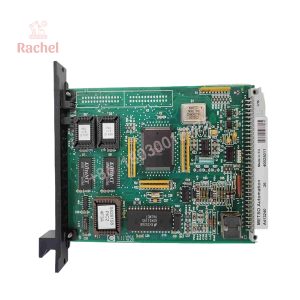
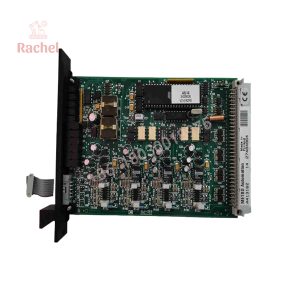
The Metso D201136 is an AO4 / AO4C analog output module used within Metso Automation (now Valmet) PLC and process control I/O systems. It is a four-channel analog output board that converts controller output values into continuous analog signals for driving field devices such as control valve positioners, variable-speed drive references, and indicating instruments.
The module belongs to the Metso D-series I/O board family, alongside boards such as the D201126 DI8 digital input unit, the D201129 DO8 digital output unit, and the D201134 AI8C analog input module, which typically populate the same control cabinets. Hardware revisions of this board are documented — including Version/Revision 07 and Revision 08, plus an L-suffixed variant (D201136 L03) — so verifying the revision marking on the original board’s label against the I/O station configuration is the essential step before ordering a replacement.
Key Technical Specifications
| Parameter | Value |
|---|---|
| Product type | Analog output module (PLC / machine control I/O) |
| Module designation | AO4 / AO4C |
| Number of channels | 4 analog output channels |
| Manufacturer / family | Metso Automation (Valmet), D-series I/O boards |
| Known hardware revisions | Version 07 and Revision 08 documented; L-suffixed variant D201136 L03 exists |
| Related family boards | D201126 (DI8 digital input), D201129 (DO8 digital output), D201134 (AI8C analog input), D201189 (AI8H analog input) |
| Typical module type reference | PLC analog output / machine control board |
Engineering Selection Highlights
- Function confirmed as analog output: Multiple independent sources consistently identify the D201136 as an AO4/AO4C analog output board, not the CPU/processor module that some listings incorrectly state. This distinction matters when cross-referencing parts lists that contain conflicting board-type descriptions.
- Four-channel AO4 structure: The “AO4” designation defines the channel count. Cabinets requiring a known number of analog output loops must scale board counts accordingly, with the companion D201134 AI8C board handling the input side.
- Revision control is the key ordering check: Documented revisions include Version 07 and Revision 08, and an L03 variant exists. The revision marking on the replacement should match the original board and the I/O station configuration to avoid firmware or wiring mismatches.
- Same-family spares grouping: The D-series boards (DI8, DO8, AI8C, AO4C) commonly appear together in Metso-based cabinets, so sites typically maintain D201136 alongside the digital and analog input boards as one spares package.
- Field-device interface: As an analog output board, its outputs typically feed final elements — valve positioners, drive speed references, and panel instruments — making loop-level signal ranges a configuration item to confirm against the station database before board replacement.
Detailed Product Overview
The D201136 belongs to the Metso D-series I/O board family, and its identity rests on the AO4C designation: a four-channel analog output module. In the structure of a Metso control cabinet, this is the board that carries the modulating-control duty of the I/O system — the loop commands that cannot be delivered by the D201129 DO8 digital output board, which handles only discrete on/off signals. The D-series division of labor is therefore a useful mental map: DI8 for discrete status in, DO8 for discrete commands out, AI8C for analog measurements in, and AO4C for analog commands out.
For maintenance and procurement, the first fact worth knowing is that this board’s function is frequently misidentified. Some third-party listings describe the D201136 as a central processor or power supply board. The consistent labeling across multiple independent sources, however, identifies it as the AO4/AO4C analog output module. When a parts list or purchase requisition conflicts with the physical board’s own label, the board label and the I/O station configuration record — not the listing — should be treated as authoritative.
The second fact is revision control. Documented units include Version 07, Revision 08, and an L-suffixed variant (D201136 L03). As with the other boards in this family, revision differences can carry hardware or firmware changes within the same order number, so a replacement should match the revision marking of the board it replaces. A secondary label check is also available: original units are documented with a TK3340-series reference marking, which helps confirm stock identity when multiple similar boards are in circulation.
Channel capacity of four analog outputs per board makes the AO4C a scaling unit: the number of modulating loops in a cabinet determines how many AO4 boards are populated. In practice, analog output boards are often less numerous than digital boards in a typical cabinet, but each one carries continuous-control loops whose failure directly affects process regulation — which is why AO4C spares are commonly held in critical-inventory stocking programs for sites running these platforms.
As with all legacy-platform I/O boards, the safest identification procedure is to read the original board’s label in the rack, record the order number, revision, and any secondary markings, and match all of them exactly when ordering a replacement.
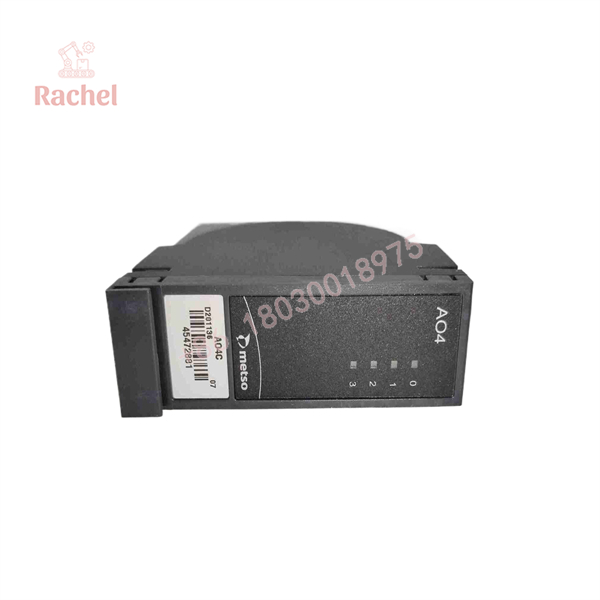
D201136
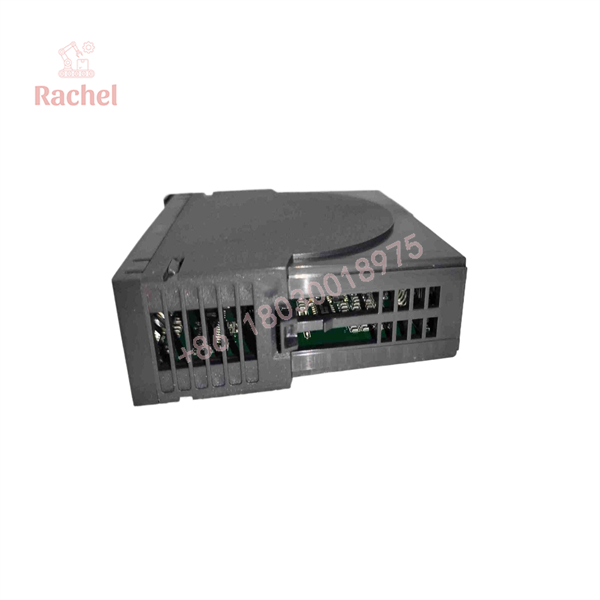
D201136
Applications & System Role
Within a Metso-based control architecture, the D201136 occupies the analog output interface: it receives digital output values from the controller and converts them into continuous analog signals delivered to final control elements in the field. Its outputs commonly serve control valve commands, variable-frequency drive references, and analog indications — the continuous-control side of the loop, complementing the D201134 AI8C analog input board that acquires transmitter signals on the measurement side.
Typical fit scenarios follow from this role: plants operating Metso/Metso Automation (now Valmet) control platforms in process industries maintain AO4C boards as replacement spares to restore analog output capacity after a board failure, to extend I/O during cabinet expansion, or to hold as critical-inventory items where continuous control loops must stay in service. It is relevant wherever continuous, modulating control signals — rather than discrete on/off commands — must reach field devices.
System Compatibility & Integration Requirements
| Item / Dependency | Verified Compatibility or Requirement | Practical Note |
|---|---|---|
| Control platform | Metso Automation (Valmet) PLC / process control I/O systems using D-series boards | Verify system-generation fit against the site’s controller documentation |
| Module role | AO4 / AO4C analog output function | Board type frequently mislisted; confirm AO4 designation on the board label |
| Revision check | Version 07, Revision 08, and L03 variant documented | Match the revision on the original board before ordering |
| Related boards | D201126 (DI8), D201129 (DO8), D201134 (AI8C), D201189 (AI8H) in the same D-series family | Typically maintained as a group of system spares |
| Label cross-check | Units documented with TK3340-series reference marking on original labels | Useful secondary identifier when verifying stock |
FAQ
What is the Metso D201136?
It is an AO4 / AO4C analog output module from Metso Automation, providing four analog output channels for PLC and process control I/O systems.
How many channels does it have?
Four analog output channels per module.
Is the D201136 a CPU or processor module?
No. Despite occasional third-party descriptions calling it a central processor board, the D201136 is consistently identified by its AO4C analog output designation. The board’s own label is the authoritative reference.
Which system does it belong to?
The Metso Automation (Valmet) D-series I/O board family, alongside boards such as the D201126 DI8, D201129 DO8, and D201134 AI8C.
Are there different revisions of this module?
Yes. Version 07, Revision 08, and an L03 variant (D201136 L03) are documented. Match the revision marking on the original board before ordering.
What does an analog output module do?
It converts controller output values into continuous analog signals for field devices such as valve positioners, drive speed references, and indicating instruments.
What should I verify before ordering?
The complete order number with revision identifier, the AO4C module type on the board label, and the configuration record of the I/O station where the board will be installed.

 Start Chat


