





Description
Product Introduction
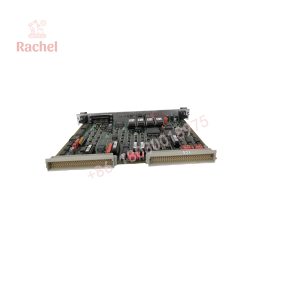
The Motorola MVME133SA is a double-high (6U) VMEbus single board computer powered by a 32-bit MC68020 microprocessor running alongside an MC68881 floating-point coprocessor. Designed for high-reliability military, aerospace, power generation, and industrial process control applications, it acts as the primary system controller or intelligent slave processor in legacy VME chassis architectures.
Compared to standard VME CPU boards of its era, the “SA” variant features 4 megabytes of shared dynamic RAM with parity, expanded EPROM/ROM capacity, and comprehensive system controller functions including a VMEbus requester and arbiter. Its rugged design and deterministic execution make it a staple in long-lifecycle embedded infrastructure where upgrading to modern architectures would require a multi-million-dollar re-certification.
Key Technical Specifications
| Parameter | Value |
| Processor | Motorola MC68020 32-Bit Microprocessor |
| Math Coprocessor | Motorola MC68881 Floating Point Unit (FPU) |
| System Memory | 4 MB Shared DRAM with Parity |
| ROM/EPROM Sockets | Sockets for up to 512 KB of JEDEC EPROM/Flash |
| Form Factor | Standard 6U VMEbus Double-Height Board |
| VMEbus Interface | Full VMEbus System Controller (A32/D32 capability) |
| Serial Ports | 2 RS-232C Asynchronous Serial Ports (via MC68681 DUART) |
| Timers | 16-bit programmable timers / watchdog timer |
| Power Requirements | +5VDC, +12VDC, -12VDC from VME backplane |
Application Scenarios & The “Trench” Experience
At 3:00 AM in a power generation facility, a critical turbine monitoring rack experienced a total backplane timeout. The main VME chassis went dark, halting real-time telemetry feed back to the control room. The culprit was a memory parity fault on an aging CPU board that had been running continuously in a warm electronics enclosure for over 18 years. Finding an exact-drop-in VME SBC with identical memory mapping was the only way to restore the turbine monitor without taking down the main generator loop.
- Power Generation & Substation Automation – Handling real-time data acquisition and deterministic control loops in legacy VME card cages.
- Military & Defense Simulators – Running low-latency avionics radar and flight-deck simulation algorithms.
- Semiconductor Wafer Fabrication – Driving precise multi-axis motion and process chambers on legacy fab lines.
- Rail Transit & Signaling Systems – Controlling trackside signal processing and wayside automation units.
Field Case Study
An aerospace test facility ran into an operational bottleneck when a core telemetry rack’s MVME133SA board suffered an onboard serial port failure during a critical testing phase. Sourcing a complete modern platform replacement meant months of software re-compilation and flight-safety software re-validation. We supplied a fully bench-tested, refurbished MVME133SA card overnight. The site engineers moved their proprietary boot EPROMs to the replacement board, set the jumper blocks, slotted the card into Rack 3, and had their test bay fully operational before noon.
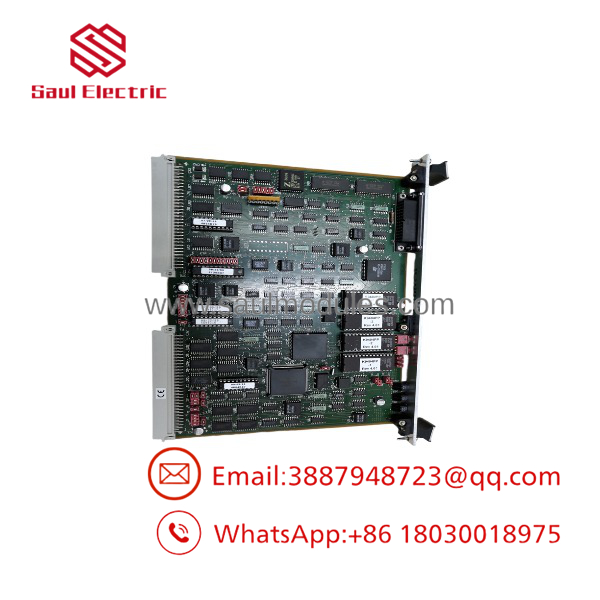
MVME133SA
Transparency SOP: Quality Assurance & Testing
VMEbus boards require far more than a simple power-on check. Every MVME133SA board undergoes a rigorous hardware validation protocol on actual VME backplanes before entering our inventory.
- Visual & Structural Audit: Inspecting card edge contacts, backplane DIN connectors (P1/P2) for bent pins, solder bridge integrity, and tantalum capacitor degradation.
- Backplane Power-On & Bus Handshake: Slotting the board into a powered VME chassis to check 5V and 12V rail draws and verify bus clock generation.
- CPU & Memory Stress Testing: Running full 32-bit RAM read/write parity stress cycles across all 4MB of onboard DRAM using diagnostic firmware.
- I/O & Peripheral Validation: Exercising both RS-232 serial channels, interrupt lines, timer registers, and EPROM socket pinouts under load.
- Anti-Static ESD Packaging: Sealing the verified board in heavy-duty ESD protective bags with fresh moisture-absorbent desiccant packs.
The Veteran’s Tech Trap Guide (Crucial Value-Add)
- ⚠️ Map Your Jumpers First: The MVME133SA has dozens of hardware jumper headers governing memory mapping, VMEbus requester levels, system controller enabling, and EPROM type selection. Take high-resolution photos of your original board’s jumpers before removing it. Dropping in a replacement board with default factory jumpers can cause address space collisions or bus locks.
- ❗ Mind the EPROMs: Transfer your plant’s original system EPROMs (firmware chips) carefully. Ensure correct chip orientation (notch matching the socket) and avoid bending IC pins during extraction and insertion. Use an IC extractor tool—do not pry them with a flathead screwdriver!
- ⚠️ System Controller Position: VMEbus architecture requires one and only one system controller in Slot 1. If your MVME133SA is installed in Slot 1, its onboard system controller jumper (SYSCON) must be enabled. If it is in any other slot, SYSCON must be disabled, or the backplane will lock up instantly.
- ❗ Backplane Pin Damage: Check your VME backplane female sockets for bent or recessed pins before sliding the board in. Forcing a card into a damaged slot will ruin the DIN connectors on your replacement board.
Frequently Asked Questions (FAQ for Conversion)
Q: Is the direct drop-in compatible with the standard MVME133 or MVME133A?
A: Yes, in most cases. The “SA” variant designates specific memory configurations and floating-point coprocessor setups. However, you must verify your exact jumper configurations and EPROM firmware compatibility when substituting models.
Q: Can I hot-swap this card out of a running VME chassis?
A: No! Standard VMEbus architectures are not live-swappable. Removing or inserting an card while the backplane is energized will create voltage transients that can destroy the CPU, backplane line drivers, or adjacent modules.
Q: What if our original system boot code is stored on socketed EPROMs?
A: You simply transfer your original socketed firmware chips from your failed board over to the matching DIP sockets on the replacement board.
Q: Are these boards new or refurbished?
A: Because Motorola discontinued the MVME series years ago, these boards are available as high-grade New Surplus (unused old stock) or Tested Refurbished units fully certified by our engineering team.
Q: What warranty coverage do you provide on legacy MVME cards?
A: We provide a full 12-month functional replacement warranty on every board shipped, giving you long-term reliability on legacy infrastructure.

 Start Chat


