





Description
Product Introduction
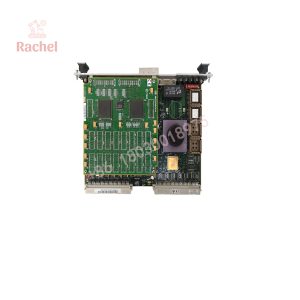
The Motorola MVME2400-0351-MPC750 is a single-slot, 6U VMEbus single-board computer engineered for demanding industrial processing, defense systems, and legacy infrastructure upgrades. Driven by the PowerPC 750 (G3) RISC processor, this module provides a massive leap in raw processing power and floating-point math efficiency over earlier 68k-based architectures while retaining full compatibility with standard VME64 backplanes.
Designed around Motorola’s Hawk System Memory Controller and Universe II VME ASIC, the MVME2400 platform offloads bus arbitration, DMA transfers, and local PCI execution from the main CPU. Its dual PMC (PCI Mezzanine Card) expansion slots allow site engineers to integrate custom fieldbus interfaces, high-speed network cards, or graphics engines directly onto the processor board, ensuring high-speed processing for real-time operating systems like VxWorks.
Key Technical Specifications
| Parameter | Specification Value |
| Processor | PowerPC 750 (MPC750) RISC Microprocessor |
| Form Factor | Standard 6U Single-Slot VMEbus (VME64 compatible) |
| VME Interface ASIC | Tundra Universe II (VME64 Master/Slave, DMA Controller) |
| System Controller | Motorola Hawk ASIC (PCI/Memory Controller) |
| Onboard RAM | High-speed SDRAM (ECC / Parity configuration) |
| Flash Memory | Onboard Flash for boot ROM / firmware storage |
| Mezzanine Slots | 2 x IEEE 1386.1 PMC (PCI Mezzanine Card) slots |
| Network Interface | 10/100Base-TX Ethernet (Intel 82559 or equivalent MAC/PHY) |
| Serial Ports | 2 x Asynchronous RS-232 serial channels |
| Real-Time Clock / NVRAM | Dallas/ST BBRAM with integrated Real-Time Clock |
| Operating Temperature | 0°C to +55°C (Standard industrial operating range) |
Application Scenarios & The “Trench” Experience
Picture this: It’s 1:30 AM during a planned refinery shutdown. The main SCADA node executing high-speed loop calculations on a 20-year-old VME chassis drops off the line. The power LED on the CPU card flickers out—the PowerPC processing board suffered a memory controller failure due to thermal stress. Thousands of upstream sensors stall, halting the startup sequence. Sourcing an exact drop-in PowerPC replacement with identical memory specs and register layouts is the only option to avoid days of costly software re-engineering.
To be honest, situations like this are where the MVME2400-0351-MPC750 proves its worth. Having a fully bench-verified, pre-tested board ready to drop into the rack turns a multi-day emergency migration into a simple board swap.
- Oil Refineries & Chemical Processing: Real-time data acquisition and multi-loop algorithmic control in legacy process control racks.
- Aerospace & Defense Simulators: Executing high-frequency math models and hardware-in-the-loop (HIL) simulation routines under VxWorks RTOS.
- Rail Transit & Signaling: Centralized wayside safety processing and interlocking control systems requiring high MTBF hardware.
- High-Energy Physics & Research: Accelerator timing sync and detector data collection across large distributed VME crates.
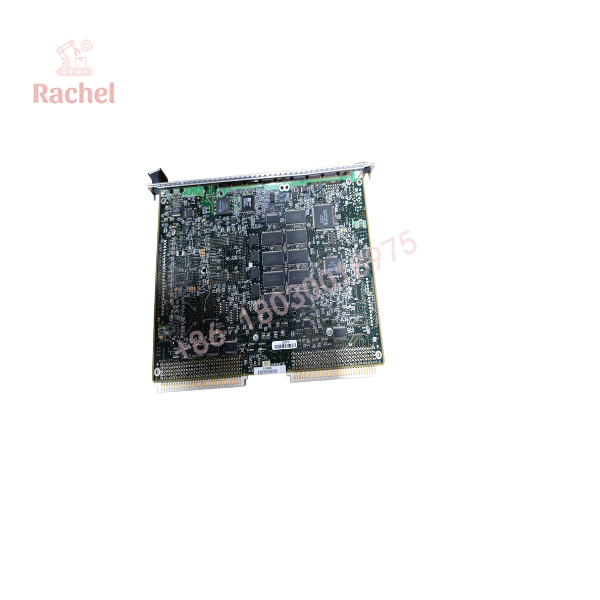
MVME2400-0351-MPC750
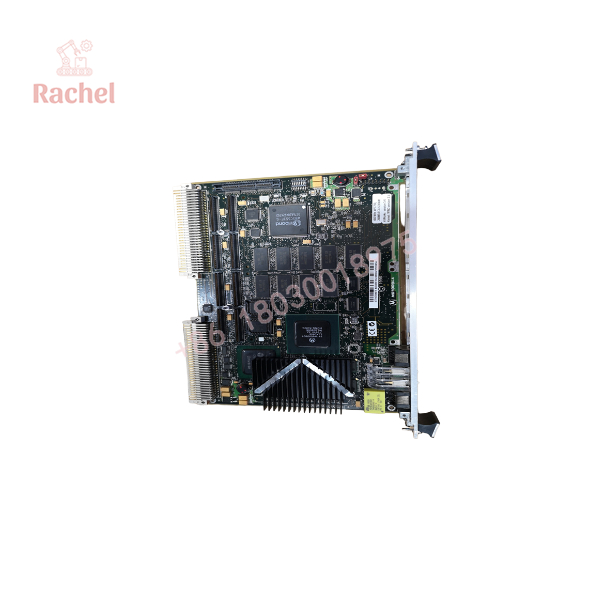
MVME2400-0351-MPC750
Transparency SOP: Quality Assurance & Testing
We don’t just ship boxes; we test them on actual Motorola 6U VME test chassis. Every refurbished or new surplus MVME2400-0351-MPC750 unit goes through a mandatory 5-step testing process:
- Inbound Visual & Physical Audit: Inspection of P1 and P2 DIN connector pins for bending, oxidation, or board trace wear. Verification that all electrolytic caps and board components show zero signs of heat degradation.
- Backplane Handshake & Boot Testing: Mounting into a powered 6U VME enclosure to verify power sequencing, voltage tolerances, and initial MOTLoad / PPCBug boot loader execution.
- RAM & Cache Stress Test: Executing deep memory diagnostic routines (DRAM pattern tests, L1/L2 cache verification) for 4 continuous hours to ensure zero bit flips under load.
- I/O & PMC Slot Validation: Testing Ethernet link speeds, serial loopbacks, and mounting test PMC modules to ensure local PCI bus arbitration functions flawlessly.
- Clear NVRAM & ESD Packaging: Resetting boot parameters to OEM defaults, clearing diagnostic logs, and sealing the card in heavy-duty ESD shielding wrap with custom anti-vibration foam packaging.
The Veteran’s Tech Trap Guide (Crucial Value-Add)
If you are swapping an MVME2400-0351-MPC750 in the field, keep these veteran tips in mind:
- ⚠️ PMC Module Standoff Height: If your old card uses PMC mezzanine modules, pay attention to the standoff heights and pin alignment when transferring them to the replacement board. Forcing a misaligned PMC card can shear the tiny surface-mount PCI connectors off the MVME2400 mainboard.
- ❗ System Controller (Slot 1) Selection: Like all VME boards, only ONE card in the chassis can drive the VMEbus System Controller functions (SCON). If this card is in Slot 1, SCON must be enabled via hardware jumpers or firmware configuration. If it’s in Slot 2 or higher, SCON MUST be disabled, or the backplane will lock up instantly.
- ⚠️ PPCBug / MOTLoad Firmware Variants: Depending on the exact sub-revision (-0351), the board may ship with either PPCBug or MOTLoad boot firmware. Ensure your RTOS boot script (e.g., VxWorks target bootline) matches the bootloader environment on the replacement card, or the system will fail to fetch its network image.
- ❗ Front Panel Routing vs. Rear P2 I/O: Serial and Ethernet signals can often be routed to either the front panel connectors or through the P2 backplane connector to a transition module (like the MVME761). Double-check the hardware jumper options on the board to make sure I/O signals are directed where your wiring harness expects them.
Frequently Asked Questions (FAQ)
Q: What does the “-0351” suffix indicate in this part number?
A: In Motorola’s numbering system, the dash suffix specifies the exact combination of hardware parameters—including CPU clock speed (e.g., 350MHz vs 450MHz), onboard ECC SDRAM capacity, Flash size, and whether it has standard or extended temperature specs.
Q: Can I upgrade an older 68k VME board (like an MVME162) directly to an MVME2400?
A: Mechanically, yes—it fits into the same 6U VME slot. However, software-wise, no. The MVME2400 uses a PowerPC RISC architecture, which requires your operating system, drivers, and application code to be recompiled for PowerPC target processors.
Q: Does this board support hot-swapping while the VME backplane is powered?
A: No. Standard VME64 backplanes do NOT support live insertion or removal. Pulling this module while the chassis is powered risks destroying the Universe II ASIC and causing damaging voltage transients on the bus lines. Always power down the crate first.
Q: Do I need special transition modules to use the rear I/O connectors?
A: If your system routes serial, parallel, or network lines through the backplane rather than the front panel, you will typically need a compatible Motorola transition board (such as the MVME761 or MVME712 series) connected to the P2 backplane slot.
Q: What warranty coverage comes with this module?
A: Every MVME2400-0351-MPC750 module—whether New Surplus or Refurbished—is backed by our full 12-Month Replacement Warranty. If the board experiences a hardware failure during normal operation within one year, we will replace it directly from our stocked inventory.

 Start Chat


