





Description
Product Introduction & Engineering Value
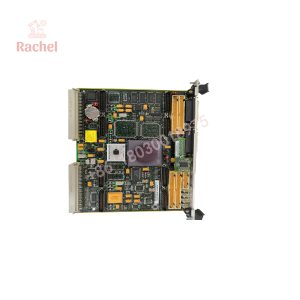
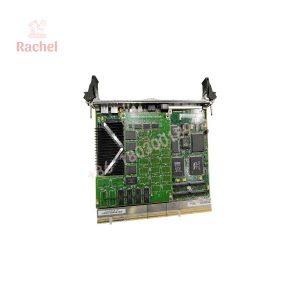
When an established VME platform reaches the point where processor failures begin affecting production, replacing the controller is often more practical than redesigning an entire control system. The Motorola MVME162-220 was developed for embedded applications requiring deterministic processing and long-term hardware stability.
Built around the Motorola MC68040 processor, the MVME162-220 integrates memory, VMEbus communication, timers, watchdog functionality, and standard embedded interfaces on a single 6U VME board. It remains common in legacy industrial automation, defense electronics, transportation, and scientific instrumentation.
Technical Specifications
| Parameter | Specification |
|---|---|
| Manufacturer | Motorola |
| Model | MVME162-220 |
| Product Type | Embedded VME Single Board Computer |
| Processor | Motorola MC68040 |
| CPU Clock | 25 MHz |
| DRAM | 4 MB Parity-Protected |
| SRAM | 128 KB Battery-Backed |
| Flash Memory | 1 MB Flash |
| Bus Standard | IEEE 1014 VMEbus |
| Form Factor | 6U VME Board |
| Serial Interfaces | Two Serial Ports |
| Watchdog Timer | Integrated |
| Typical Applications | Industrial Control, OEM Embedded Systems, Test Equipment |
Field Application & The “Trench” Experience
A rolling mill control system experienced repeated processor watchdog resets during production. Initial troubleshooting focused on the power supply and VME backplane, but diagnostics ultimately identified an aging CPU board with intermittent memory faults.
After replacing the original processor with a verified MVME162-220, engineers restored stable operation without modifying the control software. Because the replacement matched the existing hardware architecture, commissioning required only memory verification, boot diagnostics, and I/O validation before production resumed.
Typical application scenarios include:
- Continuous steel rolling mill sequencing
- Railway signaling and interlocking controllers
- High-speed industrial test and measurement platforms
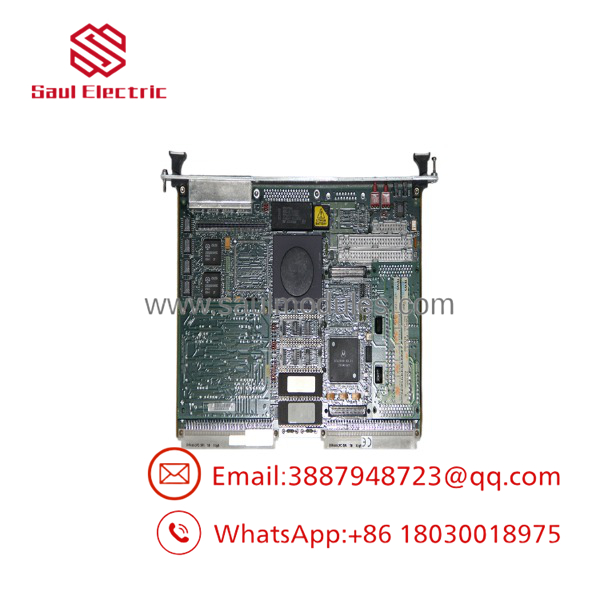
MVME162-220
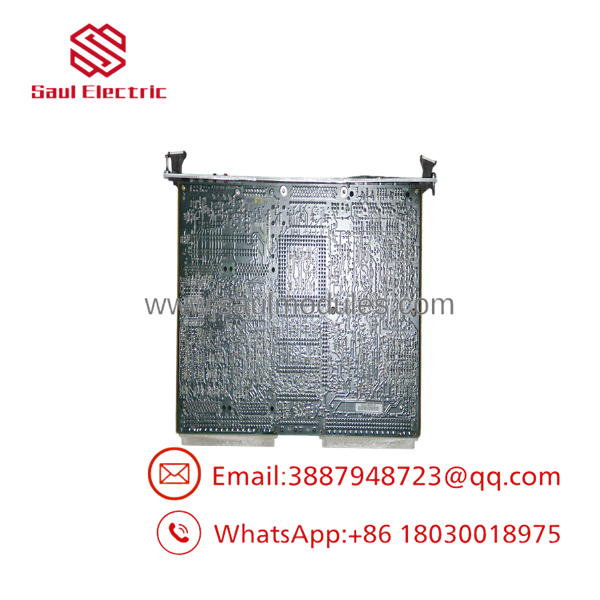
MVME162-220
Transparency SOP: QA & Testing
Before shipment, every MVME162-220 is processed through a documented quality verification procedure.
- Confirm the complete Motorola part number and board revision.
- Inspect PCB assemblies, DIN connectors, and socketed devices for physical damage.
- Verify DRAM, SRAM, Flash memory, and processor operation.
- Perform power-on diagnostics in a compatible VME chassis when available.
- Test front-panel LEDs, RESET and ABORT functions, and VMEbus communication.
- Package the board in ESD-safe materials with reinforced protective cushioning.
The Veteran’s Tech Trap Guide
⚠️ Don’t Assume Every MVME162 Is Identical
The MVME162 family includes numerous hardware variants with different processors, memory capacities, Ethernet options, and SCSI support. Always verify the exact suffix “-220” before ordering.
⚠️ Battery-Backed Memory Can Cause Surprises
If the onboard battery has reached end of life, stored parameters and diagnostics may be lost. Check battery condition before concluding the processor board has failed.
PRO TIP:
Many intermittent faults blamed on the CPU actually originate from oxidized VME DIN connectors or insufficient chassis airflow. Clean connectors and verify cooling performance before replacing the controller. The MVME162 series is designed for forced-air cooling in VME systems.
Dynamic FAQ
Q1. What processor does the -220 use?
The is equipped with a 25 MHz Motorola MC68040 processor and 4 MB of parity-protected DRAM, making it suitable for real-time embedded control applications.
the compatible with other models?
Not always. Different variants differ in CPU type, memory size, Ethernet capability, SCSI support, and I/O configuration. Verify the exact model and hardware revision before installation.
Q3. Can this controller be used in legacy VMEbus systems?
The is designed for IEEE 1014 VMEbus systems and is widely used in industrial automation, embedded computing, and OEM equipment.
Q4. How is a New Surplus unit verified?
New Surplus inventory is inspected for authenticity, storage condition, connector integrity, and identification markings. Functional testing is performed whenever compatible VME hardware is available.
Q5. What should be backed up before replacing the board?
Always preserve firmware, boot parameters, NVRAM settings, and application software before removing the existing controller to minimize commissioning time.
Q6. Is a warranty available?
Yes. Most professional industrial automation suppliers provide warranty coverage for both New Surplus and professionally rhed controllers. The warranty period depends on the product condition and supplier policy.

 Start Chat


