





Description
Product Introduction & Engineering Value
When a legacy VME controller fails, replacing the processor board is usually only one part of the engineering challenge. The real requirement is preserving the existing software environment, I/O architecture, and timing behavior. The MVME167-33B was built for embedded systems where hardware continuity is essential.
The MVME167 family became widely deployed in industrial and specialized computing environments because it combined a capable 68040 processor platform with VMEbus compatibility. For facilities maintaining validated legacy equipment, sourcing an exact or closely matched replacement can significantly reduce migration risk.
Technical Specifications
| Parameter | Specification |
|---|---|
| Manufacturer | Motorola Computer Group |
| Model Number | MVME167-33B |
| Product Type | VMEbus Single Board Computer |
| Form Factor | 6U VME |
| Processor | Motorola MC68040 |
| Clock Frequency | 33 MHz |
| VMEbus Interface | A16/A24/A32 addressing capability |
| Data Bus | 32-bit architecture |
| Memory | DRAM configuration dependent |
| Local Peripheral Support | Serial interfaces and onboard system resources |
| Expansion Method | VME backplane modules |
| Operating Environment | Embedded industrial computing systems |
Note: MVME167 boards were available in multiple hardware revisions and memory configurations. Confirm exact assembly number, firmware revision, and installed options before replacement.
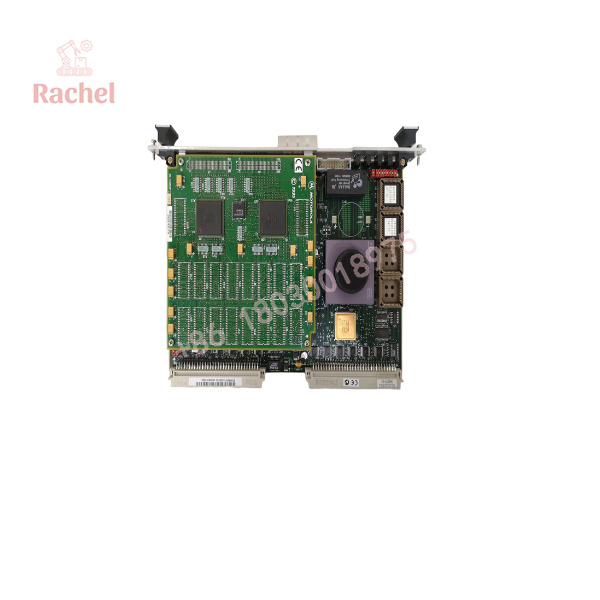
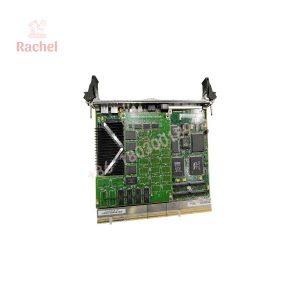
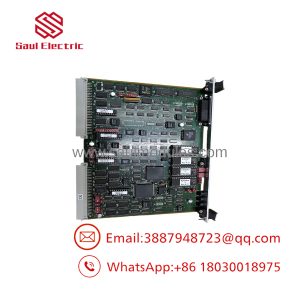
MVME167-33B
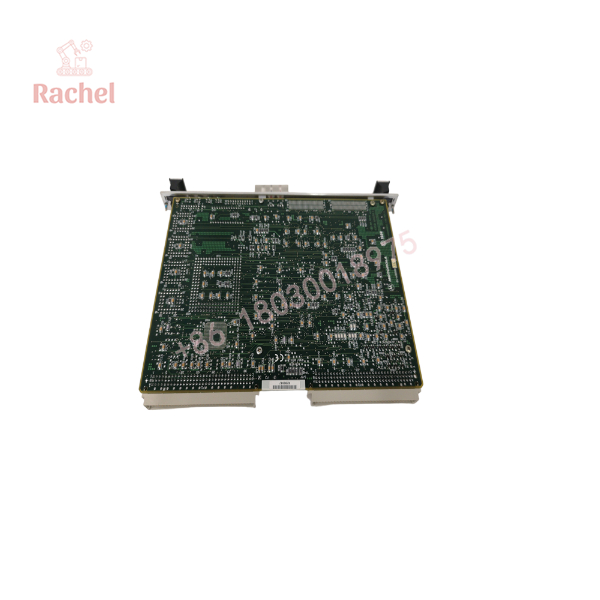
MVME167-33B
Field Application & The “Trench” Experience”
A factory automation integrator supported a decades-old automated inspection machine used for precision component testing. The machine controller relied on a VME rack containing multiple custom interface cards and a Motorola MVME167-33B processor board.
After years of continuous operation, the system began showing random boot failures. The plant considered replacing the complete controller architecture, but the qualification process for new hardware would have delayed production.
A verified MVME167-33B replacement was installed. Engineers checked VME addressing, boot firmware, and communication with existing I/O cards. The inspection system returned to service without rewriting application software.
Common application scenarios include:
- Automated inspection and measurement equipment
- Industrial motion-control systems using VME I/O modules
- Defense and aerospace embedded computers
- Railway control and monitoring systems
- Laboratory automation platforms
Transparency SOP: QA & Testing
A legacy VME processor board requires detailed verification before being used as a production spare.
Testing workflow:
- Board verification
- Confirm MVME167-33B identification.
- Record board revision and assembly details.
- Check firmware and option markings.
- Physical inspection
- Inspect PCB traces and components.
- Check VME connectors for wear or oxidation.
- Examine memory modules and socketed devices.
- Functional evaluation
- Boot test using compatible VME chassis.
- Verify processor operation.
- Confirm memory detection.
- Test VME bus communication.
- Check serial interfaces where applicable.
For New Surplus units, inspection focuses on authenticity, storage condition, and original labeling. Refurbished units should include cleaning, testing records, and warranty coverage.
The Veteran’s Tech Trap Guide
⚠️ Trap 1: Assuming all MVME167 boards are interchangeable
The MVME167 family includes different processor speeds, memory options, and firmware configurations.
PRO TIP: The suffix matters. A 33B version should be matched carefully against the original installation.
⚠️ Trap 2: Forgetting boot ROM compatibility
Many VME systems rely on specific firmware versions for startup behavior.
Before replacement, capture:
- Boot ROM version
- Startup messages
- System configuration parameters
⚠️ Trap 3: Overlooking VME timing dependencies
Older systems may depend on specific bus timing characteristics. A replacement board should be tested with the actual backplane and connected modules whenever possible.
Dynamic FAQ
Q1. What is the Motorola MVME167-33B?
The MVME167-33B is a Motorola 6U VMEbus single-board computer equipped with a 33 MHz MC68040 processor for embedded control applications.
Q2. Is the MVME167-33B still manufactured?
No. The MVME167-33B is a legacy VME product. Availability is typically through industrial surplus and refurbished spare-part channels.
Q3. Can an MVME167-33B replace another MVME167 model?
Only after checking processor speed, memory configuration, firmware revision, and application requirements. Physical compatibility alone does not guarantee system compatibility.
Q4. What should be checked before purchasing a replacement MVME167-33B?
Recommended checks include:
- Exact model number
- Board revision
- Memory size
- Firmware version
- Existing VME system configuration
Q5. How should refurbished MVME167-33B boards be tested?
Testing should include power-up verification, processor initialization, memory checks, VME bus communication, and inspection of onboard interfaces.
Q6. Why are MVME167-33B boards still required?
Many industrial and specialized systems were engineered around VMEbus technology with long service lifecycles. Maintaining compatible processor boards helps avoid expensive redesign projects and production interruptions.

 Start Chat


