





Description
Product Introduction
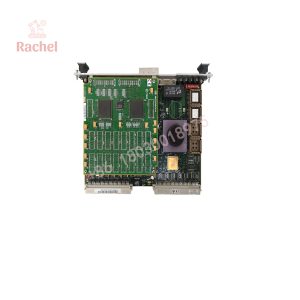
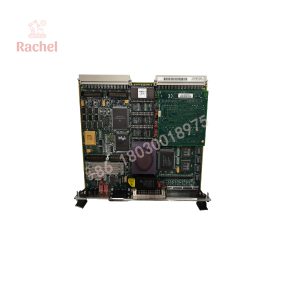
The Motorola MVME5100-0161 represents the apex of 6U VMEbus computing, built around the powerful PowerPC processor architecture integrated with Motorola’s high-bandwidth bus switching topologies. It serves as the primary processing engine in critical defense systems, power automation grids, and high-speed manufacturing lines requiring deterministic processing power paired with robust I/O handling.
By leveraging the Hawk/Harrier system memory controller and the Tundra Universe II VME ASIC, the MVME5100-0161 eliminates local bus bottlenecks between processor memory, PMC expansion modules, and the VME backplane. This architecture provides maximum throughput for real-time operating systems such as VxWorks, LynxOS, and RTEMS, ensuring that complex automation logic executes without latency or register starvation under heavy system loads.
Key Technical Specifications
| Parameter | Specification Value |
| Processor | PowerPC 750 / MPC7410 (depending on sub-rev board spec) |
| System Memory | 512 MB ECC SDRAM onboard |
| Flash Memory | Onboard Flash memory for firmware/bootloader routines |
| Form Factor | 6U Single-Slot VMEbus (VME64 / VME64x compliant) |
| VME Controller | Tundra Universe II ASIC (VMEbus Master/Slave, DMA capability) |
| Mezzanine Expansion | 2 x IEEE 1386.1 PMC slots (supports 33/66MHz PCI PMC cards) |
| Network Interfaces | Dual 10/100Base-TX Ethernet ports |
| Serial Connectivity | 2 x RS-232 serial channels (front panel or P2 backplane routed) |
| NVRAM / RTC | Battery-backed NVRAM with integrated Real-Time Clock |
| Operating Temp | 0°C to +55°C (Standard industrial grade cooling) |
Application Scenarios & The “Trench” Experience
Picture this: It’s 3:00 AM on a holiday weekend. An automated power generation station suffers an unrecoverable CPU failure in its primary SCADA synchronization node. The MVME5100 board running the real-time grid balance software drops off the VME bus, triggering a protective cascade shutdown across two turbine units. Every hour the plant stays offline incurs massive utility penalties. Replacing the processor board with an exact matching revision is mandatory to avoid spending days compiling new drivers or modifying hardware board support packages (BSPs).
To be honest, situations like this are why maintaining direct hardware replacements for legacy VME platforms is vital. Dropping in a fully bench-tested card allows engineers to restore system communications in under an hour.
- Defense & Avionics: Mission-critical radar target tracking, flight control signal processing, and naval combat system integration under VxWorks RTOS.
- Power Generation & Grids: Real-time generator synchronization, load shedding control, and protective relay telemetry processing.
- Medical & Imaging Systems: High-throughput data acquisition and image processing engines in legacy MRI and industrial CT scan rigs.
- Heavy Manufacturing: High-speed motion control loops across multi-axis metal forging, stamping, and continuous casting plants.
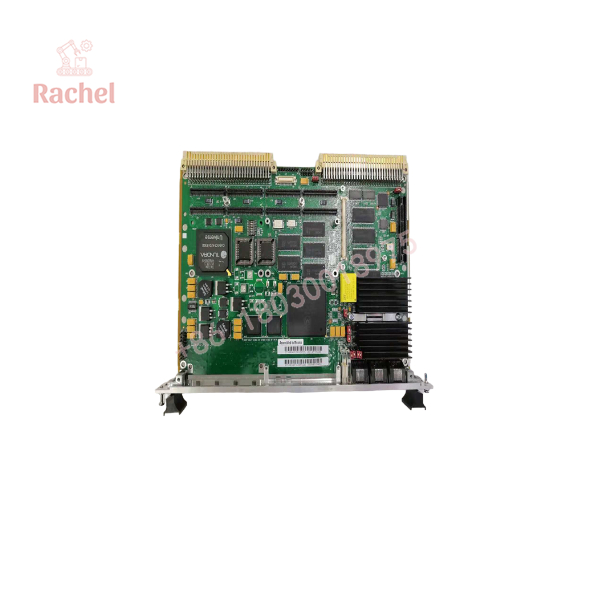
MVME5100-0161
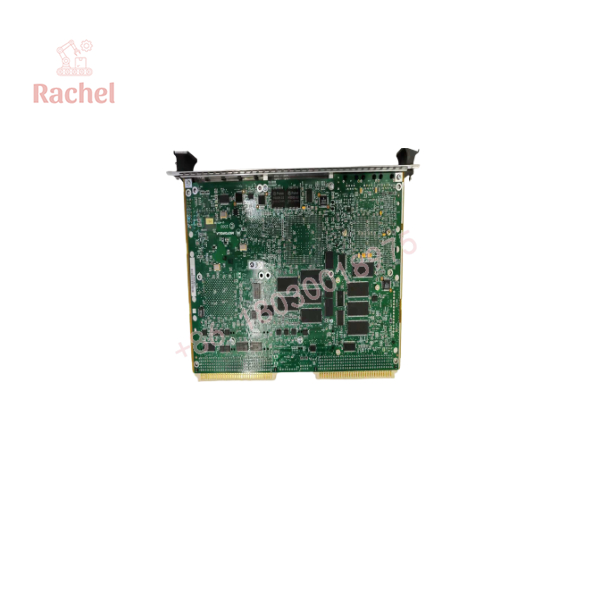
MVME5100-0161
Transparency SOP: Quality Assurance & Testing
We don’t just ship boxes; we test them on actual 6U VMEbus chassis setups. Every MVME5100-0161 module undergoes a rigorous 5-step engineering verification process:
- Inbound Visual & Pin Integrity Check: Complete microscopic inspection of the P1/P2 DIN backplane connectors for pin alignment, solder cracks, or contact corrosion.
- Voltage & Power-Up Diagnostics: Installation into a regulated 6U VME enclosure to verify power rails (5V, 3.3V, ±12V) and inspect hardware status LEDs during boot startup.
- PPCBug / MOTLoad & RAM Stress Testing: Booting into firmware monitor mode to run exhaustive 4-hour ECC SDRAM pattern tests and L1/L2 cache integrity loops.
- I/O & PMC Slot Functional Verification: Testing dual Ethernet throughput, serial loopback responses, and installing PMC interface test cards to verify PCI bus arbitration.
- Clear Backplane Logs & ESD Sealing: Clearing diagnostic logs, restoring factory boot parameters, and sealing the card in anti-static ESD shielding wrap with custom foam casing.
The Veteran’s Tech Trap Guide (Crucial Value-Add)
When installing or replacing an MVME5100-0161 in the field, watch out for these critical hardware pitfalls:
- ⚠️ P2 Backplane I/O Routing Jumpers: The MVME5100 series supports flexible I/O routing. Serial and Ethernet signals can be directed either to the front panel RJ45/DB9 jacks OR routed through the P2 connector to rear transition modules (such as the MVME761 or MVME712). Verify the jumper configuration matches your cabinet wiring before applying power!
- ❗ System Controller (Slot 1) Conflicts: If this board is located in Slot 1 of your VME crate, its System Controller (SCON) circuit MUST be jumpered active to perform bus arbitration. If placed in Slot 2 or higher, SCON MUST be turned off, or the VME backplane will freeze immediately upon power-up.
- ⚠️ PMC Standoff Alignment: When transferring PMC expansion modules from your old card to the replacement board, ensure standoffs are torqued correctly and keying pins line up. Misaligned PMC connections can destroy the delicate PCI mezzanine connector pins upon initial card seating.
- ❗ Dead NVRAM Battery Issues: If your system keeps losing its IP address or boot targets after a power cycle, the onboard BBRAM/RTC battery has depleted due to age. Always verify clock/NVRAM battery state prior to commissioning.
Frequently Asked Questions (FAQ)
Q: What is the main difference between the MVME5100 and older MVME2400 boards?
A: The MVME5100 features a faster memory bus controller (Harrier/Hawk architecture), higher RAM capacities (up to 512MB+ ECC), upgraded PowerPC processors, and improved PCI-to-VME bus bridging over the MVME2400 platform.
Q: Does the MVME5100-0161 support live insertion (hot-swapping)?
A: No. Standard 6U VMEbus hardware does NOT support removal or insertion under power. Pulling or plugging this card into a live rack can burn out the Universe II ASIC or cause damaging electrical surges down the backplane lines. Always disconnect main power first.
Q: What transition module works best with the MVME5100-0161?
A: The MVME5100 series commonly pairs with the Motorola MVME761 or MVME712 transition modules mounted on the rear of the P2 backplane to break out serial, network, parallel, and SCSI connections.
Q: Why purchase refurbished surplus instead of upgrading the entire system?
A: Migrating a legacy VME system to modern IPCs often requires millions in re-engineering costs, software recertification, and extensive downtime. Replacing a failed MVME5100 card with a pre-tested surplus unit keeps existing plant infrastructure running reliably without software changes.
Q: What warranty is provided with this unit?
A: Every MVME5100-0161 unit—whether New Surplus or OEM Refurbished—comes backed by our full 12-Month Replacement Warranty. If any component hardware failure occurs within 365 days, we replace it directly from our stock.

 Start Chat


