





Description
Product Introduction & Engineering Value
Hook option C (The Veteran’s Take): I’ve spec’d the BNC-2110 on test benches for over a decade, and it’s still the accessory I reach for when signals need to be clean and swapped fast. It breaks out AI 0–7, AO 0–1, and trigger lines from 68-pin E, M, and S Series boards to individual BNCs. One shielded box, zero wire-nut spaghetti.
It’s a passive accessory, but that’s the point. No power supply, no drivers, nothing to configure in software. Mount it on a DIN rail or sit it on the bench, run a shielded R6868/R6869 cable to your board, and your signal path stays guarded end to end. For production test stations and R&D benches alike, that simplicity earns its keep.
Technical Specifications
| Parameter | Value |
|---|---|
| DAQ connector | 68-pin male SCSI |
| BNC connector count | 15 |
| Analog inputs | AI <0..7>, differential only |
| Analog outputs | AO 0, AO 1 (+ 2 AO GND BNCs) |
| Digital I/O / trigger | 2 spring-terminal PFI lines (trigger/accessory) |
| AI signal range | ±10 V nominal (device-dependent) |
| Compatible DAQ families | NI E, M, S Series; 671x/672x/673x AO Series |
| Supported cables | SH68-68-D-R (shielded, 0.5 m to 5 m) |
| Mounting | DIN rail or desktop (benchtop) |
| Enclosure | Shielded metal housing |
| User-defined connections | 2 spring terminals for bias/guard wiring |
| Power required | None (passive accessory) |
Field Application & The “Trench” Experience
The Trench Story: A vibration lab at a mid-tier aerospace supplier called us on a Thursday with a dead test station — their old BNC-2090 had taken a dropped torque wrench to the front panel, snapping two AI jacks clean off the board. Deadline pressure was real: an actuator qualification run was booked for Monday morning. We shipped a BNC-2110 that same day. Their tech swapped the cable, re-landed their accelerometer and tach signals on the labeled BNCs, and — because the 2110 is passive — there was zero software rework. Monday’s test ran on schedule. The engineer’s only comment: “I should have standardized on these years ago.”
Niche application scenarios:
- Catalytic reformer pilot-plant thermocouple validation — comparing a reference BNC-2110 signal path against field transmitters during annual loop calibration checks.
- EV battery cycler channel breakout — routing cell-voltage sense lines and a charge/discharge trigger into an NI S Series board for high-resolution differential capture.
- Ultrasonic NDT bench wiring — bringing pulser sync and received A-scan signals from a piezo stack to shielded BNCs without ground-loop noise on the ±10 V span.
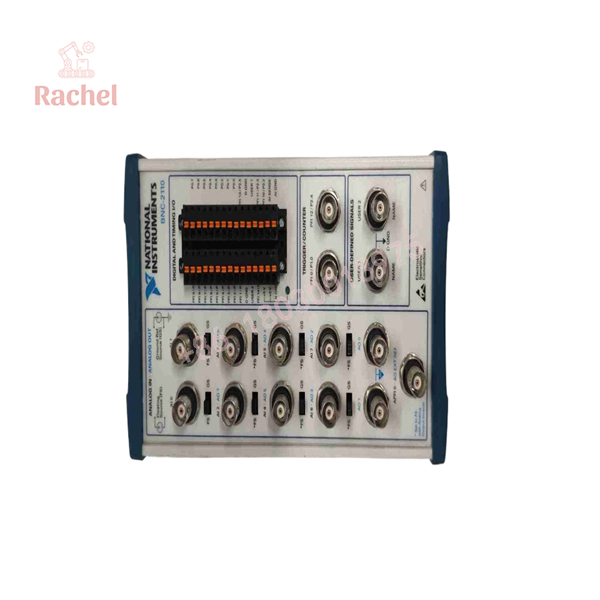
BNC-2110
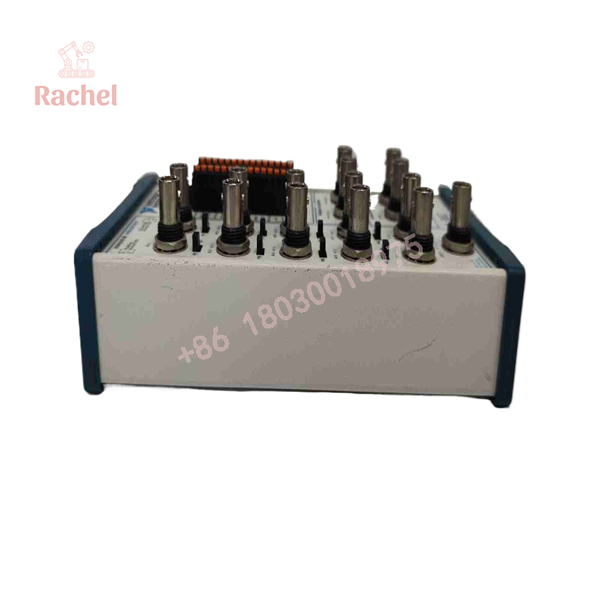
BNC-2110
Transparency SOP: QA & Testing
Every BNC-2110 we ship — New Surplus or Refurbished — clears this bench sequence before it’s listed:
- Visual & mechanical inspection — BNC jacks checked for center-pin spring tension, thread damage, and shield enclosure integrity.
- Continuity mapping — every BNC and spring terminal is tone-checked pin-for-pin against the 68-pin SCSI connector; no opens, no shorts, no swapped channels.
- Signal-path verification — a known sine and DC reference is passed through each AI and AO BNC and captured on a reference M Series device to confirm clean transmission and no intermittent contact resistance.
- Final QC sign-off — serialized inspection record packed with the unit, plus a functional guarantee on arrival.
The Veteran’s Tech Trap Guide
⚠️ Differential only. No exceptions. The BNC-2110’s AI BNCs are wired for differential measurements, period. If you try to force a single-ended signal in without a bias path, you’ll chase phantom offsets and drifting readings for hours. Use the spring terminals to properly bias floating sources.
⚠️ Cable compatibility is not optional. You must use a shielded 68-pin cable like the SH68-68-D-R. A cheap unshielded ribbon through a motor-laden plant floor will turn your ±10 V measurements into an antenna farm.
PRO TIP: On NI 6723 devices, do NOT connect the BNC-2110 to the AO 8–31 connector — it’s a documented incompatibility. And on 6224/6229/6254/6259/6284/6289 units using Connector 1, note that the AI <0..7> BNC mapping shifts. Label your setup before you trust your first reading.
PRO TIP: Spring terminals loosen after years of re-termination. A used unit with “working” BNCs but loose spring-clip clamping will bite you on trigger lines. Test before install — our units already are.
Dynamic FAQ
Q1: Is the BNC-2110 compatible with my NI PCIe-6251?
Yes — the PCIe-6251 is an M Series device with a 68-pin connector and is fully supported. It also works with E Series (e.g., PCI-6035E), S Series, and the 671x/672x/673x analog output families.
Q2: Can I use it for single-ended analog inputs?
No. The AI BNCs are differential-only by design. For single-ended or higher-channel-count routing, look at the BNC-2090A instead.
Q3: Do I need to install any driver or software for the accessory itself?
No. It’s a completely passive breakout. Your DAQ device’s existing NI-DAQmx or Traditional NI-DAQ installation handles everything; the 2110 adds no software layer.
Q4: What does “New Surplus” mean for this unit, and how can I trust it?
New Surplus means original NI manufacturing, never placed into field service — typically excess factory or distributor stock. Ours pass the full continuity and signal-path bench sequence in Section 6 before shipping, and come with a serialized inspection record.
Q5: What warranty do you offer?
Both New Surplus and Refurbished units carry our standard warranty covering full functionality and DOA replacement. Contact the sales desk for current term lengths on this SKU.
Q6: Which cable do I need, and do you stock it?
The SH68-68-D-R shielded cable (0.5 m, 1 m, 2 m, and 5 m lengths). We stock common lengths — order it with the block so you’re not bench-down waiting on a cable.

 Start Chat


