





Description
Product Introduction
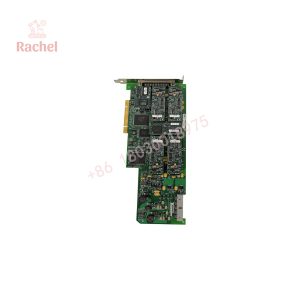
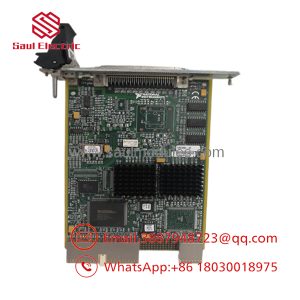
The National Instruments PXI-6115 is a simultaneous-sampling multifunction DAQ module designed for applications that require synchronized analog inputs, analog outputs, digital I/O, and hardware timing within a PXI instrumentation system. It is widely deployed in automated test equipment (ATE), radar, sonar, ultrasonic inspection, automotive validation, and high-speed laboratory measurements.
Unlike multiplexed DAQ boards, every analog input channel on the PXI-6115 samples at the same instant. That matters when measuring phase relationships, transient events, vibration, or multi-channel waveform timing. In our field experience, replacing a simultaneous-sampling board with a lower-cost multiplexed alternative often introduces timing errors that are difficult to diagnose later.
Key Technical Specifications
| Parameter | Value |
|---|---|
| Manufacturer | National Instruments |
| Model | PXI-6115 |
| Product Type | PXI Multifunction DAQ Module |
| Bus Interface | PXI |
| Analog Inputs | 4 simultaneous channels |
| ADC Resolution | 12-bit |
| Maximum Sampling Rate | 10 MS/s per channel |
| Analog Outputs | 2 channels |
| Digital I/O | 8 lines |
| Counter/Timers | 2 × 24-bit |
| Trigger Support | Digital Trigger, PXI Trigger Bus, Star Trigger |
| Analog Input Connector | 68-pin SCSI-II |
| Maximum Working Voltage | 42 V (Measurement Category I) |
| Operating Temperature | 0°C to +50°C |
Application Scenarios & The “Trench” Experience
Everything looks synchronized.
Until it isn’t.
Years ago, a test stand began producing inconsistent vibration data. The sensors checked out. The amplifiers checked out. Even the timing controller passed diagnostics.
The problem turned out to be an engineer replacing a simultaneous-sampling DAQ with a multiplexed acquisition board during an emergency repair.
The measurements were accurate.
The timing wasn’t.
That difference invalidated weeks of test data.
Typical Applications
Automotive Testing – Engine and Powertrain Validation –
Captures synchronized pressure, vibration, and actuator signals during transient engine events.
Radar Systems – Pulse Analysis –
Measures multiple high-speed analog channels simultaneously to preserve waveform timing.
Ultrasonic Inspection – Multi-Channel Signal Acquisition –
Acquires synchronized ultrasonic echo signals for defect analysis.
Research Laboratories – High-Speed Experiments –
Records synchronized analog waveforms for physics, materials, and electronics research.
Industrial Automation – Hardware-in-the-Loop (HIL) Testing –
Combines analog input, analog output, digital I/O, and hardware triggering in one PXI platform.
Field Replacement Example
An aerospace laboratory reported timing drift between four sensor channels after replacing a failed DAQ board with another model.
Every voltage measurement was within tolerance.
Only after reviewing the hardware architecture did engineers realize the replacement board used multiplexed sampling instead of simultaneous acquisition.
Installing the correct PXI-6115 restored channel synchronization immediately.
Sometimes the hardware specification matters more than the measured value.
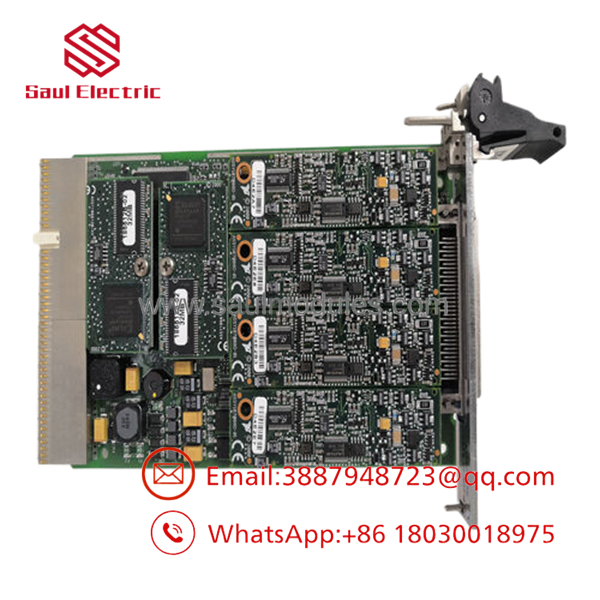
- PXI-6115
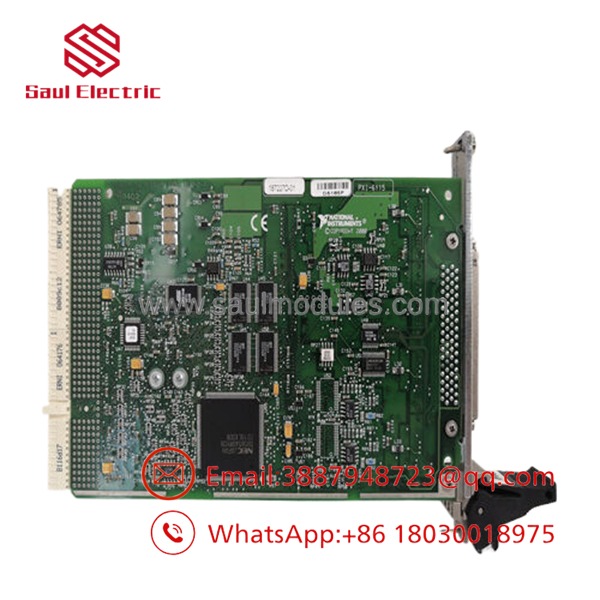
- PXI-6115
Transparency SOP: Quality Assurance & Testing
We don’t just ship boxes; we test them in an operational NI PXI chassis.
1. Inbound Inspection
- Verify NI product labels and serial numbers.
- Inspect the 68-pin SCSI connector for bent or damaged pins.
- Check PCB integrity and shielding.
- Screen for unauthorized repairs.
2. Live Rig Testing
- Install the module in a compatible PXI chassis.
- Verify recognition in NI MAX.
- Test all analog inputs and outputs.
- Verify digital I/O and hardware triggering.
- Confirm counter operation.
3. Electrical Parameter Checks
- Measure analog input accuracy.
- Verify simultaneous sampling across all four channels.
- Test analog output waveform generation.
- Confirm digital timing integrity.
4. Firmware & Driver Verification
- Verify compatibility with supported NI-DAQmx releases.
- Record hardware revision.
- Confirm successful self-test before shipment.
5. Final QC & Anti-Static Packaging
- Complete functional verification.
- Package using ESD-safe materials.
- Protect the SCSI connector during shipping.
- Include test documentation upon request.
The Veteran’s Tech Trap Guide
⚠️ Don’t substitute a multiplexed DAQ for a simultaneous-sampling board.
The voltage readings may appear correct, but channel-to-channel timing errors can invalidate vibration, acoustic, or transient measurements.
❗ Verify NI-DAQmx compatibility before installing.
Older PXI systems often depend on specific driver revisions. Updating the driver without checking software compatibility can break existing LabVIEW or TestStand applications.
⚠️ Inspect the 68-pin connector carefully.
Bent SCSI-II pins are a common source of intermittent analog channel failures.
❗ Watch the chassis power budget.
The draws significant current from the PXI backplane. Verify chassis capacity before adding multiple high-speed acquisition cards.
⚠️ Plan for obsolescence.
NI has discontinued the and recommends the PXIe-6386 for new designs. For long-life production systems, maintaining tested spare modules is often less disruptive than redesigning validated test software.
Frequently Asked Questions (FAQ)
Q1: What makes the different from standard DAQ boards?
A: The uses simultaneous sampling on all four analog input channels, allowing accurate phase and transient measurements that multiplexed devices cannot provide.
Q2: Is the still manufactured?
A: No. National Instruments has discontinued the . The recommended migration product is the PXIe-6386.
Q3: Which software supports the ?
A: The module is supported by NI-DAQmx and integrates with LabVIEW, LabWindows/CVI, TestStand, and other NI-supported development environments.
Q4: Can the analog input, analog output, and digital I/O operate synchronously?
A: Yes. The is specifically designed for synchronized stimulus/response applications where analog input, analog output, digital I/O, and triggering share common timing resources.
Q5: Is this module suitable for new system designs?
A: For brand-new projects, migrating to current PXIe hardware is generally the better choice. The remains an excellent option for maintaining validated legacy PXI systems where software compatibility and repeatable measurements are more important than adopting new hardware.
Q6: Why are surplus modules less expensive than buying directly from the OEM?
A: Most surplus inventory comes from laboratory upgrades, ATE modernization projects, or unused maintenance stock. Lower pricing reflects sourcing rather than performance. Live functional testing and traceability are the important quality indicators.
Q7: What warranty is typically available?
A: Most reputable industrial automation and test-equipment suppliers provide a 12-month warranty for professionally tested surplus or refurbished modules. Before purchasing, request a self-test report, NI MAX detection results, and hardware revision information.

 Start Chat


