





Description
Product Introduction
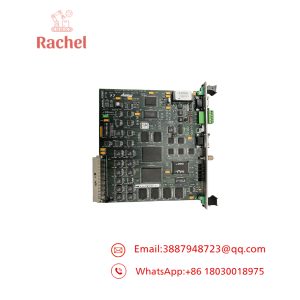
The OKOS AL8XGTE-3 is a high-speed PCI Express digitizer board built for ultrasonic testing, acoustic microscopy, and fast transient capture. It converts high-frequency analog waveforms into 8-bit digital data at sampling rates from 250 kS/s up to 3 GS/s, then transfers records to the host PC through PCIe DMA.
Unlike a general-purpose DAQ card, it is optimized for high-repetition-rate ultrasonic acquisition. Its DC-coupled, 50-ohm input, greater-than-1 GHz bandwidth, onboard buffer memory, and encoder/TTL/software triggering make it suitable for C-scan and scanning acoustic microscope (SAM) systems.
Key Technical Specifications
| Parameter | Value |
|---|---|
| Manufacturer | OKOS / Acquisition Logic |
| Model | AL8XGTE-3 |
| Product type | High-speed PCI Express digitizer / A/D acquisition card |
| Resolution | 8 bits |
| Sampling rate | 250 kS/s to 3 GS/s |
| Channel configuration | One channel at 3 GS/s, or two channels at 1.5 GS/s per channel |
| Interleaved mode | Two ADCs on one channel for 2 or 3 GS/s effective sampling |
| Analog bandwidth | Greater than 1 GHz |
| Input coupling / impedance | DC-coupled, 50-ohm terminated |
| Input range | 125 mVp-p to 2 Vp-p, programmable |
| Onboard memory | 512 Msample to 2 Gsample options; one source cites up to 4 Gsample |
| Bus interface | PCI Express x1 |
| Data transfer | PCIe DMA; acquisition can continue during host readout |
| Trigger sources | Software, BNC external, quadrature encoder, internal TTL |
| Card dimensions | 4.25 x 9.375 inches, single PCIe slot |
| Power requirements | +5 V at 3.5 A; +3.3 V at 2.4 A; +12 V at 0.01 A; -12 V at 0.01 A |
| Operating temperature | 0 to 55 °C |
| Storage temperature | -20 to 70 °C |
| Weight | 210 g |
| Software | Oscilloscope program, drivers, and SDK for C/C++, C#, VB, and LabVIEW |
Application Scenarios & The “Trench” Experience
A scanning acoustic microscope starts producing noisy C-scan images. The mechanical scanner moves correctly, but every waveform looks clipped or unstable. Technicians often suspect the transducer or pulser first. In reality, a marginal PCIe digitizer input stage, bad BNC ground, or an incompatible host PCIe slot can degrade the entire acquisition chain.
- Semiconductor failure analysis – Scanning acoustic microscopy (SAM) for die attach, voids, delamination, and package inspection – Required because the card captures high-frequency ultrasonic return signals with high repetition rate and precise triggering.
- Non-destructive testing – Ultrasonic flaw detection and thickness measurement – Required for its >1 GHz bandwidth, 50-ohm input, and 8-bit high-speed digitization.
- Electronics manufacturing – C-scan inspection of PCBs, BGAs, and molded packages – Required for encoder-synchronized acquisition and repeatable scan imaging.
- Research laboratories – High-speed transient waveform capture – Required for 3 GS/s sampling, pre/post-trigger records, and PCIe DMA transfer.
- Legacy OKOS system repair – Replacement of a failed AL8xGTE-3 in an existing SAM or NDT workstation – Required because the original acquisition software, trigger chain, and PCIe integration depend on this board family.
Field case study: A semiconductor lab’s SAM system began intermittently losing waveform records during full-wafer scans. The scanner and transducer tested normal. The issue was traced to a marginal PCIe x1 slot and an unseated card retention bracket; reseating the AL8XGTE-3 and moving it to a verified slot restored stable acquisition. Before replacing a five-figure ultrasonic digitizer, check the host slot, grounding, and cable shield first.
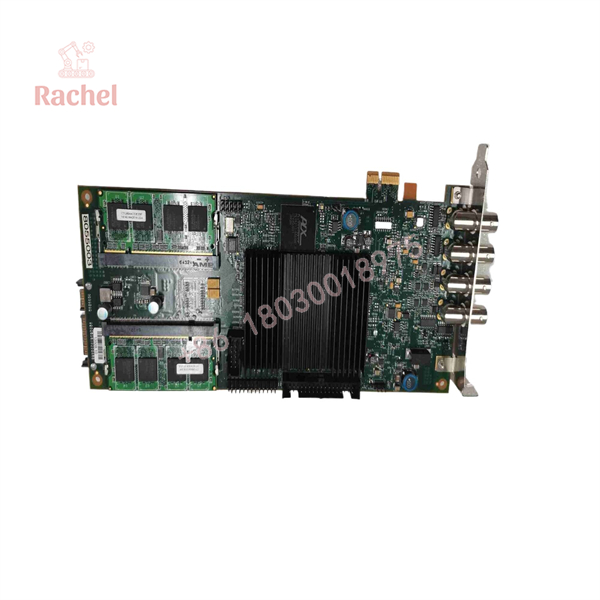
AL8XGTE-3
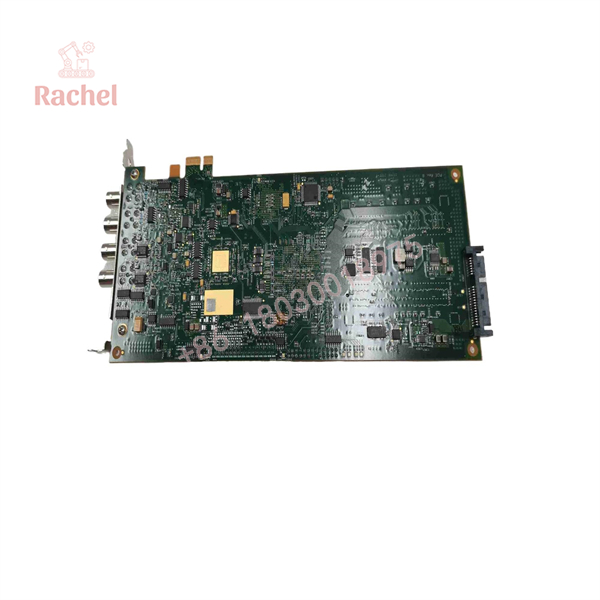
AL8XGTE-3
Transparency SOP: Quality Assurance & Testing
We don’t just ship boxes; we test them in a compatible PCIe host and OKOS acquisition environment where available.
- Inbound inspection: Verify model marking, PCIe edge condition, BNC/SMA connector condition, PCB damage, and evidence of prior repair or component replacement.
- Anti-counterfeit check: Compare silkscreen, component placement, PCB construction, and label format against known OKOS/Acquisition Logic boards.
- Live rig testing: Install in a compatible PCIe x1 host, load drivers, and confirm enumeration and stable DMA transfer.
- Signal-path testing: Apply a calibrated high-frequency test signal; verify amplitude linearity across the 125 mVp-p to 2 Vp-p range and check for clipping, noise, or missing codes.
- Sampling verification: Confirm 1, 1.5, 2, and 3 GS/s acquisition modes where the board configuration supports them.
- Trigger verification: Exercise software, external BNC, TTL, and encoder-trigger modes; confirm pre-trigger and post-trigger record capture.
- Memory and transfer testing: Run repeated acquisition/readout cycles to detect buffer-memory faults or PCIe transfer instability.
- Final QC and packaging: Record test results, protect the PCIe edge and RF connectors, and ship in anti-static packaging.
The Veteran’s Tech Trap Guide
- ⚠️ Do not assume every PCIe slot will work. This is a PCIe x1 card, but older industrial PCs can have marginal slot power, poor grounding, or BIOS compatibility issues. Test in the intended host before deploying it in a production SAM system.
- ❗ Check the 50-ohm termination and cable shield. A damaged coax, poor BNC ground, or unterminated input can create ringing and false echoes that look like a digitizer fault.
- ⚠️ Do not exceed the input range. The programmable range is 125 mVp-p to 2 Vp-p; an overdriven pulser output can clip the ADC and corrupt the measurement.
- ❗ Confirm the exact memory option. Suppliers describe 512 Msample, 2 Gsample, and up to 4 Gsample configurations. The onboard buffer size affects long records and continuous acquisition behavior, so verify the installed configuration—not just the model number.
- ⚠️ Use ESD precautions. This is a high-speed analog/digital PCB. A grounded wrist strap, anti-static bag, and protected PCIe edge handling are mandatory.
Frequently Asked Questions
Q: Is the AL8XGTE-3 hot-swappable?
A: No. Power down the PC, disconnect external signal sources, and follow proper ESD procedures before removing or installing the PCIe card.
Q: Can it acquire two channels at 3 GS/s each?
A: No. The board supports one channel at 3 GS/s or two channels at 1.5 GS/s per channel. It can also interleave both ADCs on one channel to reach 2 or 3 GS/s effective sampling.
Q: Does it work with LabVIEW?
A: Yes. OKOS documentation and supplier listings identify SDK support for C/C++, C#, VB, and LabVIEW, along with an included oscilloscope evaluation program.
Q: Can it replace an AL8xGTE-1?
A: Not automatically. Both are OKOS PCIe digitizers, but the -3 version supports higher effective sampling rates and may differ in channel configuration or memory option. Match the exact model and host software configuration before substitution.
Q: Does it support encoder-triggered scanning?
A: Yes. Acquisition can be triggered by software, BNC input, quadrature encoder input, or internal TTL signals, which is important for C-scan and SAM applications.
Q: Why is surplus stock cheaper than a new OEM card?
A: Surplus suppliers source retired instruments, decommissioned SAM systems, and excess inventory. The lower price reflects limited availability and variable cosmetic condition—not necessarily poor electrical performance, provided the board passes PCIe enumeration, DMA, trigger, and calibrated signal tests.
Q: What warranty should I expect?
A: For a tested refurbished or surplus card, 12 months is a reasonable baseline. Confirm whether it covers functional failure only, and whether it excludes damage from overvoltage, ESD, or installation in an incompatible host.

 Start Chat


