





Description
Product Introduction & Engineering Value
The Pilz DI808 should be handled as a model-specific legacy automation component rather than identified from the short designation alone. Without the complete Pilz article number or nameplate information, assigning a voltage, channel count, safety category, or communications protocol would be speculative.
For replacement procurement, the practical priority is identification. Record the complete label, hardware revision, installed controller, adjacent modules, terminal arrangement, and wiring before selecting a spare. This is especially important when the module participates in a safety-related control circuit.
Technical Specifications
| Parameter | Specification / Status |
|---|---|
| Manufacturer | Pilz |
| Model | DI808 |
| Product Type | Digital/control module |
| Safety Function | Verify |
| Controller Family | Verify |
| Number of Inputs | Verify |
| Input Voltage | Verify |
| Input Current | Verify |
| Output Configuration | Verify |
| Communication Interface | Verify |
| Backplane/System Bus | Verify |
| Terminal Type | Verify |
| Mounting Method | Verify |
| Hardware Revision | Critical — verify |
| Firmware | Verify |
| Certification | Verify exact variant |
Engineering Qualification
I would not publish numerical electrical specifications for Pilz DI808 without the complete part number. In safety automation, an incorrect input voltage or safety classification is not a harmless catalog error; it can result in an incorrect replacement being installed in a safety circuit.
Field Application & the “Trench” Experience
A production machine develops a safety-related input fault. The maintenance technician finds a Pilz module marked DI808 and checks the spare cabinet.
There are several Pilz modules with similar housings. One has a similar connector and appears to fit the rack. The engineer stops the replacement.
First, the team records the complete article number and hardware revision. Then they document which emergency-stop, guard-door, light-curtain, or other safety-device circuits are connected to the module. Only after those details are confirmed is the replacement approved.
The lesson is simple: in safety control, mechanical fit is not compatibility.
Potential application areas should be confirmed from the exact Pilz system, but relevant scenarios may include:
- Safety interlock monitoring
- Guard-door status acquisition
- Emergency-stop circuit monitoring
- Machine safety input circuits
- Safety-related industrial automation cabinets
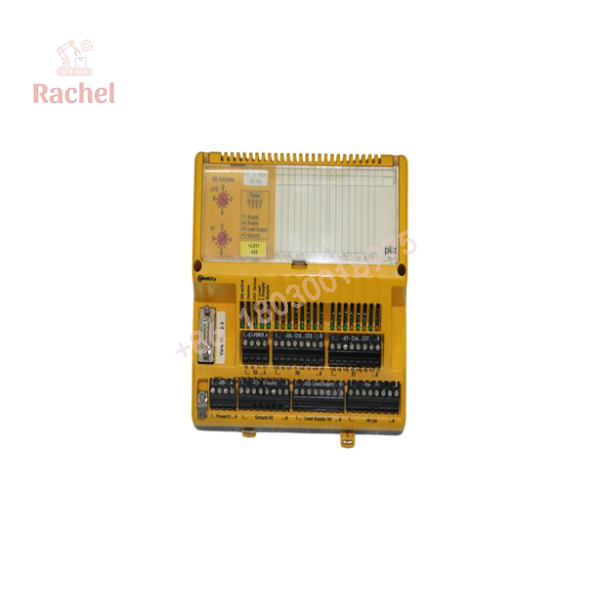
DI808
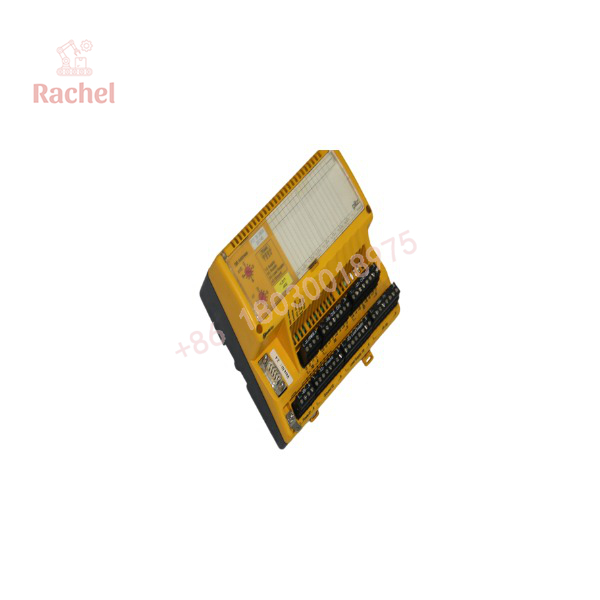
DI808
Transparency SOP: QA & Testing
For New Surplus or Refurbished Pilz DI808 inventory, testing should be more rigorous than a standard PLC I/O card.
Identification
- Verify the complete Pilz part number.
- Record hardware revision and serial/date information.
- Photograph all connectors and terminal markings.
- Confirm the associated Pilz controller/system.
Inspection
- Check housing and terminal blocks for damage.
- Inspect connectors and contacts.
- Examine the PCB for contamination, corrosion, or overheating.
- Confirm any configuration switches or removable terminals.
Functional testing
- Install the module in the correct Pilz test environment.
- Verify controller recognition and diagnostics.
- Exercise each applicable input channel.
- Confirm expected status indication.
- Verify system communication.
- Where the module is safety-related, perform the manufacturer’s specified safety validation procedure.
Critical distinction: A module that powers up successfully is not automatically safety-function tested.
The Veteran’s Tech Trap Guide
⚠️ Do not assign a Safety Integrity Level from the model name.
A short designation such as DI808 does not establish whether a particular hardware revision is suitable for a safety function. Confirm the exact Pilz documentation and certification data.
PRO TIP: When requesting a replacement, provide the supplier with a photograph showing the entire Pilz label, not just “DI808.”
⚠️ Do not substitute a standard digital I/O module for a safety module.
If the original device is part of a safety function, the replacement must satisfy the applicable safety architecture, diagnostics, and certification requirements.
⚠️ Record the original wiring.
Before removing the module, document every terminal and connected safety device. This is particularly important when several normally closed safety circuits are wired in series.
⚠️ Don’t rely on a generic “Pilz compatible” claim.
For safety-related equipment, compatibility should be established from the exact Pilz system documentation and hardware article number.
Dynamic FAQ
Q1. What is the Pilz DI808?
is a Pilz industrial automation module designation, but the available public information is insufficient to establish its exact product family and safety function with confidence.
Q2. Is Pilz DI808 a safety input module?
That should not be assumed from the Pilz brand or DI designation alone. Verify the complete article number and applicable Pilz safety documentation before using it in a safety circuit.
Q3. What voltage does DI808 use?
The exact input/supply voltage should be confirmed from the physical nameplate or official Pilz documentation. I would not infer it from “DI808.”
Q4. Can another Pilz digital-input module replace DI808?
Not automatically. Check controller compatibility, terminal arrangement, input characteristics, diagnostic behavior, firmware/hardware revision, and—if safety-related—the applicable safety certification and architecture.
Q5. How should New Surplus DI808 stock be authenticated?
Request photographs of the actual unit showing the Pilz logo, complete article number, hardware revision, serial/date information, connectors, and original packaging. For a safety application, also request documentation identifying the tested safety function.
Q6. What warranty should I request?
For refurbished inventory, request written coverage for the specific input channels and functions tested. If the supplier has not performed a safety-system test, the warranty should not imply that the module has been safety-validated.
Q7. What information should I provide for a replacement quotation?
Provide the complete Pilz part number, nameplate photograph, controller/rack model, adjacent modules, terminal arrangement, and the safety function in which DI808 is installed. That information is far more useful than the short “DI808” designation alone.

 Start Chat


