





Description
3. Product Introduction & Engineering Value
Small Portescap/Escap motors like the 57M300B5A show up constantly in older instrumentation, lab equipment, and light industrial timing mechanisms — the kind of application where you need a reliable, low-torque motor spinning at a fixed, known speed rather than a full servo system.
The confirmed electrical profile here — 120 VAC, 60 Hz, 300 RPM — is exactly what you’d expect from a small AC synchronous motor, where output speed is locked directly to line frequency and pole count rather than controlled electronically. That’s a meaningfully different device from a stepper motor, which is normally DC-driven and specified by step angle and holding torque rather than a fixed RPM at line voltage. Given that some resellers list this part as a “stepper motor,” confirming which one you actually have — via nameplate, wiring, or the original equipment’s documentation — matters before you order a replacement or attempt to troubleshoot it as one type or the other.
4. Technical Specifications
Verified/consistently reported parameters:
- Input voltage: 120 VAC
- Input frequency: 60 Hz
- Rated speed: 300 RPM
- Manufacturer: Portescap (part number pattern suggests an older/legacy catalog entry, possibly predating current Portescap branding)
- Product status: Appears discontinued/legacy — sourced today via used/surplus channels
Unresolved/conflicting:
- Motor type: Listed as “stepper motor” by some resellers, but the 120V/60Hz/300RPM spec pattern is characteristic of an AC synchronous motor, not a stepper. I could not confirm which via Portescap’s current catalog nomenclature, since this part number format doesn’t match their present-day product line structure.
- Torque, physical dimensions, shaft type, mounting configuration: Not available from consistently reliable sources — request the nameplate photo or original OEM documentation for these.
5. Field Application & The “Trench” Experience
Illustrative scenario — not a specific reported incident:
A common situation with legacy motors like this: equipment needs a replacement motor, and someone orders based on a reseller listing’s category label (“stepper motor”) without verifying against the actual application. If the original device used this as a synchronous timing motor and the replacement is sourced or wired as though it were a stepper (expecting a driver circuit, step pulses, etc.), nothing will work — because the two motor types have fundamentally different control requirements. Confirming the actual motor technology against the equipment’s original documentation, rather than trusting a single reseller’s category label, avoids this entirely.
Specific application scenarios:
- Timing mechanisms in older lab or medical instrumentation, where a fixed-speed AC synchronous motor drives a chart recorder, timer, or indexing cam
- Small indexing or metering equipment in light industrial settings, where consistent, line-frequency-locked speed matters more than variable control
- Legacy OEM equipment repair, where the original manufacturer specified this exact Portescap/Escap part and no modern direct equivalent is readily documented
6. Transparency SOP: QA & Testing
Generic verification framework for a used/surplus legacy motor like this:
- Nameplate and wiring verification — confirm actual motor type (synchronous vs. stepper) against physical markings and wiring configuration before anything else, given the classification ambiguity noted above
- Visual and mechanical inspection — bearing play, shaft condition, winding lead condition
- No-load run test — confirm the motor reaches its rated 300 RPM at 120VAC/60Hz input and runs without unusual noise or vibration
- Insulation resistance test — confirm winding insulation integrity given the age of this part class
(General framework — substitute your actual documented QA process where it differs.)
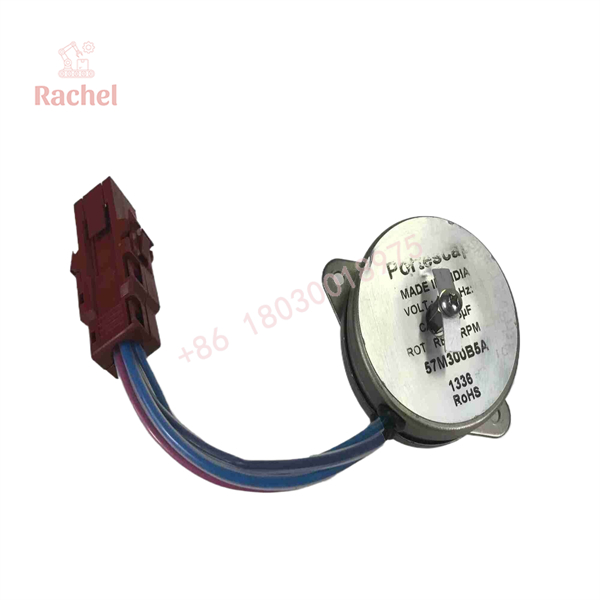
57M300B5A
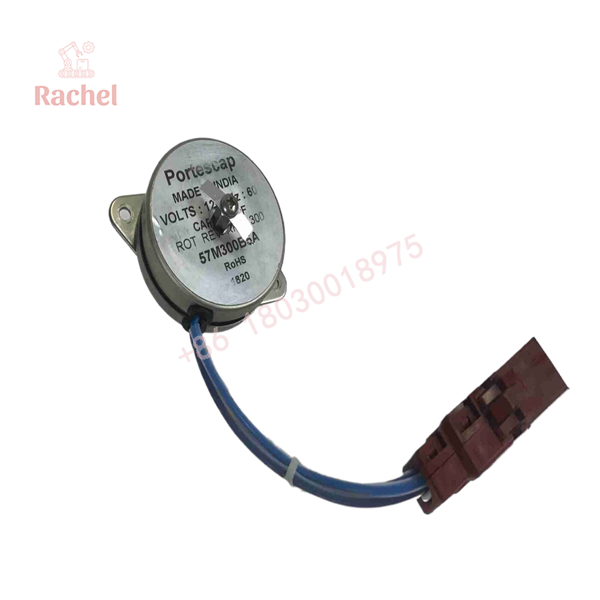
57M300B5A
7. The Veteran’s Tech Trap Guide
⚠️ Don’t trust a single reseller’s category label for legacy motors like this. “Stepper motor” and “synchronous motor” require completely different control approaches — a stepper needs a driver sending step pulses; a synchronous AC motor just needs the rated line voltage and frequency. Confirm against your equipment’s actual documentation before assuming either.
⚠️ Speed is frequency-locked if this is genuinely a synchronous motor. If you’re in a 50Hz region and need to run this motor, expect the output speed to shift proportionally (300 RPM at 60Hz would become 250 RPM at 50Hz) — this is a physical characteristic of synchronous motors, not a defect.
PRO TIP: Given how old and poorly documented this part class is, if you have the actual failed unit in hand, that’s your best source of truth — check the nameplate, count the wiring leads, and compare against the equipment’s original wiring diagram before ordering a replacement based on an online listing alone.
⚠️ “Legacy/obsolete” parts through Portescap’s own channels aren’t eligible for standard repair or spares support — per Portescap’s own guidance, motors not matching current catalog winding/execution codes are treated as proprietary or obsolete, meaning you’d need to go through the original equipment manufacturer rather than Portescap directly for support.
8. Dynamic FAQ
Q: Is this a stepper motor or a synchronous motor?
Sources conflict — the 120V/60Hz/300RPM specification pattern strongly suggests a synchronous AC motor, but some resellers list it as a stepper motor. Confirm against your equipment’s actual wiring and documentation before assuming either.
Q: What speed would this motor run at on 50Hz power?
If it is a synchronous motor as the spec pattern suggests, speed would scale down proportionally with frequency — but confirm this against actual motor type first, since a stepper motor’s speed isn’t determined by line frequency at all.
Q: Is this part still available new from Portescap?
No clear evidence of current availability — this appears to be a legacy/discontinued part number, sourced today primarily through used and surplus channels.
Q: Can Portescap repair or provide spares for this motor?
Only if it matches their current catalog winding and execution codes — per their own guidance, parts that don’t match are treated as proprietary/obsolete, requiring you to contact the original equipment manufacturer instead.
Q: What warranty applies to used stock of this part?
Varies by seller — confirm the specific term at time of purchase, since this is old, low-documentation surplus stock.

 Start Chat


