





Description
Product Introduction & Engineering Value
The R. STAHL 947022-16-11 is built for discrete signal acquisition where the field circuits must remain intrinsically safe. Its 16 Ex i channels accept volt-free contacts and NAMUR proximity switches, while each input can be monitored for open-circuit and short-circuit conditions. Channels 14 and 15 add frequency or pulse-counting capability up to 20 kHz.
This is an IS1 remote I/O module, not a generic 24 VDC digital input card. It interfaces with the IS1 BusRail and is intended for hazardous-area instrumentation architectures. The complete module designation should therefore be matched before replacement.
Technical Specifications
| Parameter | Specification |
|---|---|
| Manufacturer | R. STAHL |
| Series | 9470/22 |
| System | IS1 Remote I/O |
| Part Number | 9470/22-16-11 |
| Common Ordering Format | 947022-16-11 |
| Article Number | 168682 |
| Module Type | Digital Input Module NAMUR |
| Number of Channels | 16 |
| Input Type | Volt-free contacts / NAMUR proximity switches |
| Input Protection | Ex ia IIC intrinsically safe |
| Signal Diagnostics | Open-circuit and short-circuit monitoring |
| Frequency / Counter Channels | Channels 14 and 15 |
| Maximum Frequency | 20 kHz |
| Ambient Temperature | -20 °C to +65 °C |
| Weight | 316 g |
R. STAHL specifies a maximum input voltage of 11.6 V, maximum current of 22 mA, and maximum power of 51 mW for the intrinsically safe input circuit. The current product sheet lists explosion-protection application across Zones 1, 2, 21, and 22, subject to the applicable installation requirements.
The older technical documentation additionally identifies galvanic isolation between the inputs and system and a redundant interface to the BusRail.
Field Application & the “Trench” Experience
A common failure scenario is a process unit where one or more NAMUR proximity switches stop appearing correctly at the control system. The temptation is to troubleshoot the PLC immediately. An experienced technician starts closer to the field: check the sensor loop, inspect the wiring, review the module diagnostics, and determine whether the fault is isolated to one channel or follows the module.
With the 9470/22-16-11, the diagnostic architecture is useful because each input circuit can be monitored for open-circuit and short-circuit conditions. If the application uses speed or pulse monitoring, channels 14 and 15 can also be configured for frequency measurement or pulse counting up to 20 kHz.
Specific application scenarios
- Rotating equipment speed monitoring: using a NAMUR proximity sensor with channel 14 or 15 as a frequency input.
- Valve position feedback: collecting discrete NAMUR proximity-switch signals from pneumatically actuated valves in a classified process area.
- Tank and reactor instrumentation: monitoring multiple discrete field contacts through an IS1 remote I/O station while maintaining intrinsically safe field circuits.
- Conveyor pulse detection: using the counter function on channels 14 or 15 instead of treating the signal as a conventional discrete input.
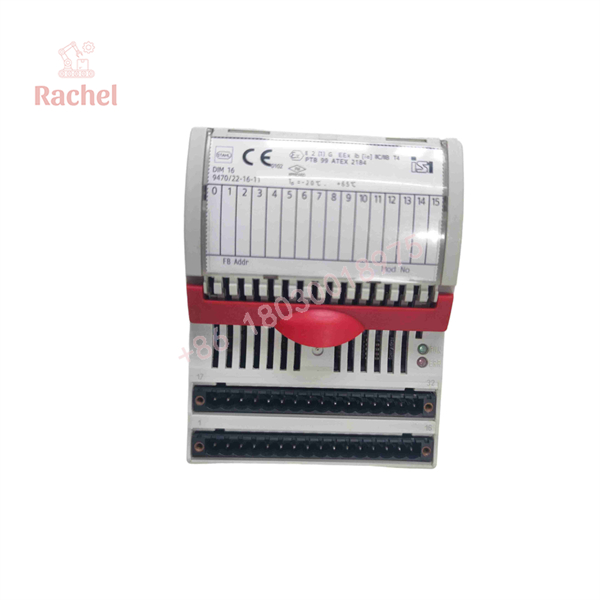
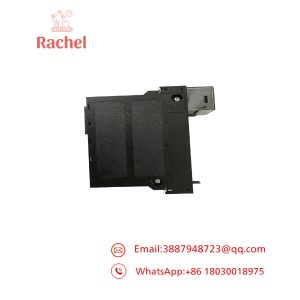
947022-16-11
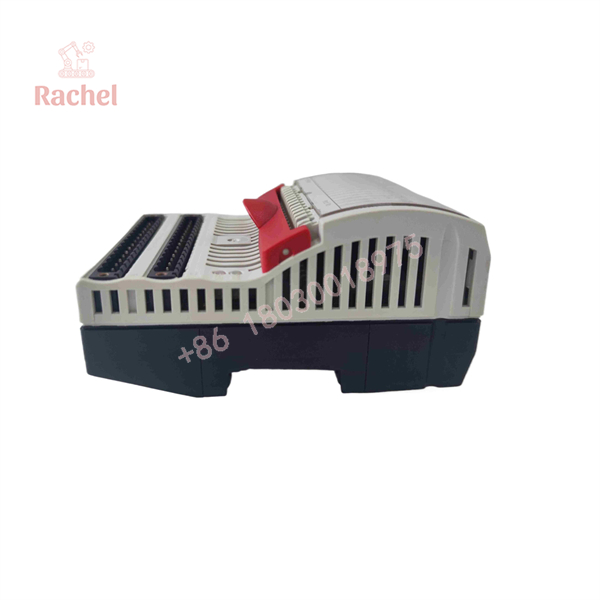
947022-16-11
Transparency SOP: QA & Testing
For New Surplus or unused stock, inspection should focus on identity, physical condition, and compatibility rather than simply powering up the board.
1 — Identity
Verify 9470/22-16-11 and, where applicable, Article No. 168682 against the product label. R. STAHL’s current product sheet uses this exact designation.
2 — Physical condition
Inspect the enclosure, connector interface, terminal areas, locking mechanism, labels, and PCB-accessible areas for impact damage, corrosion, contamination, or evidence of previous installation.
3 — Channel verification
Confirm that the replacement is the 16-channel NAMUR version. Do not confuse it with other 9470-series digital input variants.
4 — System test
In an appropriate IS1 test environment, verify module recognition, channel status, diagnostics, and communication with the BusRail before returning the process to service.
5 — Documentation
Record the original module number, replacement number, hardware/revision markings, field-channel assignment, and installation location in the maintenance record.
The Veteran’s Tech Trap Guide
⚠️ Trap #1 — Do not treat this as a conventional 24 V digital input card.
The 9470/22-16-11 is specifically designed for intrinsically safe Ex i field circuits and NAMUR devices. Substituting a standard PLC digital-input module changes the electrical interface and hazardous-area protection concept.
⚠️ Trap #2 — Channels 14 and 15 are special.
They can be used for frequency measurement or pulse counting up to 20 kHz. If the original application uses these channels for speed or pulse measurement, document the configuration before replacement.
PRO TIP: Photograph the complete BusRail station before removing the module. Record its slot position, neighboring modules, field-terminal arrangement, and diagnostic indication. R. STAHL documentation shows the 9470/22-16-11 as a DIM module within the IS1 station architecture.
⚠️ Trap #3 — “Hot-swappable” does not mean “service it without site controls.”
R. STAHL documentation states that the module can be replaced during operation within the appropriate IS1 architecture. That does not override site electrical-safety procedures, hazardous-area work permits, or the specific certification requirements of the installation.
Dynamic FAQ
What is R. STAHL 947022-16-11?
It is the condensed part-number format commonly used for R. STAHL 9470/22-16-11, a 16-channel NAMUR digital input module for the IS1 remote I/O system. The manufacturer’s current documentation identifies Article No. 168682.
How many inputs does it have?
It has 16 digital input channels for volt-free contacts and NAMUR proximity switches.
Can it measure frequency?
Yes. Channels 14 and 15 can be configured for frequency measurement or pulse counting up to 20 kHz.
Does it provide line-fault monitoring?
Yes. The input channels support monitoring for open circuits and short circuits.
Is 947022-16-11 intrinsically safe?
Yes. The module uses Ex ia IIC intrinsically safe inputs. R. STAHL documentation identifies applications covering hazardous-area Zones 1, 2, 21, and 22, subject to the applicable system and installation requirements.
Can it be hot-swapped?
R. STAHL documentation states that the module can be replaced while the system is operating within the specified IS1 architecture. Site procedures and hazardous-area requirements must still be followed before performing a live replacement.
What should I verify when purchasing a replacement?
Verify the complete designation 9470/22-16-11, Article No. 168682, module revision, physical condition, terminal/interface compatibility, and the condition category stated by the supplier.
Is New Surplus the same as refurbished?
No. New Surplus generally refers to unused inventory outside the normal current-production supply chain, while refurbished equipment has undergone inspection, repair, or reconditioning. Request the exact condition, testing performed, warranty period, and return terms in writing before purchasing.
What warranty should I expect?
Warranty coverage depends on the supplier and stock condition. For surplus or refurbished equipment, confirm whether the warranty covers DOA, communication faults, and functional failure after installation, and whether returns are permitted for a verified compatibility issue.

 Start Chat


