





Description
Product Introduction
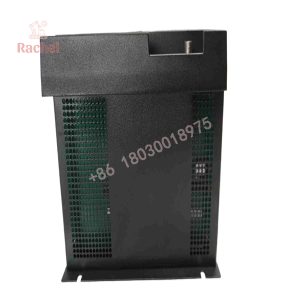
The Reliance Electric 45C959 is a 16-channel digital relay output module for the Shark XL programmable controller family. The module uses a removable terminal block and provides individual LED status indication for its output channels. Rockwell Automation’s Shark XL documentation identifies 45C959 specifically as the 16-channel relay-output version.
This is a discrete-output module, not an analog or transistor output card. The relay architecture is useful when the control system needs to switch external AC or DC loads, but it also introduces contact-current and inrush limitations that must be respected. The two output groups use separate commons, C1 and C2, which are not internally connected.
Key Technical Specifications
| Parameter | Specification |
|---|---|
| Manufacturer | Reliance Electric |
| Current Corporate Association | Baldor Reliance / Rockwell Automation documentation |
| Part Number | 45C959 |
| Series | Shark XL / Shark XL II |
| Product Type | Digital Relay Output Module |
| Number of Outputs | 16 |
| Output Type | Electromechanical relay |
| Rated AC Output | 120 VAC, 2 A |
| AC Frequency | 50/60 Hz |
| Output Groups | Channels 0-7 = C1; Channels 8-15 = C2 |
| Common Terminals | C1 and C2, electrically separate |
| Terminal Block | Removable |
| Status Indication | Individual LED indicators |
| Lifecycle | Discontinued / legacy |
Rockwell’s Shark XL documentation confirms 45C959 as a 16-channel relay-output module with a removable terminal block and identifies C1 and C2 as separate commons.
A secondary industrial reference lists the output range as 21-27 VDC or 85-264 VAC, with a maximum inrush current of 6 A for 100 ms. Because that source presents these as operating specifications rather than a complete OEM electrical table, verify the exact load class against the original Shark XL documentation before using those limits for engineering calculations.
Application Scenarios & The “Trench” Experience
A legacy PLC cabinet fails in the middle of a production shift. The processor is healthy. Inputs are reading correctly. One group of field devices, however, refuses to energize. The output LEDs tell the story: the PLC is commanding the outputs, but the field loads are not responding.
That’s where an old relay output card becomes the suspect.
- Industrial Automation — Motor Contactor Control — Provides discrete relay outputs for contactors, interposing relays, and other switched loads.
- Process Control — Solenoid and Valve Commands — Suitable where discrete field devices require relay-isolated switching.
- Machine Control — Auxiliary Equipment — Provides 16 programmable output points for legacy machinery.
- Material Handling — Conveyor Interlocks — Can control contactors, indicator circuits, and auxiliary relay logic.
- Legacy Plant Maintenance — Shark XL PLC Replacement — Useful when an operating controller still depends on the original 45C959 hardware.
Field case — plausible replacement scenario:
A conveyor system suddenly loses several output devices. The PLC program continues executing, and the output indicators respond correctly. The maintenance technician checks the field wiring and finds the common circuit intact.
The 45C959 is then isolated as the likely failure point.
Instead of replacing the entire Shark XL controller, the maintenance team installs a tested replacement module. Before energizing the field loads, they verify every terminal, especially the division between C1 for outputs 0-7 and C2 for outputs 8-15. The output circuit is restored without changing the PLC program.
The detail matters. A common-terminal mistake can turn a five-minute module replacement into an afternoon of troubleshooting.
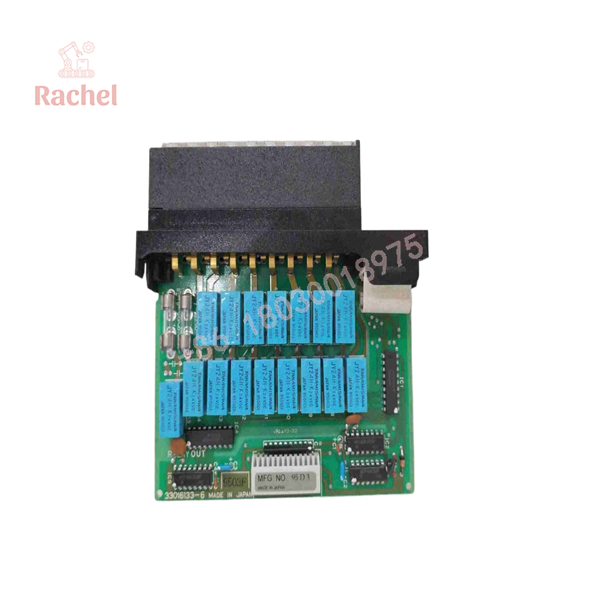
45C959
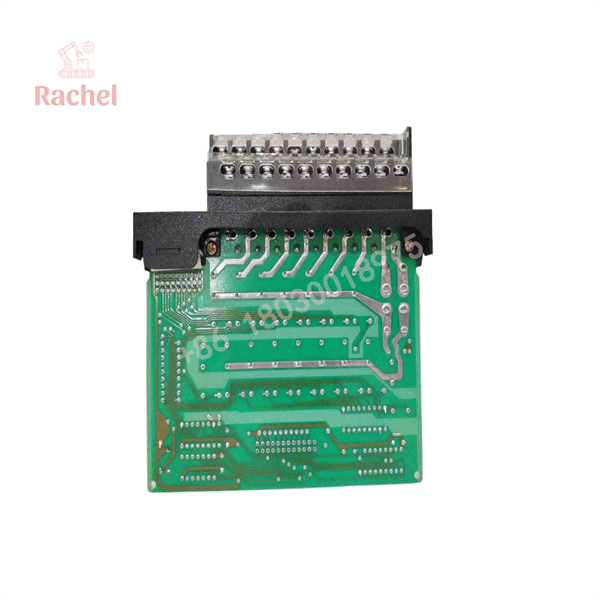
45C959
Transparency SOP: Quality Assurance & Testing
A relay output module needs both logic-level and load-side testing.
- Inbound Inspection
- Verify 45C959 markings and manufacturer identification.
- Inspect the removable terminal block and terminal screws.
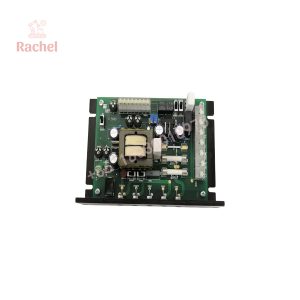
- Check the relay area, PCB, LEDs, housing, and connector contacts.
- Look for heat damage caused by overloaded relay contacts.
- Live Rig Testing
- Install the module in a compatible Shark XL test rack.
- Verify controller recognition and output addressing.
- Command each of the 16 outputs individually.
- Confirm that every corresponding LED operates correctly.
- Verify relay contact operation with suitable test loads.
- Electrical Parameter Checks
- Measure relay contact continuity when energized.
- Check open-circuit isolation when de-energized.
- Test representative AC and DC loads within the documented ratings.
- Check for abnormal contact resistance or intermittent operation.
- Do not use a high-voltage insulation tester directly across sensitive PLC electronics unless the OEM procedure explicitly permits it.
- Firmware Verification
- The 45C959 is an output module rather than a conventional CPU, so firmware flashing is generally not the primary acceptance test.
- Record module revision markings and compare them with the removed card where available.
- Final QC & Anti-static Packaging
- Record the serial number, revision, and test results.
- Photograph the actual module and terminal block.
- Package the PCB using ESD-safe materials.
- Protect the removable terminal block from mechanical impact.
We don’t just ship boxes. Each relay channel should be proven to switch before the module goes back into a production PLC rack.
The Veteran’s Tech Trap Guide (Crucial Value-Add)
- ⚠️ Do not tie C1 and C2 together. Channels 0-7 use C1, while channels 8-15 use C2. The OEM documentation explicitly states that the two commons are not internally connected.
- ❗ Check the load before blaming the PLC. A relay output LED being ON tells you that the module has been commanded. It does not prove that the external contact is healthy or capable of carrying the load.
- ⚠️ Watch motor and solenoid inrush. Relay contacts have finite switching capacity. A load that looks acceptable by steady-state current can still damage contacts through repeated inrush.
- ❗ Photograph the terminal wiring before pulling the module. With 16 channels and two independent commons, one misplaced wire can create several apparently unrelated field failures.
Frequently Asked Questions (FAQ for Conversion)
Q1. What is the Reliance Electric 45C959?
It is a 16-channel digital relay output module for the Reliance Shark XL programmable-controller family. Rockwell’s Shark XL documentation lists 45C959 as the 16-channel relay-output model with a removable terminal block.
Q2. What output voltage does the 45C959 support?
The module is documented for relay switching applications, with current industrial references identifying 120 VAC, 2 A output capability. Another reference gives an operating output range of 85-264 VAC or 21-27 VDC. Verify the exact load rating from the OEM documentation for your installation before switching a critical load.
Q3. Are C1 and C2 connected internally?
No. Outputs 0-7 use C1, and outputs 8-15 use C2. The commons are electrically separate.
Q4. Can I substitute a transistor-output module such as 45C964?
Not as a blind substitution. 45C964 is a different output technology—a 16-channel 24 VDC transistor-output module. The field load characteristics, switching behavior, isolation, and wiring requirements are different. Rockwell lists 45C959 and 45C964 as separate Shark XL output modules.
Q5. Is the 45C959 hot-swappable?
Do not assume it is. Unless the specific Shark XL installation documentation explicitly permits live module removal, shut down and isolate the controller and associated field power before removing the card.
Q6. Is the 45C959 discontinued?
Yes. Current industrial listings identify the 45C959 as discontinued by the manufacturer, although secondary-market suppliers continue to list new-surplus, used, and refurbished units.
Q7. Is a surplus 45C959 fake or refurbished?
Not necessarily. Legacy Shark XL modules routinely appear through industrial surplus and repair channels. Current suppliers describe both new and reconditioned inventory.

 Start Chat


