





Description
Product Introduction
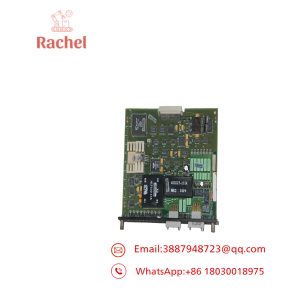
The Reliance Electric 57C431, also designated AutoMax 6011, is a processor module for the Reliance AutoMax industrial control platform. It plugs directly into an AutoMax/DCS 5000 rack backplane and executes application programs written in BASIC, Control Block, or Ladder Logic.
The 57C431 uses an 8 MHz Motorola 68010 16-bit processor with 512K parity RAM. It supports multi-processor AutoMax architectures, with up to four processors operating in a rack. The processor can coexist with 57C430A and 57C435 modules, but common-memory requirements and slot restrictions become important as processor count increases.
Key Technical Specifications
| Parameter | Specification |
|---|---|
| Manufacturer | Reliance Electric |
| Model | 57C431 |
| AutoMax Designation | 6011 Processor |
| Product Type | AutoMax Processor Module |
| Processor | Motorola 68010 |
| CPU Speed | 8 MHz |
| RAM | 512K parity RAM |
| Application Memory | Approximately 300K available for application tasks |
| Serial Interface | RS-232C |
| Serial Port Isolation | 450 V |
| Serial Voltage | ±12 V |
| Maximum Serial Current | ±30 mA per channel |
| Battery | 3.6 V lithium, AA size |
| Battery Capacity | 2.0 Ah |
| Typical Battery RAM Retention | Approximately 333 days |
| Operating Temperature | 0°C to 60°C |
| Storage Temperature | −40°C to 85°C |
| Humidity | 5–90% non-condensing |
| Average Power Dissipation | 15 W |
| Module Dimensions | 11.75 × 1.25 × 7.375 in |
Rockwell’s AutoMax documentation identifies the 57C431 as a 512K processor module, with a 15 W average power dissipation and 5 V, ±12 V system power requirements. The processor’s two serial interfaces use RS-232C, with 450 V electrical isolation.
The onboard battery is not a minor detail. For the 57C430A/57C431, the published minimum RAM hold-up time with battery is 42 days, with a typical value of approximately 333 days. Without the battery, typical retention falls to about 10 hours, with a published minimum of 10 minutes.
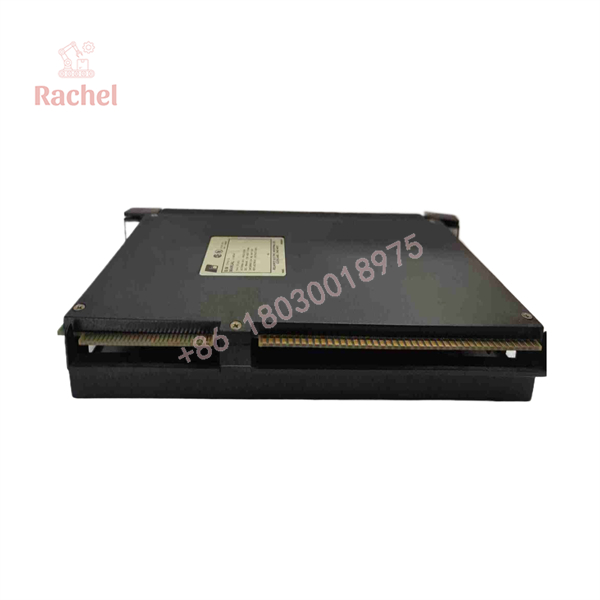
57C431
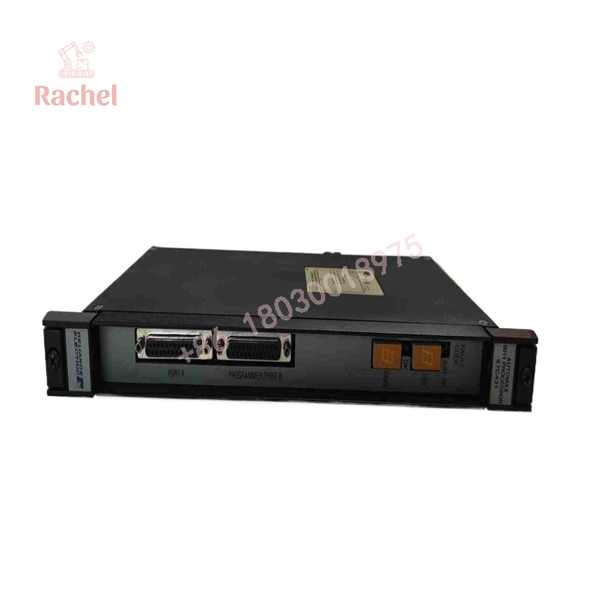
57C431
Application Scenarios & The “Trench” Experience
A 30-year-old AutoMax rack doesn’t usually fail gracefully. The processor may throw a diagnostic code, stop executing tasks, or simply refuse to boot after a power event. Meanwhile, the production line is sitting still.
That’s when the 57C431 becomes more than an obsolete CPU number on a purchasing list.
- Industrial Drives — AutoMax Motion Control — Executes control applications that coordinate drive and I/O modules within the AutoMax rack.
- Motor Control — Multi-Processor AutoMax Systems — Provides one processing resource in systems where several processors divide application tasks.
- Process Automation — Data Acquisition and Control — Runs AutoMax application logic for legacy industrial processes.
- Data Logging — Legacy Control Architecture — Supports AutoMax applications involving data acquisition and system-wide variables.
- DCS 5000 / AutoMax — Processor Replacement — Maintains an existing rack architecture without immediately replacing the complete legacy control platform.
Rockwell documentation states that up to four AutoMax processor modules can be used in a rack, increasing processing capability and total application memory. When multiple processors are installed, a Common Memory module provides bus arbitration and shared system information.
Field case — plausible replacement scenario:
A production line stops after a planned power shutdown. The AutoMax rack powers up, but the processor remains in diagnostics. The display indicates a RAM-related fault.
The maintenance team pulls the processor and finds 57C431 on the faceplate.
A replacement is located, but the technician does not immediately install it. First, the team checks the processor revision, battery condition, rack slot, operating software, and Common Memory configuration. They also verify that the replacement is actually a 57C431 rather than a visually similar 57C430A.
The replacement passes the rack diagnostics. The AutoMax runbase loads correctly. Application tasks resume.
The downtime was measured in hours, not days.
Transparency SOP: Quality Assurance & Testing
An obsolete processor deserves a real rack test. A visual inspection is not enough.
- Inbound Inspection
- Verify 57C431 / AutoMax 6011 markings.
- Inspect the PCB, faceplate, edge connectors, serial ports, LEDs, and battery compartment.
- Check for corrosion, battery leakage, repaired traces, or damaged connectors.
- Record hardware revision information.
- Live Rig Testing
- Install the module into a compatible AutoMax rack.
- Verify power-up diagnostics.
- Check RAM and parity diagnostics.
- Verify processor initialization.
- Test the RS-232 communication ports.
- Where practical, load a controlled AutoMax operating environment and execute a test application.
- Electrical Parameter Checks
- Verify 5 V and ±12 V rack supply conditions.
- Check serial-port operation.
- Monitor the processor for abnormal current draw or overheating.
- Verify diagnostic behavior under controlled conditions.
- Firmware / Software Verification
- Record the processor hardware revision.
- Verify compatibility with the installed AutoMax runbase/programming environment.
- Check for incompatible EPROM/runbase conditions.
- Rockwell documentation identifies incompatible processor EPROMs as a specific power-up diagnostic condition.
- Final QC & Anti-static Packaging
- Record diagnostic results.
- Document battery condition.
- Photograph the actual board and faceplate.
- Use ESD-safe packaging.
- Protect both RS-232 connectors and backplane edge contacts.
We don’t just ship boxes. A 57C431 should be powered up in an actual compatible AutoMax rack before it is treated as a production spare.
The Veteran’s Tech Trap Guide (Crucial Value-Add)
- ⚠️ Check the battery before installing the processor. The 57C431 contains battery-backed RAM. An old battery can leave you with a processor that powers up but loses its operating system, tasks, or retained variables after power is removed.
- ❗ Do not confuse 57C431 with 57C430A. Both are based on the Motorola 68010, but the 57C430A has 256K RAM, while the 57C431 has 512K RAM.
- ⚠️ Check the rack slot. In a multi-processor AutoMax rack, processors occupy slots 1-4, while slot 0 is reserved for Common Memory. Slot 1 also has special restrictions when multiple processors are installed.
- ❗ Watch the EPROM/runbase compatibility. A processor replacement can expose an old software mismatch that was never visible while the original CPU was running. The AutoMax diagnostics specifically include an error for incompatible EPROMs among processors in the rack.
Frequently Asked Questions (FAQ for Conversion)
Q1. What is the Reliance 57C431?
It is the AutoMax 6011 processor module, based on an 8 MHz Motorola 68010 processor with 512K parity RAM. It is used in Reliance AutoMax/DCS 5000 control systems.
Q2. How much RAM does the 57C431 have?
The module contains 512K parity RAM. The documentation states that approximately 300K is available for application programs, regardless of which operating system is loaded onto the processor.
Q3. What programming languages does the 57C431 support?
AutoMax supports BASIC, Control Block, and Ladder Logic application programming.
Q4. Does the 57C431 have RS-232 ports?
Yes. The processor has RS-232C serial interfaces. The published specification gives ±12 V signaling, 450 V electrical isolation, and ±30 mA maximum current per channel.
Q5. Can I hot-swap the 57C431?
No. Do not remove or install the processor with the rack energized unless the exact equipment documentation explicitly provides a controlled live-replacement procedure. For a legacy AutoMax rack, the safe assumption is to power down and follow the applicable isolation procedure.
Q6. Does replacing the 57C431 erase the AutoMax program?
It depends on where the application and configuration data are stored and on the condition of the original processor’s battery-backed RAM. The processor’s RAM contains the operating system, tasks, local variables, and other retained information. Back up the AutoMax configuration before replacement whenever possible.
Q7. Is a surplus 57C431 worth using?
For an operating AutoMax installation, it can be a practical maintenance spare because the platform is legacy hardware and complete modernization can be considerably more disruptive. But do not buy an untested board simply because the faceplate says 57C431. Request the actual module photograph, hardware revision, battery condition, rack-test results, diagnostic status, and written warranty. Current secondary-market suppliers also offer repair services for this model.

 Start Chat


