





Description
Product Introduction
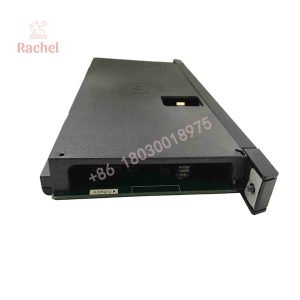
The Reliance Electric 57C424 is a dedicated dual-channel resolver input module designed for the high-performance AutoMax Distributed Control System (DCS). Installed directly into an AutoMax storage rack slot, this module converts high-frequency analog sine/cosine signals from industrial rotary resolvers into digital position and speed data for the system’s task processors.
Unlike basic incremental encoder cards that lose position reference during power outages, the 57C424 interfaces with absolute resolvers to retain true mechanical position upon reboot without requiring zero-homing routines. Its hardware-level signal conditioning mitigates electrical noise across long cable runs, making it critical for continuous heavy-duty web handling and metal rolling applications.
Key Technical Specifications
| Parameter | Value |
| Part Number | 57C424 |
| Manufacturer | Reliance Electric / Rockwell Automation |
| System Architecture | AutoMax DCS Rack |
| Module Type | Dual Resolver Feedback Input Card |
| Number of Channels | 2 Independent Resolver Channels |
| Reference Excitation | Onboard Sine Wave Generator (AC Excitation) |
| Resolution | 12-bit to 16-bit Absolute Position Tracking |
| Backplane Current Draw | Powered directly via AutoMax Rack Backplane (+5V DC) |
| Wiring Connection | Front-panel high-density terminal block / D-shell connector |
| Operating Temp | 0°C to 60°C (32°F to 140°F) |
Application Scenarios & The “Trench” Experience
Picture this: It’s 2 AM on a high-speed metal slitting line, and the system loses synchronization between the entry pinch rolls and the main cutter head. The rack processor throws a position feedback fault on Channel 1, halting the line at $3,500 per hour in idle downtime. The root cause is a blown excitation driver circuit on the aged 57C424 module. You don’t have weeks to redesign the entire control rack to a modern PLC architecture—you need a pre-tested 57C424 card to slide into Slot 4 and resume production immediately.
- Metals Rolling & Slitting Lines – Flying shear and mill roll positioning – Delivers absolute position tracking for high-impact mechanical cycles.
- Paper & Pulp Processing – Sectional drive synchronization – Eliminates speed drift between continuous web processing rolls.
- Heavy Material Handling – Overhead crane hoist position tracking – Retains absolute mechanical coordinates through facility power dips.
- Rubber & Plastics Manufacturing – Extruder feed positioning – Filters heavy electrical noise from high-horsepower DC drive bridges.
Field Case Study
An aluminum extrusion plant in Alabama suffered a total shutdown when a lightning surge compromised the analog input stages on a 57C424 card controlling a billet feeder arm. The OEM lead time for a complete system upgrade was quoted at six months. We dispatched a fully bench-tested, refurbished 57C424 module overnight. The plant electrician powered down the rack, pulled the card, set the board jump-address switches to match the original unit, and re-inserted the card. The extrusion line was fully operational within 20 minutes of unpacking.
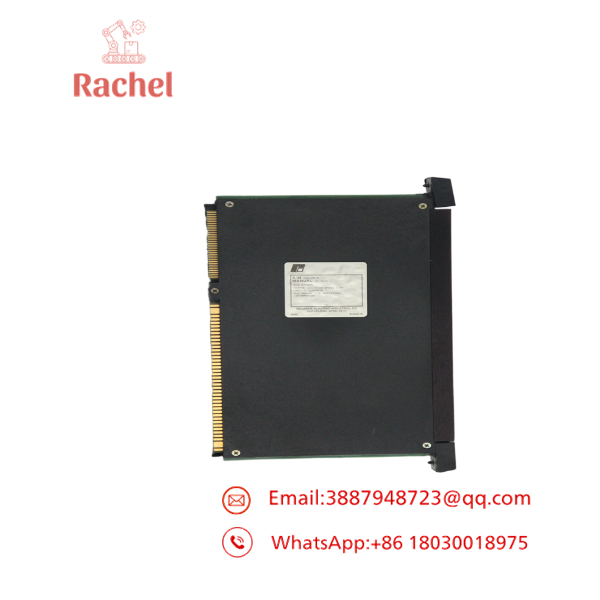
57C424
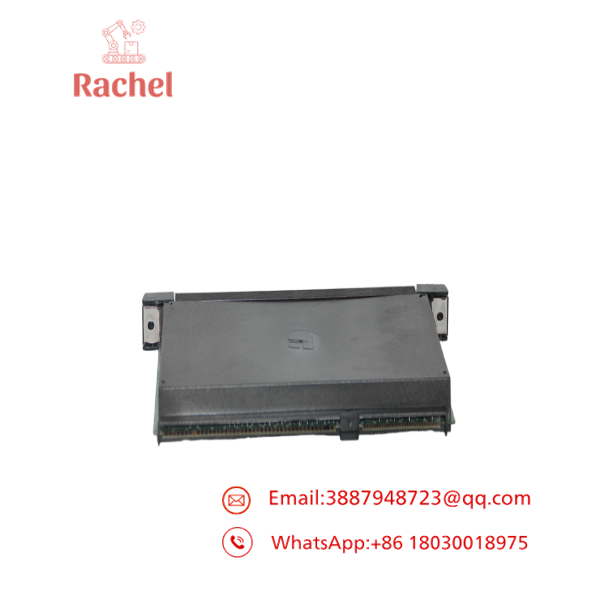
57C424
Transparency SOP: Quality Assurance & Testing
We don’t just ship boxes; we test them on actual AutoMax rack systems:
- Inbound Visual Inspection: Inspect PCB traces for heat discoloration, damaged backplane edge-connectors, and cracked solder joints.
- Backplane & Power Rail Test: Verify bus resistance and confirm power-on handshake logic without over-current draw on the 5V rail.
- Resolver Excitation Sweep: Connect precision oscilloscope probes to verify clean, distortion-free reference sine waves from the onboard oscillator.
- Dual-Channel Signal Injection: Inject simulated sine/cosine resolver signals across all channel inputs to confirm accurate position data translation to the AutoMax bus.
- Noise Immunity & Stress Test: Run continuous data acquisition cycles on a live AutoMax rack while cycling environmental temperature parameters.
- ESD & Protective Packaging: Clean circuit surfaces with anti-static solution, wrap in static-shielding bags, and crate in high-density foam shipping boxes.
The Veteran’s Tech Trap Guide
- ⚠️ Match Board Jumpers and DIP Switches: Before sliding the replacement 57C424 into the rack, meticulously record and match the jumper configurations and DIP switch address settings from your old board. An incorrect address configuration will cause backplane bus conflicts and lock up the main CPU.
- ❗ Never Pull Under Power: AutoMax backplane slots are not hot-swappable. Pulling or inserting a 57C424 card while the rack power supply is energized can arc backplane pins and corrupt memory on neighboring processor cards. Always turn off rack power first.
- ⚠️ Check Shielding on Resolver Cables: Resolvers run on low-voltage analog signals. Ensure the twisted-pair cable shields are grounded at one end only (typically at the rack chassis). Improper shield grounding creates ground loops that manifest as phantom position jumps on the 57C424 input registers.
- ❗ Inspect the Edge Connector Slot: If the original card failed due to a severe voltage spike, inspect the female backplane connector in the rack for carbon deposits or bent contacts before inserting the new module.
Frequently Asked Questions
Q: Is the Reliance 57C424 module hot-swappable?
A: No. The AutoMax bus architecture requires total rack power shutdown before removing or installing cards to prevent backplane damage or system crashes.
Q: Can I use standard incremental optical encoders with the 57C424?
A: No. The 57C424 is specifically designed for AC-excited analog resolvers (sine/cosine output). Incremental quadrature encoders require a dedicated encoder input card (such as the AutoMax 57C435).
Q: Does replacing a failed 57C424 card require reprogramming the AutoMax processor?
A: No. As long as the hardware DIP switch/jumper addresses on the replacement board are set identically to the failed card, the AutoMax processor will automatically recognize the module and resume data exchange upon boot.
Q: What is the primary cause of failure on these legacy resolver cards?
A: Over time, high ambient temperatures in drive cabinets degrade the electrolytic capacitors on the onboard excitation power supply circuits, leading to weak or distorted sine-wave reference signals.
Q: What warranty is provided with this module?
A: Every 57C424 card—whether New Surplus or bench-tested Refurbished—comes with a full 12-month operational warranty covering all hardware components and backplane communication functions.

 Start Chat


