





Description
Product Introduction and Engineering Value
Valve positioning errors can affect chilled-water flow, heating capacity, and process temperature stability. The AVM234SF132 addresses this requirement with a stepper motor, integrated SUT electronics, and configurable positioning behavior. Its controller automatically detects supported constant or switched input signals, reducing the need for manual signal-type selection during commissioning.
The actuator is designed for compatible SAUTER valve families, including VQD/BQD, VQE/BQE, VUG/BUG, VUS/BUS, VUP, and V6R/B6R. It also supports selected non-SAUTER valve installations when the correct adapter is used. Mechanical compatibility must be established before installation; matching the electrical ratings alone is insufficient.
Technical Specifications
| Parameter | Specification |
|---|---|
| Manufacturer | SAUTER |
| Model | AVM234SF132 |
| Actuator technology | Stepper motor with SUT electronic control |
| Rated actuating force | 2,500 N |
| Supply voltage | 24 V AC/DC |
| Power consumption | 10 W; 20 VA |
| Control signals | 0–10 V, 4–20 mA, 2-point, 3-point |
| Maximum stated stroke | 49 mm |
| Selectable positioning speed | 2 / 4 / 6 s/mm |
| Valve characteristic | Linear, quadratic, or equal-percentage |
| Position feedback / adaptation | Automatic stroke adaptation; retained stroke measurement after power loss |
| Electrical connection | Screw terminals, maximum 2.5 mm² |
| Cable entries | Two M20 × 1.5 and one M16 × 1.5 provisions |
| Protection rating | IP66, as listed in SAUTER technical documentation |
| Mounting orientation | Vertical upright to horizontal; not suspended |
| Manual operation | Crank handle with motor cutoff and reinitialization function |
Sources: SAUTER product documentation and type data.
Engineering note: The 49 mm figure is the actuator’s maximum stated stroke, not a guarantee that every compatible valve uses the full travel. Actual travel, positioning time, and valve operating characteristics depend on the installed valve and selected settings.
Field Applications and the Maintenance Perspective
Field scenario: Restoring chilled-water valve control
A commercial building experiences unstable supply-air temperatures after a valve actuator begins sticking near the end of its travel. The building automation system continues issuing control commands, but the valve no longer responds consistently.
The maintenance engineer identifies the installed actuator as an AVM234SF132 and checks the valve body, linkage, supply voltage, and controller output. Before replacement, the team confirms the required stroke and mounting arrangement, then verifies the selected control characteristic and direction of operation during commissioning.
After installation, the engineer checks the valve’s full travel and confirms that the building automation controller can regulate the valve across its intended operating range. This is an illustrative maintenance scenario, not a documented customer case.
Other suitable applications include:
- Chilled-water coil control: Modulating water flow through compatible HVAC control valves to regulate cooling output.
- Boiler and heating-water circuits: Controlling hot-water flow in compatible heating installations.
- Building energy management: Integrating valve positioning with controllers that provide 0–10 V, 4–20 mA, two-position, or three-position commands.
The actuator is intended for compatible valve-control applications. Confirm the valve’s pressure limits, medium temperature, and intended duty before approving the complete assembly.
Quality Assurance and Testing
For replacement procurement, request evidence of both product identity and functional condition. The following inspection sequence is appropriate for new-surplus or refurbished stock.
- Part-number verification: Check the AVM234SF132 label and confirm that the supplied unit does not carry a different suffix, such as
-5,-6, or-7. - Physical inspection: Examine the housing, mounting column, cable entries, terminals, and manual adjustment mechanism for damage.
- Electrical checks: Verify the rated supply and inspect the wiring arrangement before applying power.
- Actuation test: Use a compatible valve fixture or approved test arrangement to verify movement, travel adaptation, and force-dependent cutoff.
- Control-signal test: Test the required analog or switched input mode and verify the configured direction of operation.
- Documentation review: Record the unit’s condition, test results, warranty coverage, and any included mounting accessories.
A new-surplus unit may be unused but stored for an extended period. A refurbished unit may have repaired or replaced components. Neither condition should be treated as proof of full functionality without supporting inspection or test records.
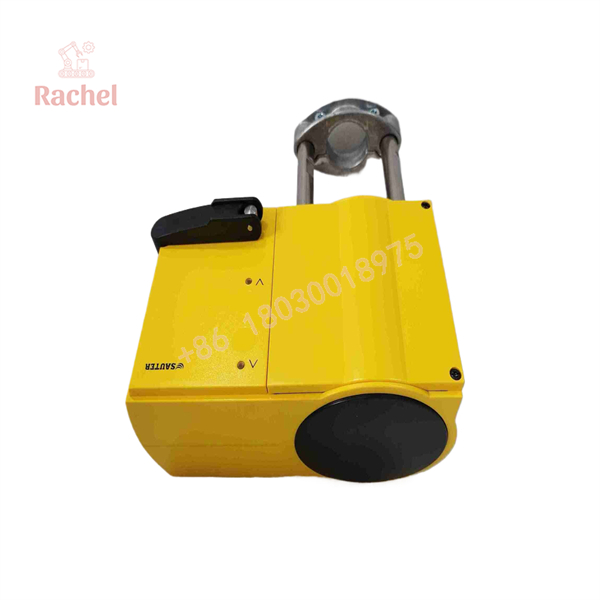
AVM234SF132
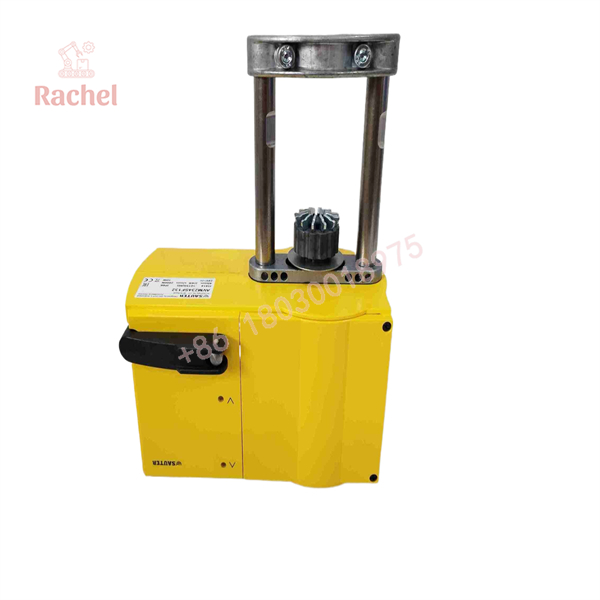
AVM234SF132
Replacement Pitfalls: What Engineers Should Check
Pitfall 1: Selecting the wrong actuator variant
The AVM234SF132 family includes variants with different mounting applications and, in some cases, different actuating forces. For example, the documented AVM234SF132-7 variant is rated at 1,700 N rather than 2,500 N. Do not substitute by model-family similarity alone.
Pitfall 2: Ignoring valve stroke and mounting hardware
Confirm the valve’s required travel and the correct mounting kit. SAUTER lists separate mounting sets for different valve sizes and stroke requirements. An actuator that fits the electrical connection may still be mechanically unsuitable.
Pitfall 3: Applying the wrong control configuration
The actuator supports multiple control modes and selectable positioning characteristics. Check the controller output, terminal assignment, direction of operation, and running-time setting. Incorrect configuration can produce reversed movement or unsatisfactory valve regulation.
PRO TIP: Record the original actuator settings and take photographs of the wiring and valve linkage before removal. After installation, perform a controlled stroke-adaptation and functional test in accordance with the manufacturer’s instructions.
Frequently Asked Questions
Q1. What is the SAUTER AVM234SF132 used for?
It is a linear electric actuator for positioning compatible two-way and three-way control valves in HVAC and building automation applications. It uses a stepper motor and SUT electronics to regulate valve movement based on the selected control input.
Q2. Does the AVM234SF132 support both analog and switched control?
Yes. Its documented inputs include 0–10 V and 4–20 mA analog signals, as well as two-point and three-point control. The intended control mode and wiring must be verified during commissioning.
Q3. Can it replace another AVM 234S actuator?
Not automatically. Confirm the complete part number, rated force, supply voltage, mounting arrangement, valve stroke, and control requirements. Different suffixes can indicate materially different configurations.
Q4. What valve brands and models are compatible?
The documented SAUTER valve families include VQD/BQD, VQE/BQE, VUG/BUG, VUS/BUS, VUP, and V6R/B6R. Non-SAUTER valves may require a suitable adapter. Confirm compatibility with the specific valve body and mounting hardware.
Q5. Is the AVM234SF132 available as new-surplus or refurbished stock?
Industrial spare-parts suppliers list the model, but availability varies by supplier and condition. For example, offers a quotation-based inquiry. Confirm current inventory, condition, delivery time, and included accessories directly with the supplier.
Q6. How can I verify authenticity and warranty coverage?
Request photographs of the SAUTER label, complete type designation, and any serial or traceability information available. Ask for a written condition declaration, functional test report, warranty period, exclusions, and return procedure. Warranty terms depend on the seller and purchase agreement; obtain them in writing before ordering.

 Start Chat


