





Description
Product Introduction and Engineering Value
A guard that opens before hazardous motion has stopped creates a direct personnel-safety risk. The AZM160-22YP addresses this problem by combining guard locking with mechanically operated switching contacts that can be integrated into a suitable safety relay or safety controller. Its function depends on the selected locking principle, correct wiring, and the machine’s safety architecture.
The AZM 160 family uses a compact housing with mounting provisions and options for manual or emergency release. For maintenance teams supporting legacy machinery, preserving the original locking behavior and contact logic is more important than simply matching the enclosure dimensions. Confirm the full product code before approving an equivalent.
Technical Specifications
The following table separates established product-family information from details that require confirmation for the exact AZM160-22YP unit.
| Parameter | Specification or verification requirement |
|---|---|
| Manufacturer | SCHMERSAL |
| Model | AZM160-22YP |
| Product category | Solenoid-latching safety interlock |
| Housing | Thermoplastic enclosure, according to AZM 160 family documentation |
| Locking mechanism | Electromagnetic solenoid with mechanical guard-locking components |
| Supply voltage | Verify the nameplate; AZM 160 family variants include 24 VAC/DC, 110 VAC, and 230 VAC versions |
| Safety contacts | Confirm the exact contact arrangement using the unit’s wiring diagram |
| Locking force | Family documentation lists a holding force of up to 2,000 N for applicable variants; verify the exact unit |
| Latching force | Variant-dependent; do not confuse the latching force with the guard-locking force |
| Cable entry | Confirm the YP variant’s actual connection arrangement and gland requirements |
| Manual release | Availability and configuration depend on the specific variant |
| Protection rating | Check the applicable datasheet and nameplate before specifying an IP rating |
| Ambient temperature | Verify the exact variant’s permitted operating range |
| Safety integration | Connect through a suitable safety relay or safety controller according to the machine risk assessment |
Sources: SCHMERSAL AZM 160 family documentation and distributor records.
Critical distinction: The AZM 160 family includes different voltage, contact, and release configurations. The family-level 2,000 N holding-force figure must not be interpreted as a verified rating for every variant. The exact ordering code and manufacturer documentation take precedence over generic reseller specifications.
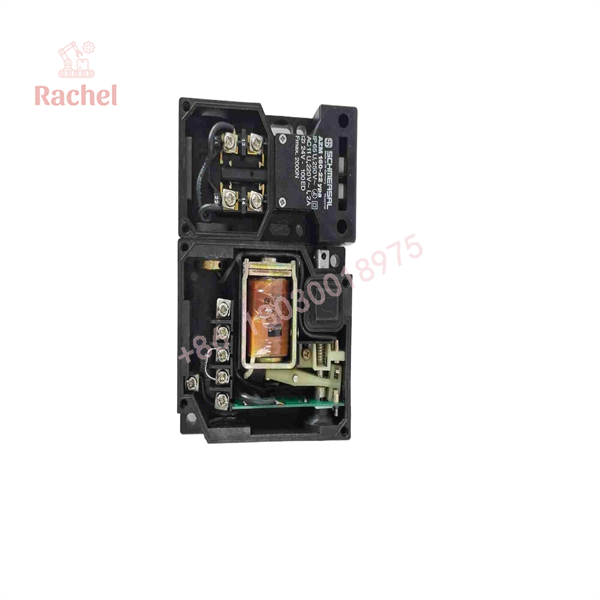
AZM160-22YP
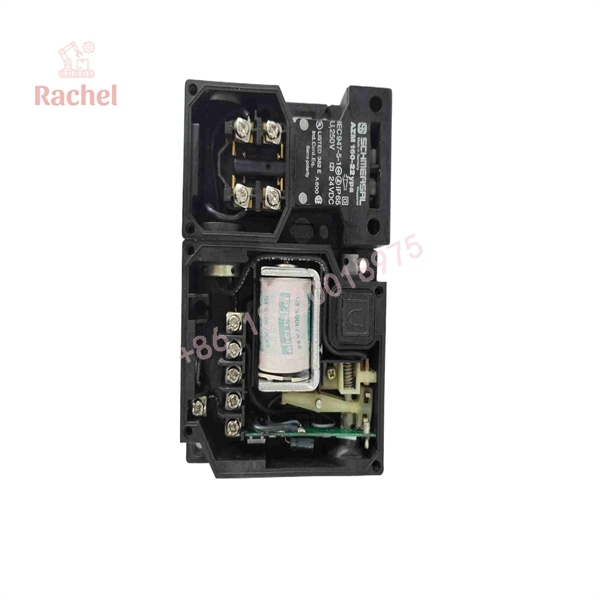
AZM160-22YP
Field Applications and Maintenance Scenario
Field scenario: Replacing a guard-locking switch on a robotic cell
A robotic assembly cell develops an intermittent guard-interlock fault. The safety controller reports that the access door is not in the expected locked state, preventing the next production cycle from starting.
The maintenance engineer identifies the installed switch as an AZM160-22YP and checks the actuator alignment, mechanical wear, cable condition, solenoid supply, and safety-contact states. Before ordering a replacement, the engineer compares the complete part number and wiring diagram to confirm the required locking behavior. After installation, the machine’s safety functions are validated under the approved commissioning procedure.
This is an illustrative maintenance scenario, not a documented customer installation.
Other suitable application areas include:
- Robotic welding cells: Guard locking for perimeter doors where access must be controlled around hazardous robot motion.
- CNC machining centers: Interlocking access doors to prevent unsafe access during spindle or axis operation.
- Automated packaging lines: Guarded access points around conveyors, cutting stations, and powered mechanisms.
The appropriate switch configuration depends on the hazard, guard design, required stopping time, and safety-system architecture. An interlock switch alone does not establish the safety performance of the complete machine.
Quality Assurance and Testing
For a legacy safety switch, purchasing checks should cover product identity, electrical condition, and functional suitability.
- Identity check: Photograph the complete SCHMERSAL nameplate and verify the AZM160-22YP designation, voltage marking, and any additional ordering code.
- Mechanical inspection: Check the housing, actuator opening, mounting points, release mechanism, and cable entries for damage or excessive wear.
- Electrical inspection: Verify the solenoid rating and inspect the contacts and terminals against the correct wiring diagram.
- Functional testing: Have qualified personnel verify guard locking, unlocking, contact transitions, and the specified response to loss of power.
- Safety validation: Confirm that the installed circuit meets the machine’s documented safety requirements. Do not rely solely on an isolated switch test.
- Commercial documentation: Obtain a written condition declaration, test report, warranty terms, and return procedure.
New-surplus and refurbished stock should be clearly distinguished. A new-surplus unit may be unused but stored for years; a refurbished unit may contain repaired or replaced parts. Neither condition alone establishes suitability for a safety-critical installation.
Replacement Pitfalls: What Engineers Should Check
Pitfall 1: Selecting the wrong coil voltage
AZM 160 family variants are available with different electrical ratings. Never energize a replacement based solely on the model prefix. Read the voltage marking and verify the wiring diagram first.
Pitfall 2: Confusing latching force with holding force
Latching force describes the effort associated with engaging the mechanism; holding force describes resistance to guard opening under the specified conditions. These values are not interchangeable. Do not use the switch as a substitute for a guard designed to withstand greater mechanical loads.
Pitfall 3: Ignoring power-loss behavior
The locking principle determines whether the guard remains locked or releases when power is lost. Confirm the exact variant and assess the consequences against the machine’s risk assessment. Do not change the locking principle without engineering review.
PRO TIP: Never bypass the interlock or bridge its safety contacts to restore production. After replacement, verify the complete guard system, including stopping time, release behavior, contact monitoring, and the safety controller’s fault response.
Frequently Asked Questions
Q1. What is the SCHMERSAL AZM160-22YP used for?
It is a solenoid-operated safety interlock for movable machine guards. It combines a locking mechanism with switching contacts used in a machine’s safety circuit. The exact operating behavior depends on the variant and installation.
Q2. What supply voltage does the require?
The exact voltage must be confirmed from the unit’s nameplate and applicable wiring documentation. The AZM 160 family includes multiple electrical variants, so a generic family listing is not sufficient to select a replacement.
Q3. Can I replace it with another AZM 160 model?
Not without checking compatibility. Compare the coil voltage, locking principle, contact arrangement, actuator geometry, connection method, and release configuration. A different suffix may represent a materially different electrical or mechanical arrangement.
Q4. Does the provide a safety-rated system by itself?
No. The switch is one component of a machine-safety system. Overall safety performance depends on the risk assessment, circuit architecture, safety controller, diagnostics, wiring, and validation of the complete installation.
Q5. Is the available as new-surplus or refurbished stock?
Specialist suppliers list the model in legacy spare-parts catalogs. For example, identifies it as discontinued by the manufacturer. Current stock and product condition should be confirmed directly with the seller.
Q6. How do I verify authenticity and warranty coverage?
Request photographs of the original label, complete model designation, and any available traceability records. Obtain written confirmation of the item’s condition, test coverage, warranty duration, exclusions, and return procedure. A seller’s warranty is not necessarily the manufacturer’s warranty.

 Start Chat


