





Description
Product Introduction & Engineering Value
The 140CPU31110 sits in the middle of the older Quantum processor generation, combining a 40 MHz 486DX2 processor with substantially more memory than the earlier 140CPU11302. It provides 768 kB of internal RAM and supports Concept and ProWORX 32 programming environments, making it useful for maintaining legacy Quantum control applications without immediately forcing a platform migration.
For replacement work, the key question is not only whether the CPU physically fits. Check the installed firmware, application language, memory requirements, communication topology, and I/O architecture. A processor replacement should preserve the control application’s operating assumptions wherever possible.
Technical Specifications
| Parameter | Specification |
|---|---|
| Catalog Number | 140CPU31110 |
| Platform | Modicon Quantum |
| Processor | Intel 486DX2 |
| Processor Speed | 40 MHz |
| Internal RAM | 768 kB |
| 984 Ladder Logic | Up to 16 kwords |
| IEC 1131-2 Programming | Supported |
| Watchdog Timer | 250 ms |
| Local I/O | Up to 64 input / 64 output words |
| Remote I/O | Up to 64 input / 64 output words per drop |
| Remote Drops | Up to 31 |
| Distributed I/O | Up to 3 distributed networks |
| Modbus Plus | Supported |
| Modbus | Supported |
| Battery | 3 V lithium |
| Battery Capacity | 1.2 Ah |
| Bus Current Requirement | Approximately 700 mA |
| Operating Temperature | 0–60°C |
| Storage Temperature | -40–85°C |
| Module Format | Standard |
Schneider documentation identifies the 140CPU31110 as a 486DX2 40 MHz Quantum processor with 768 kB RAM, a 250 ms watchdog, and support for local, remote, and distributed I/O architectures.
Field Application & the “Trench” Experience
A typical maintenance situation starts with a Quantum rack that has been running for years. The PLC begins reporting processor-related faults, and the maintenance team has a replacement CPU available. The temptation is to remove the old processor immediately.
An experienced technician takes a different route.
First, the existing application is backed up. Then the CPU catalog number and firmware information are recorded. The technician checks the battery, Modbus Plus connections, remote I/O configuration, and PLC operating mode. Only after that is the replacement 140CPU31110 installed and tested.
That sequence is particularly useful when the control system cannot be easily taken offline for experimentation.
Niche applications include:
- Legacy water-treatment control racks using Quantum remote I/O over Modbus Plus.
- Material-handling PLC systems running established LL984 logic with distributed I/O.
- Process packaging machinery where maintaining the existing Quantum application is preferable to an immediate controller migration.
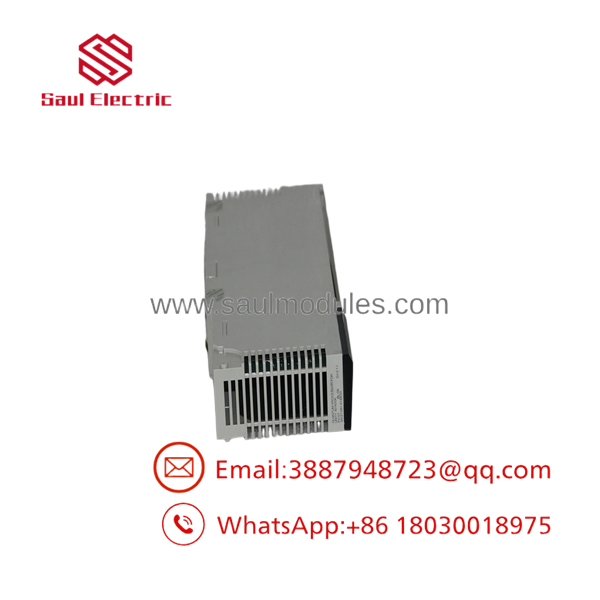
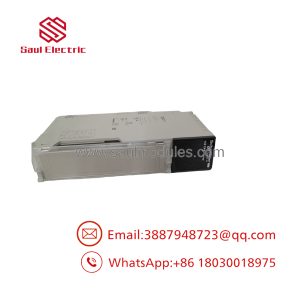
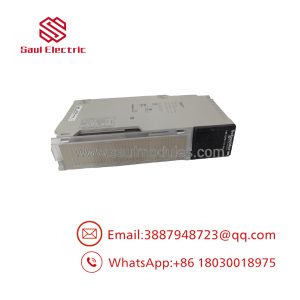
140CPU31110
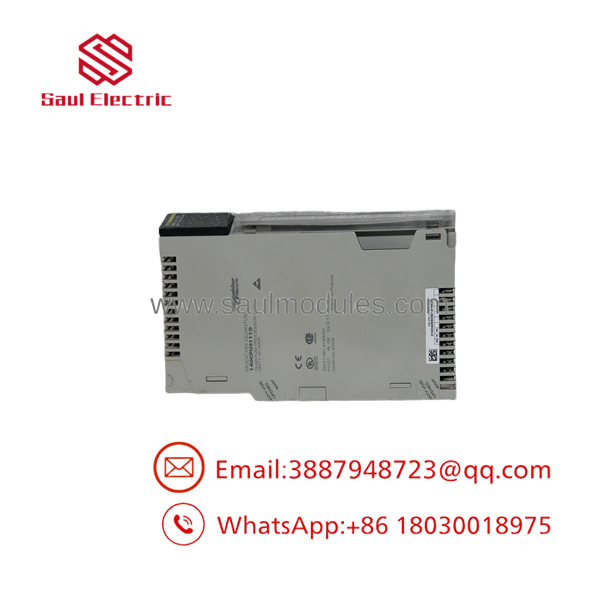
140CPU31110
Transparency SOP: QA & Testing
For New Surplus or refurbished 140CPU31110 inventory, a meaningful inspection should include:
1. Identity verification
Confirm the exact 140CPU31110 catalog number and inspect the original manufacturer label.
2. Physical inspection
Check the enclosure, backplane connector, communication ports, mounting hardware, and battery compartment for damage or corrosion.
3. Battery assessment
The processor uses a 3 V lithium battery. Because these are legacy CPUs, battery age should be documented rather than inferred from the module’s appearance.
4. Controlled power-up
Install the processor into an appropriate Quantum test rack and verify startup diagnostics and processor status.
5. Communications check
Where the appropriate test equipment is available, verify the processor’s Modbus/Modbus Plus communication functions.
6. Application execution test
Run a controlled test program and confirm normal processor operation before shipment.
7. Stock-condition declaration
Clearly identify whether the unit is New Surplus, Used, or Refurbished. These terms should not be used interchangeably.
The Veteran’s Tech Trap Guide
⚠️ Trap #1 — Don’t confuse CPU31110 with later Quantum CPUs.
The 140CPU31110 belongs to an older Quantum processor generation. Similar physical dimensions do not establish application compatibility. Firmware, memory, programming environment, and communication requirements still have to match.
⚠️ Trap #2 — Protect the application backup.
A processor replacement is a bad time to discover that the only copy of the PLC program was stored inside an inaccessible engineering workstation.
PRO TIP: Before removing the original CPU, capture the processor part number, firmware information, rack configuration, battery condition, and communication connections. Save the current application separately.
⚠️ Trap #3 — Don’t overlook Modbus Plus topology.
A Quantum CPU may be doing much more than executing ladder logic. If the existing system depends on Modbus Plus remote I/O or peer devices, replacing the CPU without documenting the network topology can produce a PLC that runs while the plant still does not operate correctly.
Dynamic FAQ
Q: What is the Schneider 140CPU31110?
A: It is a Modicon Quantum processor module using an Intel 486DX2 processor operating at 40 MHz, with 768 kB of internal RAM.
Q: How much memory does the 140CPU31110 provide?
A: Schneider lists 768 kB of internal RAM for this processor.
Q: What programming environments are associated with the 140CPU31110?
A: The processor supports the Quantum programming ecosystem, including Concept and ProWORX 32, along with LL984 and IEC 1131-2 programming capabilities.
Q: Does the 140CPU31110 support Modbus Plus?
A: Yes. Modbus Plus is part of the communication architecture supported by the Quantum processor family.
Q: What should I check before replacing a 140CPU31110?
A: Record the existing CPU and firmware information, back up the application, verify battery condition, document Modbus Plus topology, and confirm the local/remote/distributed I/O configuration before removing the original processor.
Q: How should I evaluate a New Surplus 140CPU31110?
A: Confirm the actual catalog number from the label, inspect the processor physically, ask about battery age, and request evidence of controlled power-up and functional testing. Also obtain the supplier’s written warranty and return terms.

 Start Chat


