





Description
Product Introduction & Engineering Value
Hot-standby architecture changes the replacement equation. The 140CPU67160 is not merely a Quantum processor; it is designed for redundant controller applications where a standby CPU must remain synchronized with the primary controller. Its 266 MHz processing rate, multimode Ethernet capability, and support for multiple remote and distributed I/O architectures make it a specialized legacy Quantum spare.
When replacing one of these CPUs, the second controller matters just as much as the failed unit. Firmware compatibility, hot-standby configuration, Ethernet fiber connections, application backup, and synchronization status should all be checked before commissioning. Schneider’s firmware documentation specifically notes compatibility relationships between CPU operating-system versions and copro firmware versions.
Technical Specifications
| Parameter | Specification |
|---|---|
| Catalog Number | 140CPU67160 |
| Platform | Modicon Quantum |
| Processor Type | Unity Hot Standby Processor |
| Clock Frequency | 266 MHz |
| Transmission Mode | Multimode |
| Local Racks | 2 |
| Supported Rack Sizes | 2, 4, 6, 10, or 16 slots |
| Distributed I/O Stations | Up to 63 |
| Remote I/O Stations | Up to 31 S908 / Quantum Ethernet or 16 X80 Ethernet |
| Remote Discrete I/O | Up to 31,744 inputs and 31,744 outputs |
| Program Memory | 1,024 kB |
| Ethernet | Multimode Ethernet |
| Modbus Plus | Supported |
| Modbus | Supported |
| Bus Current Requirement | Approximately 2,500 mA |
| Programming Platform | Unity |
| Application | Quantum Hot Standby / high-availability control |
Published product data confirms the 266 MHz processor, two local racks, up to 63 distributed I/O stations, and multiple remote-I/O configurations.
Firmware deserves special attention. Schneider provides dedicated 140CPU67160 operating-system files, including V3.53 and V3.60, and explicitly documents compatibility between CPU OS and copro firmware versions.
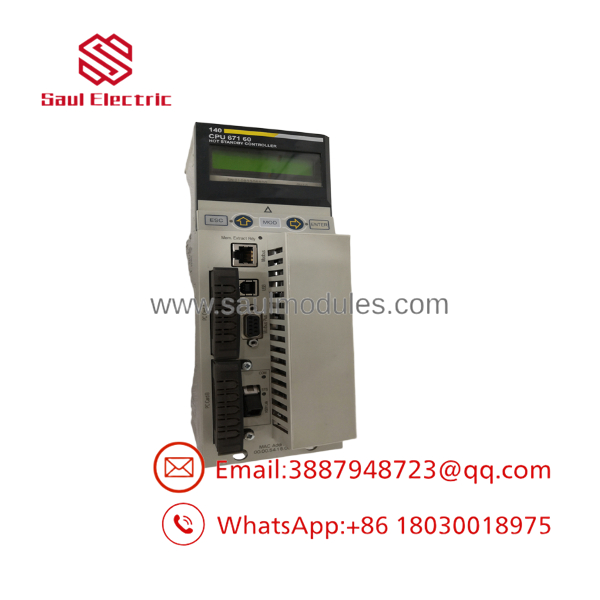
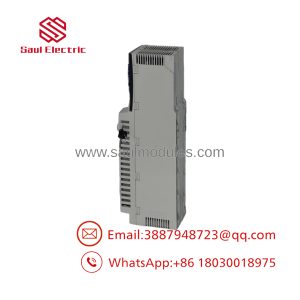
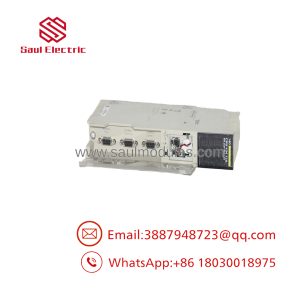
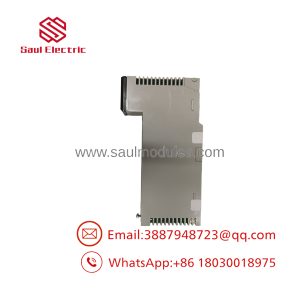
140CPU67160
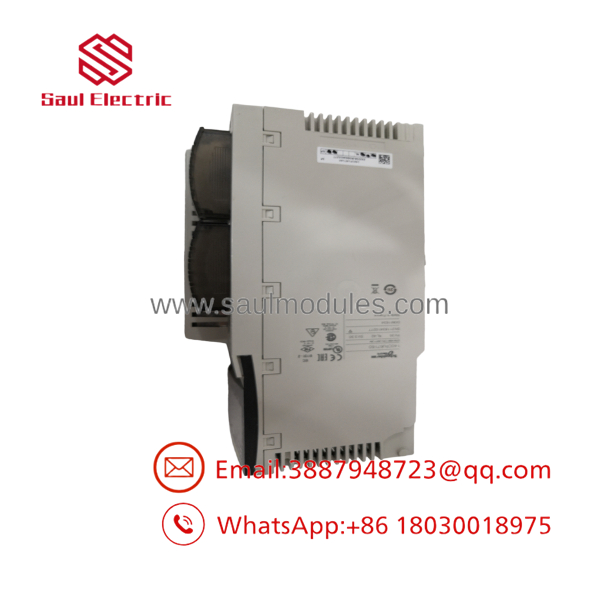
140CPU67160
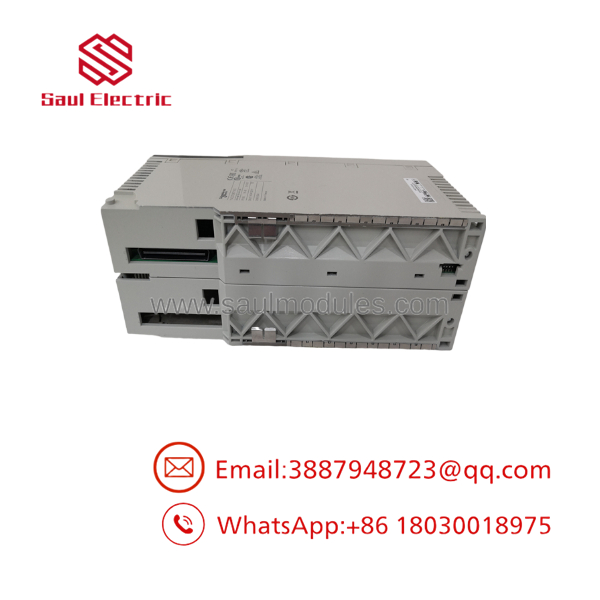
140CPU67160
Field Application & the “Trench” Experience
Consider a municipal water-treatment control system running two Quantum CPUs in a hot-standby configuration. The primary controller develops a processor fault, and the standby takes control as designed. Production continues, but the maintenance team now has a very specific problem: the failed 140CPU67160 must be replaced without disturbing the active controller.
The technician first records the running CPU’s firmware, hot-standby status, Ethernet/fiber connections, application revision, and I/O topology. The replacement processor is then checked independently before being introduced into the redundant pair.
That is the right mindset for this CPU. Don’t turn a successful failover into a plant shutdown.
Practical application scenarios include:
- Municipal water pumping and treatment control requiring controller redundancy.
- Hydroelectric auxiliary control systems using Quantum remote I/O and redundant processors.
- Continuous process-control systems where loss of the PLC processor can have significant operational consequences.
- Large material-handling installations using distributed Quantum I/O with redundant controller architecture.
The 140CPU67160 supports up to 63 distributed I/O stations and multiple remote-I/O architectures, making it suitable for substantially distributed Quantum systems.
Transparency SOP: QA & Testing
For New Surplus or refurbished 140CPU67160 stock, a meaningful QA procedure should include:
- Catalog verification
Confirm the exact140CPU67160number on the physical Schneider label. - Physical inspection
Examine the housing, backplane connector, Ethernet/fiber interfaces, indicators, and mounting hardware. - Firmware identification
Record the installed OS/firmware version. This is particularly important for a hot-standby application because Schneider documents CPU/copro firmware compatibility requirements. - Controlled power-up
Test the processor in an appropriate Quantum rack and check startup diagnostics. - Communication verification
Where the proper test setup exists, verify the Ethernet and relevant Quantum network interfaces. - Hot-standby validation
A serious test should evaluate the processor’s behavior in a compatible redundant test configuration rather than merely checking whether the CPU powers up. - Stock-condition documentation
State separately whether the unit is New Surplus, Used, or Refurbished. Include test results where available.
For a processor this specialized, “powers on” is not an adequate functional description.
The Veteran’s Tech Trap Guide
⚠️ Trap #1 — Firmware mismatch can undermine the replacement.
Schneider explicitly documents compatibility rules between the 140CPU67160 operating system and copro firmware. A replacement CPU with a different firmware revision should therefore be checked against the existing redundant pair before installation.
PRO TIP: Record the firmware versions of both the active and standby CPUs before touching the hardware. Keep that information with the replacement-parts record.
⚠️ Trap #2 — Don’t test it like a normal standalone CPU.
The defining feature of the 140CPU67160 is its hot-standby function. A bench test showing that the processor boots does not establish that synchronization, redundancy, and failover behavior are correct.
⚠️ Trap #3 — Multimode Ethernet is not just another network port.
The product is specifically described by Schneider as having multimode Ethernet. Verify the installed fiber/network architecture, transceivers or cabling arrangement, and existing redundancy configuration before removing the original unit.
⚠️ Trap #4 — Don’t treat BMEH584040 as a physical drop-in replacement.
Schneider recommends the BMEH584040 redundant M580 processor as the replacement for the 140CPU67160. However, this moves the system from the legacy Quantum architecture to Modicon M580. Application conversion, I/O compatibility, network architecture, and redundancy configuration must be assessed as part of the migration.
Dynamic FAQ
Q: What is the Schneider 140CPU67160?
A: It is a Modicon Quantum Unity Hot Standby processor with a 266 MHz clock and multimode Ethernet capability. It is intended for redundant PLC control applications.
Q: Is the 140CPU67160 a redundant CPU?
A: Yes. Its specific product designation is a Unity Hot Standby processor, meaning it is designed to operate as part of a redundant Quantum controller architecture.
Q: What is the processor speed?
A: The published specification is 266 MHz.
Q: What is the recommended replacement for 140CPU67160?
A: Schneider Electric currently identifies BMEH584040, a redundant Modicon M580 processor, as the recommended replacement. This should be treated as a migration path rather than an assumed one-for-one hardware swap.

 Start Chat


