





Description
Product Introduction & Engineering Value
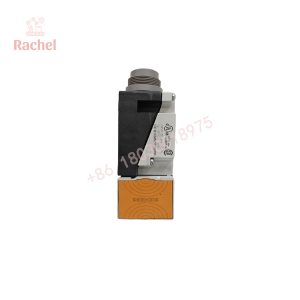
The Siemens 505-6660 is a legacy TI 505-series discrete I/O module used in Siemens/Texas Instruments PLC installations. This family remains relevant in plants where the control application is stable but the original PLC hardware has become difficult to source through normal distribution.
For a replacement, the critical issue is not simply finding another 505-series module. Confirm the exact 505-6660 part number, input electrical characteristics, terminal/base arrangement, and PLC configuration before installation. Legacy I/O modules can look nearly identical while having substantially different signal requirements.
Technical Specifications
- Manufacturer: Siemens
- Part Number: 505-6660
- Product Family: TI 505 / SIMATIC 505
- Hardware Type: PLC I/O module
- I/O Category: Discrete/digital input
- Controller Platform: TI 505 PLC
- Installation: 505-series I/O base/rack
- Signal Type: Discrete input
- Field Wiring: Via the applicable 505-series terminal/base arrangement
- Application: Industrial automation and process-control systems
- Lifecycle: Legacy/obsolete platform
- Replacement Strategy: Exact part-number replacement preferred unless a documented migration path has been engineered
Specification caution
I would not publish an exact channel count, input voltage range, current consumption, or terminal assignment for 505-6660 without the corresponding Siemens/TI 505 hardware documentation. Third-party catalogs frequently contain conflicting specifications for legacy 505 modules.
For procurement, the actual module label and original equipment documentation should take precedence.
Field Application & the “Trench” Experience
A production machine built around a TI 505 PLC develops a single failed field input. The sensor itself tests good. Wiring checks out. The PLC rack reports an input fault.
The plant has no engineering reason to redesign the machine. It simply needs the failed I/O module.
This is where an exact 505-6660 spare makes sense. Instead of modifying the field wiring, PLC program, and rack architecture, maintenance can restore the original I/O configuration—provided the replacement has been properly identified and tested.
Specific application scenarios
- Legacy packaging-machine input monitoring — Receiving discrete signals from limit switches, proximity sensors, and machine interlocks.
- Conveyor sequencing system — Monitoring position and permissive signals in a TI 505-controlled material-handling system.
- Process auxiliary equipment — Maintaining discrete status inputs without migrating the complete 505 PLC installation.
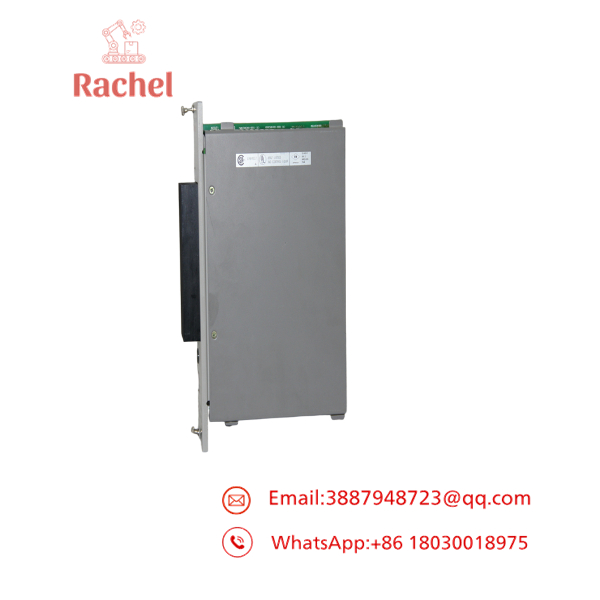
505-6660
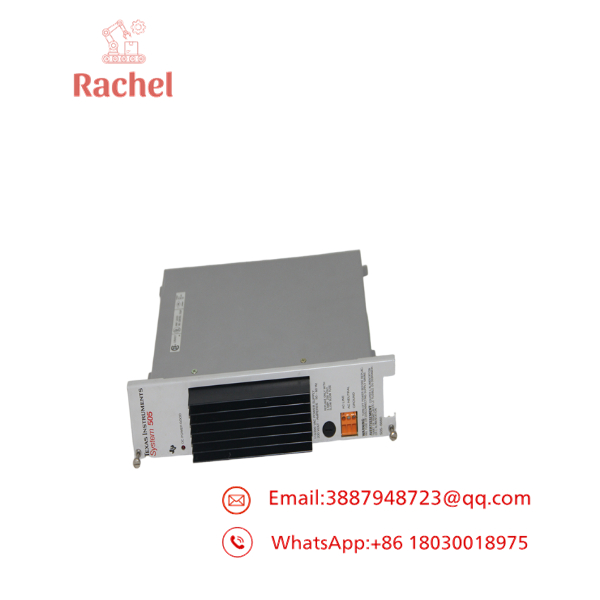
505-6660
Transparency SOP: QA & Testing
For surplus or refurbished 505-6660 inventory, a meaningful test should reproduce the module’s actual PLC operating environment.
- Part-number check — Confirm 505-6660 on the physical module.
- Visual inspection — Check the housing, terminal interface, PCB, connectors, and mounting points.
- Electrical screening — Check for obvious shorts or abnormal resistance before rack installation.
- Rack test — Install the module in a compatible TI 505 test rack.
- Input simulation — Apply appropriate simulated field signals to the inputs.
- PLC verification — Confirm that the controller correctly detects and reports the input states.
- Extended test — Cycle inputs repeatedly to identify intermittent channels.
- Documentation — Record module revision, tested channels, test conditions, and final status.
Procurement standard: “Powers on” should not be accepted as the complete test description for a used 505-series I/O module.
The Veteran’s Tech Trap Guide
⚠️ Trap #1 — Assuming every 505 I/O module is interchangeable.
The TI 505 family contains numerous digital and analog I/O variants. Matching the rack format is not enough.
PRO TIP: Photograph the original module label and terminal arrangement before issuing a replacement order.
⚠️ Trap #2 — Forgetting the input electrical specification.
A discrete input module must match the field signal. Installing the wrong voltage/current configuration can result in inputs that never turn on—or worse, damage to the module.
⚠️ Trap #3 — Replacing the module without documenting the existing PLC configuration.
Before removing the original unit, record rack position, slot number, channel usage, and field wiring. Legacy documentation is often incomplete.
⚠️ Trap #4 — Trusting a copied distributor specification.
For a discontinued 505-series module, conflicting third-party data is common. If the input voltage or channel count is critical to the installation, verify it from Siemens/TI documentation or the physical module.
Dynamic FAQ
What is Siemens 505-6660?
The 505-6660 is a legacy TI 505 / SIMATIC 505 discrete I/O module used in Siemens/Texas Instruments PLC systems.
Is the 505-6660 still manufactured?
It is associated with the legacy TI 505 platform and is generally sourced through surplus, used, refurbished, or specialist industrial-automation inventory.
Can I replace 505-6660 with another Siemens 505-series module?
Not without verifying the electrical and functional specifications. The replacement must be compatible with the field signal, rack, PLC configuration, and application.
What should I request when purchasing new-surplus 505-6660 stock?
Request:
- Actual photograph of the 505-6660 label
- Hardware/revision information
- Confirmation of unused/new-surplus condition
- Input-channel test results
- Test-rack details
- Warranty period
- Return policy
How should a refurbished 505-6660 be tested?
The best practical test is installation in a compatible TI 505 rack with simulated field inputs. Each channel should be switched repeatedly and verified from the PLC side.
Does a replacement module require PLC programming?
A direct hardware replacement normally does not imply that the control program itself must be rewritten, but the installed rack configuration and I/O addressing must be verified. Do not assume this without checking the particular PLC system.
What warranty should I expect?
Warranty depends on the supplier and stock condition. For legacy PLC hardware, a written warranty covering functional failure after installation is preferable to a simple “tested” claim.

 Start Chat


