





Description
Product Introduction
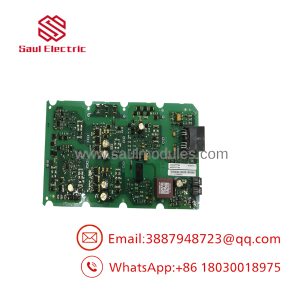
The Siemens Moore 16413-1-05 is an APACS MNET interface module designed for communication functions inside legacy Moore process automation systems. It provides the network interface layer required for APACS MNET communication between distributed control components.
This module is important in long-running DCS installations where replacing the entire control platform is not practical. The 16413-1-05 maintains the existing APACS architecture, allowing operators to preserve installed engineering databases, control strategies, and field wiring.
Key Technical Specifications
| Parameter | Specification |
|---|---|
| Manufacturer | Siemens Moore Products |
| Part Number | 16413-1-05 |
| Alternate Number | TI-16413-1-05 |
| Product Type | DCS Interface Communication Module |
| System Family | APACS |
| Communication Network | MNET |
| Module Function | MNI/MBI Interface |
| Power Supply | 24 VDC |
| Mounting | APACS system installation |
| Operating Temperature | 0°C to 50°C (secondary-source specification) |
| Storage Temperature | -20°C to 70°C (secondary-source specification) |
| Humidity Range | 5% to 95% RH non-condensing (secondary-source specification) |
| Weight | Approx. 0.16-0.35 kg depending on listing data |
| Manufacturer Status | Discontinued / Legacy |
The available documentation confirms the module identity as MNI/MBI APACS MNET Interface Module. Some secondary listings provide environmental values and communication details, but engineers should verify exact operating limits from the original Siemens Moore APACS manuals before approving installation.
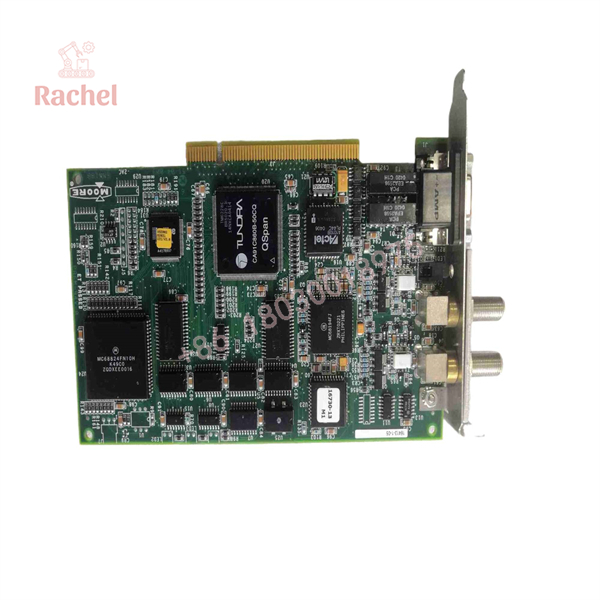
16413-1-05
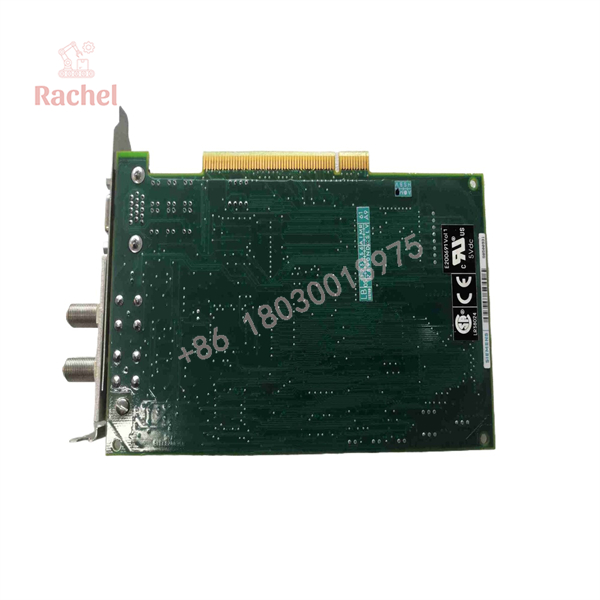
16413-1-05
Application Scenarios & The “Trench” Experience
The failure usually appears simple.
A process unit loses communication with part of an aging APACS system. The field instruments are healthy. The controller logic is running. The network diagnostics point toward one old interface module sitting in a cabinet that nobody has touched for fifteen years.
That is where legacy DCS maintenance becomes difficult.
The 16413-1-05 is used in applications such as:
- Oil & Gas Facilities — Process Control Network Communication — Maintains APACS MNET communication paths between control system components.
- Chemical Plants — Distributed Control Systems — Supports existing APACS installations where migration is not immediately planned.
- Power Generation — Auxiliary Process Control — Keeps legacy monitoring and control networks operational.
- Water Treatment Plants — Continuous Process Automation — Supports older DCS communication structures with installed APACS hardware.
- Manufacturing Plants — Legacy Automation Maintenance — Provides a replacement option when an original interface module fails.
Field case — a plausible replacement scenario:
A chemical plant has an APACS-based control system installed in the early 2000s. During a routine shutdown, operators notice intermittent communication alarms between controller nodes.
The maintenance team first checks fiber links, power supplies, and controller diagnostics. The problem eventually traces back to the MNET interface module.
A modern replacement strategy would require engineering changes, validation, and operator retraining. Finding a tested 16413-1-05 allows the plant to restore the original architecture with much lower commissioning risk.
The important part is not just finding the part number. It is verifying that the replacement communicates correctly with the existing APACS network.
Transparency SOP: Quality Assurance & Testing
For New Surplus or refurbished Siemens Moore 16413-1-05 modules, the inspection process should include:
- Inbound Inspection
- Verify the complete part number: 16413-1-05.
- Check Siemens Moore labeling, PCB markings, and revision identifiers.
- Inspect connectors, housing, and mounting features.
- Check for corrosion, repair marks, or unauthorized modifications.
- Live Rig Testing
- Install the module into a compatible APACS/MNET test environment where available.
- Perform power-up verification.
- Confirm module initialization.
- Verify communication handshake with the APACS network.
- Electrical Parameter Checks
- Verify 24 VDC input behavior.
- Check power consumption and abnormal current draw.
- Inspect communication interface circuits.
- Firmware Verification
- Record available firmware revision information.
- Compare hardware revision with the customer’s installed module.
- Confirm compatibility before shipment.
- Final QC & Anti-static Packaging
- Clean connector contacts.
- Apply ESD protection.
- Package using anti-static materials.
- Record serial number and inspection results.
We do not just ship old DCS boards. A legacy communication module needs a communication test whenever possible. A card that powers on but fails the MNET handshake is not a successful replacement.
The Veteran’s Tech Trap Guide
⚠️ Do not assume every APACS interface module is interchangeable.
The 16413-1-05 belongs to the APACS MNET communication family. Similar-looking modules may have different network functions. Check the exact part number before installation.
❗ Capture the old configuration before pulling the module.
Take photos. Record rack position. Document cables. Legacy DCS cabinets often contain undocumented field changes.
⚠️ Watch for firmware and revision differences.
A replacement board may physically fit and still fail communication because the hardware revision or software configuration does not match the installed system.
❗ Do not troubleshoot only from the controller side.
A communication fault can come from the interface module, network wiring, power quality, or configuration database. Check the complete communication path.
⚠️ Avoid unnecessary handling of the PCB.
Older industrial boards are sensitive to ESD damage. Use proper grounding and anti-static protection during inspection and installation.
Frequently Asked Questions (FAQ for Conversion)
Q1: What is Siemens Moore 16413-1-05?
It is an APACS MNET MNI/MBI Interface Module used in Siemens Moore legacy DCS installations.
Q2: Is 16413-1-05 a PLC I/O module?
No. It is primarily a communication/interface module for the APACS distributed control system. It handles network communication functions rather than direct field signal acquisition.
Q3: Is Siemens Moore 16413-1-05 discontinued?
Yes. Industrial surplus databases identify it as discontinued by the manufacturer. Remaining supply generally comes through surplus inventory and specialized automation-part suppliers.
Q4: Can I replace it while the APACS system is running?
Do not assume hot swapping is supported. DCS communication modules are normally replaced under controlled shutdown procedures unless the specific APACS hardware documentation confirms live replacement capability.
Q5: Does the replacement require firmware matching?
Yes. Verify firmware and hardware revision compatibility whenever possible. Communication modules are sensitive to software configuration differences.
Q6: Is a surplus 16413-1-05 fake or refurbished?
Not necessarily. Legacy automation parts often come from plant closures, unused project inventory, or decommissioned systems. The correct approach is to request actual photos, revision information, testing records, and warranty terms.
Q7: Why is this module cheaper through surplus channels than direct OEM replacement?
Legacy DCS components often remain available after OEM production ends because industrial plants keep spare inventories for years. Surplus pricing reflects inventory source, availability, and condition. Always compare documentation, testing, and warranty—not only the purchase price.

 Start Chat


