





Description
Product Introduction
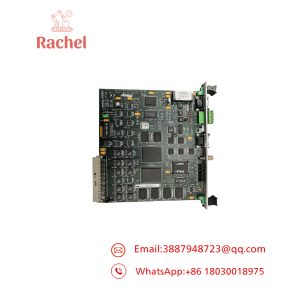
The Toshiba DI334 is an industrial-grade digital input module designed for Toshiba’s legacy PROSEC PLC and TOSDIC DCS controller platforms. Operating as a critical signal interface between field instrumentation and the main processor, it monitors discrete states from pushbuttons, limit switches, flow switches, and motor starter auxiliary contacts.
Engineered for harsh industrial noise environments, the DI334 incorporates optocoupler galvanic isolation to protect sensitive backplane electronics from field voltage surges and ground loops. To be honest, while many engineers confuse this part number with the ABB DI334 S500 module, the Toshiba variant is built specifically for Toshiba rack backplanes and features unique keying, terminal architecture, and bus communication protocols.
Key Technical Specifications
| Parameter | Value / Description |
| Manufacturer | Toshiba Corporation |
| Model Number | DI334 |
| System Family | Toshiba PROSEC T-Series / TOSDIC Systems |
| Input Type | Discrete / Digital Input |
| Nominal Input Voltage | 24 VDC |
| Signal Isolation | Optocoupler Galvanic Isolation (Field to Logic Bus) |
| Status Indicators | Individual Channel LED Indicators |
| Terminal Connection | Front-Mounted Screw Terminal Block / Header |
| Operating Temperature | 0°C to +55°C (32°F to 131°F) |
| Mounting | Dedicated Toshiba Rack / Base Slot |
Application Scenarios & The “Trench” Experience
A thermal power plant’s water treatment panel triggers an unhandled logic fault at 2 AM because a floating ground on a wet field contact degrades an input channel, causing the controller to misread a valve limit switch. In heavy continuous processes running legacy Toshiba DCS hardware, a single degraded input channel can freeze an entire automated sequence.
- Power Generation & Utility Plants – Captures valve limit status, breaker position signals, and safety trip contact feedback.
- Metals & Steel Rolling Mills – Monitors optical sensors, hydraulic pressure switches, and operator console commands under high electromagnetic noise.
- Water & Wastewater Facilities – Tracks pump run/stop status, tank high-level floats, and chemical dosing interlocks.
- Chemical & Petrochemical Processing – Reads discrete field interlocks across hazardous area barrier circuits.
Real-World Field Case Study
During a scheduled maintenance cycle at an industrial utility station running legacy Toshiba controllers, an input card in the water treatment rack stopped registering feedback from three motorized valve limit switches. Diagnostics showed that a line voltage spike had blown the front-end optocoupler array on channel bank 1 of the original DI334 card.
Upgrading the entire rack to a modern PAC architecture would have required weeks of panel redesign, re-wiring, and re-validating the control logic. The plant electrician sourced a fully bench-tested surplus Toshiba DI334 module. In our field experience, double-checking the terminal arm engagement and field 24V bus polarity before sliding the card home prevents instant repeat failures. After swapping the card and landing the terminal block, all field inputs responded immediately, getting the water treatment loop back online in under an hour.
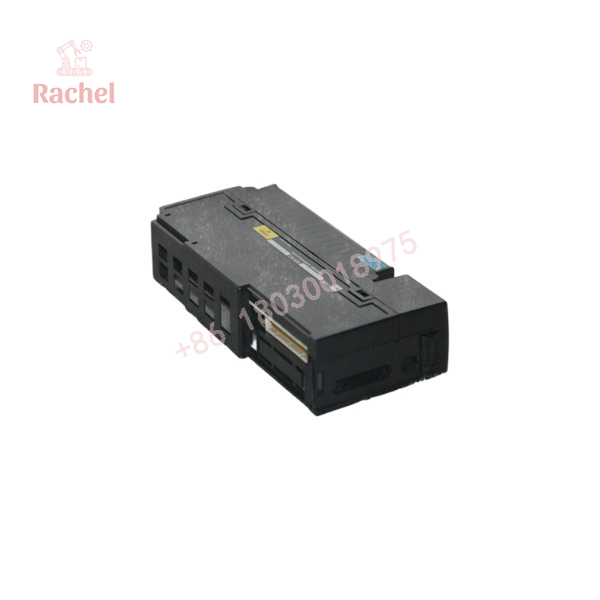
DI334
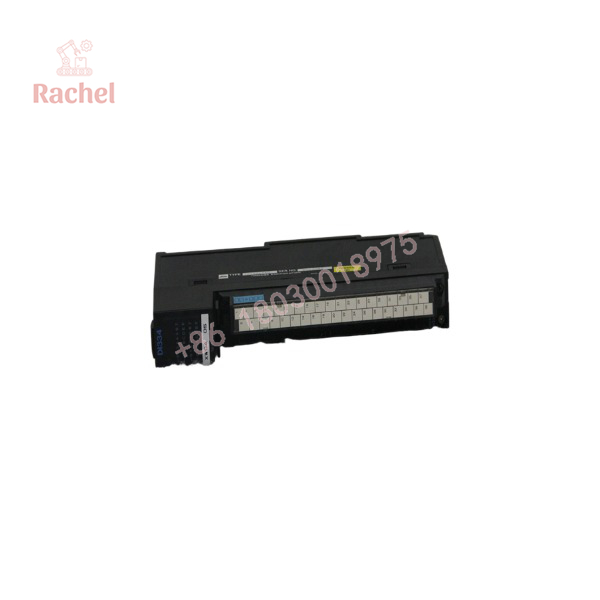
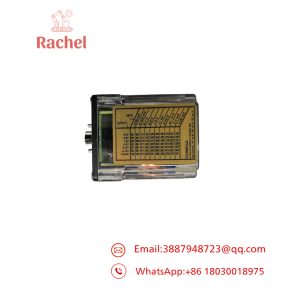
DI334
Transparency SOP: Quality Assurance & Testing
We don’t just ship boxes; we test them on actual Toshiba controller racks. Every pre-owned or new-surplus Toshiba DI334 digital input module undergoes a strict multi-point verification protocol before leaving our facility:
- Inbound Visual & Mechanical Audit: Inspect the card housing, backplane gold fingers, terminal connectors, and component solder joints for signs of thermal stress or corrosion.
- Backplane Bus Handshake Test: Insert the card into a powered Toshiba test rack to confirm immediate bus recognition, board ID verification, and system status LED initialization.
- Multi-Channel Signal Injection: Inject calibrated 24VDC signals across every individual input channel to verify ON/OFF voltage switching thresholds and channel LED illumination.
- Galvanic Isolation Check: Verify dielectric insulation resistance between field wiring terminals and the backplane logic ground.
- Final Quality Check & ESD Packaging: Apply protective terminal covers, log hardware revisions, and seal the unit inside heavy-duty anti-static barrier bags with custom foam packing.
The Veteran’s Tech Trap Guide (Crucial Value-Add)
⚠️ Do Not Confuse with ABB DI334: Double-check your system cabinet! ABB also manufactures an S500 series digital input module under the catalog name DI334 (3BSE008508R1). The Toshiba DI334 and ABB DI334 are completely incompatible physically and electrically. Verify the brand on your failed module before ordering.
❗ Never Remove the Module Under Field Power: Always de-energize the 24VDC field sensor supply and disconnect the front terminal block before pulling the Toshiba DI334 module from the rack slot. Hot-swapping a card without taking field power offline can cause arcing across the backplane edge pins and fry neighboring I/O cards.
⚠️ Verify External 24V Power Polarity: The module’s input circuits rely on an external 24VDC power source to sink or source current through field contacts. Reversing the 24V positive and common ground wiring will prevent all inputs from registering and keep status LEDs completely dark.
❗ Check Field Contact Bounce & Shielding: If an input channel flickers intermittently or counts multiple pulses on a single contact closure, inspect field wiring for loose terminal screws or unshielded cables running near high-voltage motor drives.
Frequently Asked Questions (FAQ)
Q: Is the Toshiba DI334 interchangeable with the ABB DI334 module?
A: No. They are completely different products from two distinct manufacturers. The Toshiba DI334 is designed for Toshiba PROSEC/TOSDIC racks, whereas the ABB DI334 belongs to the ABB AC31/S500 I/O platform.
Q: Can I use 120VAC field signals with the Toshiba DI334?
A: No. The Toshiba DI334 is strictly rated for 24VDC discrete signals. Connecting 120VAC directly to the input terminals will instantly destroy the internal optocouplers and input resistors.
Q: What are the primary symptoms of a failing DI334 input module?
A: Common indications include a channel LED remaining off when 24VDC is present at the terminal, a channel LED staying permanently lit regardless of field contact state, or a red system FAIL LED on the module front panel.
Q: Do I need to re-program the controller when replacing a faulty DI334 board?
A: No. As long as you replace the failed card with an identical Toshiba DI334 module and land the terminal block correctly, the controller will automatically read the card hardware on boot without software changes.
Q: What warranty coverage comes with surplus or pre-owned units?
A: All factory-sealed surplus and fully reconditioned Toshiba DI334 modules supplied through our channel come backed by a comprehensive 12-month operational replacement warranty.
Q: Why source surplus Toshiba I/O cards instead of upgrading the entire control panel?
A: Complete DCS or PLC migrations require purchasing new CPUs, re-engineering wiring drawings, and rewriting thousands of lines of control code—a process costing tens of thousands in capital and downtime. Sourcing tested surplus cards maintains your existing, validated control system at a fraction of the cost.

 Start Chat


