





Description
Product Introduction & Engineering Value
Running high-voltage DC trip solenoids over long field runs usually leaves control engineers blind to cable degradation until the moment a critical valve fails to actuate on demand. The Triconex 3623T Supervised Digital Output (SDO) module solves this vulnerability by taking field circuit diagnostics all the way to the load terminals.
Operating on a 120 VDC nominal field supply, the 3623T uses a quadruplicated transistor switch matrix driven by three independent TMR processor channels. Onboard voltage and current loopback circuitry continuously injects micro-test pulses into the field loop. This reveals open field wiring, blown fuses, or shorted loads instantly without changing the physical state of your trip device or causing unwanted plant shutdowns.
Technical Specifications
- Output Channels: 16 commoned, supervised digital points
- Nominal Output Voltage: 120 VDC
- Operational Voltage Range: 90 to 150 VDC (160 VDC max peak)
- Maximum Current Rating: 0.8 A per channel (4.0 A surge for 10 ms)
- Minimum Required Load: 30 mA per point (for full diagnostic supervision)
- Max Off-State Leakage Current: 4.0 mA
- ON-State Voltage Drop: <1.5 VDC typical at full continuous current
- Point-to-Point Isolation: 1500 VDC / 2500 VDC functional isolation
- Baseplate Fuses: 1.0 A fast-acting per point on the external termination panel
- Power Dissipation: Less than 10 Watts internal logic load
Field Application & The “Trench” Experience
The Trench Story
A high-pressure gas compressor station in West Texas logged a persistent LOAD alarm on channel 8 of an existing 3623T module without triggering a system trip. TriStation diagnostics indicated an open circuit on the fuel gas emergency shut-off valve (ESDV) solenoid loop. Field technicians dispatched to the valve enclosure discovered severe copper corrosion inside the junction box, which had eroded the conductor down to a single strand—dropping loop current right to the module’s 30 mA supervision threshold. The SDO card’s passive diagnostic loopback caught the fault weeks before a scheduled ESD test, allowing the site crew to replace the field lead without taking the compressor offline.
Specific Field Application Scenarios
- Main Fuel Gas Emergency Isolation Valves (EFIV): Actuating high-voltage 120 VDC heavy-duty trip solenoids on industrial power boilers.
- Turbine Emergency Stop & Throttle Control: Driving high-reliability safety-trip coils on steam and gas turbine emergency trip headers.
- High-Pressure Pipeline Blowdown Solenoids: Continuous supervision of remote 120 VDC blowdown valve actuators exposed to ambient field degradation.
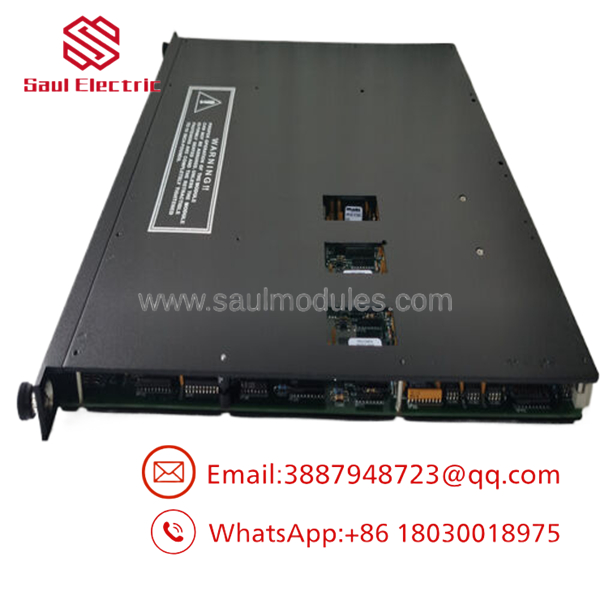
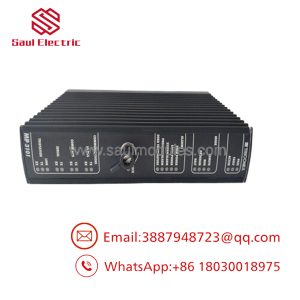
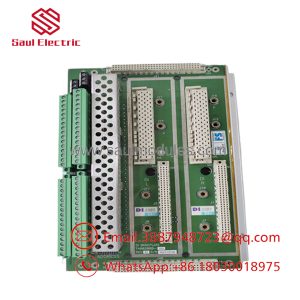
- 3623T
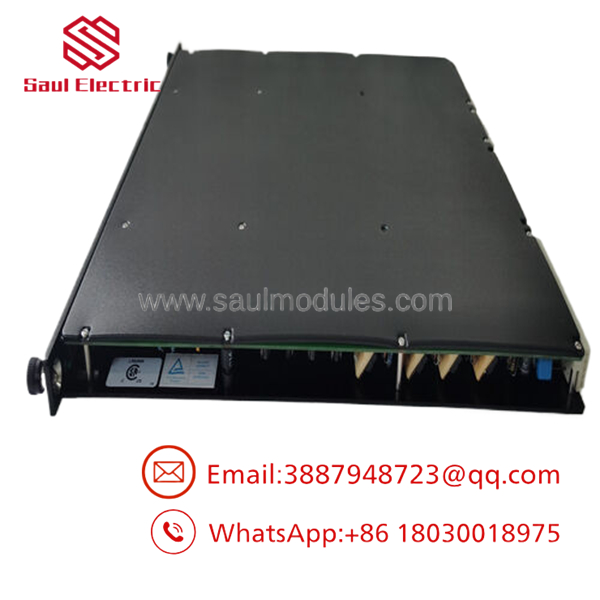
- 3623T
Transparency SOP: QA & Testing
- Step 1: Mechanical Pin & Conformal Coating Inspection
We check the 3623T’s backplane edge connectors for pin wear, verify structural rail alignment, and check for conformal coating breakdown caused by thermal cycles.
- Step 2: Live Chassis Initialization & TriBus Sync
The card is inserted into a live Tricon test chassis to verify power distribution, microprocessor boot sequences, and TriBus communications.
- Step 3: 120 VDC Load & Current Loopback Validation
We apply a 120 VDC field supply across all 16 channels, loading each to its nominal 0.8 A capacity. We test response timing, verify voltage drop (<1.5 VDC), and confirm off-state leakage remains below specs.
- Step 4: Simulated Field Fault Diagnostics (Supervision Check)
We simulate open loads, dead shorts, and blown field fuses to confirm that the module accurately trips internal diagnostic bits and illuminates the front-panel
LOADandPOWERalarm LEDs.
The Veteran’s Tech Trap Guide
⚠️ The 30 mA Minimum Load Threshold: The “Supervised” feature requires at least 30 mA of continuous current to accurately verify loop integrity. If you connect the 3623T to low-power interposing relays or modern high-efficiency solenoids drawing under 30 mA, the module will report a false “LOAD” alarm because it perceives the circuit as an open wire. Always check your solenoid hold-in current, and wire a external load-resistor kit across the ETP terminals if the load falls below 30 mA.
PRO TIP: Managing 120 VDC Inductive Kickback
When breaking 120 VDC inductive solenoid loads, back-EMF spikes can easily breach 600 Volts if unsuppressed. Although the 3623T has internal switching protection, driving un-suppressed 120 VDC solenoids will gradually degrade the output transistors over time. Always mount an appropriately rated flyback diode or MOV surge suppressor right across the solenoid coil terminals in the field.
⚠️ Fuses Located on the ETP, Not the Card: If an individual channel loses output power, do not immediately assume the 3623T module has blown an internal switch element. The 1.0 A fast-acting fuses are located on the External Termination Panel (ETP). Always verify ETP fuse continuity and check for 120 VDC field bus supply before pulling the card from the rack.
Dynamic FAQ
Q: What makes a “Supervised” Digital Output (SDO) module like the 3623T different from a standard Digital Output card?
A: A standard output card only knows if its internal switches are open or closed. The supervised 3623T actively sends low-level diagnostic pulses into the field wiring to monitor the physical health of the loop, detecting open field leads, shorted loads, missing field power, or blown fuses in real time.
Q: Can I use the 3623T on 24 VDC control loops?
A: No. The 3623T is specifically built for 120 VDC nominal power loops (operating between 90 and 150 VDC). For 24 VDC supervised applications, you must use the 3625 or 3624 series modules.
Q: Is the 3623T hot-swappable in an active Tricon system?
A: Yes. The 3623T supports online hot-swapping. You can insert the replacement card into the adjacent hot-spare slot, wait for the Tricon Main Processors to synchronize state and verify diagnostics, and then safely remove the faulted card without interrupting power to the field loads.
Q: What is the warranty on surplus or reconditioned Triconex 3623T modules?
A: All our New Surplus and reconditioned Triconex 3623T modules come with a full 1-year functional replacement warranty and arrive complete with bench diagnostic reports.
Q: Why is my 3623T module showing a red “LOAD” LED when the solenoid operates fine?
A: This almost always indicates that the connected field device draws less than the 30 mA minimum current threshold required for load-sensing diagnostics. Adding a parallel dummy load resistor at the termination assembly will raise current draw above 30 mA and clear the alarm.

 Start Chat


