





Description
Product Introduction
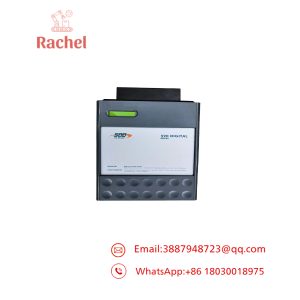
The Vibro-Meter CMC16 is a 16-channel Condition Monitoring Card designed for the VM600 machinery monitoring system. It acquires dynamic vibration signals, processes speed and phase references, and evaluates configurable measurement bands and alarm limits. Typical applications include monitoring steam turbines, gas compressors, pumps, and other rotating equipment where vibration trends and spectral data support maintenance decisions.
Its main advantage is onboard signal processing across 16 configurable channels. The card supports FFT analysis, synchronous order tracking, waveform capture, and alarm-based data logging. Rather than sending every raw measurement continuously to a host computer, it can process measurements locally and transmit configured results. That architecture helps engineers investigate developing machine faults without requiring continuous high-volume data transfers.
Key Technical Specifications
The following values are based on published CMC 16 technical documentation. Confirm the exact hardware and firmware revision before procurement.
| Parameter | Specification |
|---|---|
| Manufacturer | Vibro-Meter SA |
| Model | CMC 16 / CMC16 |
| Product Type | Condition monitoring and data acquisition card |
| System Platform | VM600 Condition Monitoring System |
| Input Channels | 16 individually configurable dynamic channels |
| A/D Conversion | 14-bit converter per channel; transmitted data may be truncated to 12 bits plus sign |
| Maximum Sampling Rate | Up to 100 kHz in certain documented configurations; revision-dependent specifications must be checked |
| Maximum Frequency Span | 20 kHz |
| FFT Resolution | Configurable, with up to 3,200 lines in documented operating modes |
| Speed Measurement Range | 15 to 30,000 RPM for documented order-tracking operation |
| Speed/Phase Inputs | Up to 4, subject to channel configuration |
| Communication | VMEbus to CPU M; RS-485 serial communication in supported configurations |
| Supply Voltage | 5 VDC ±5% |
| Power Consumption | Approximately 15 W |
| Operating Temperature | −25°C to +65°C |
| Dimensions | Approximately 262 × 20 × 187 mm (H × W × D) |
| Weight | Approximately 0.35 kg |
Source: Vibro-Meter CMC 16 technical documentation. Sampling rates and acquisition capabilities vary across published document revisions, so the specifications for the exact ordering code take precedence.
Ordering code matters. The documented format is 200-530-SSS-HHh, where the suffix represents embedded software and hardware revisions. Obtain the complete part number from the installed card before selecting a replacement.
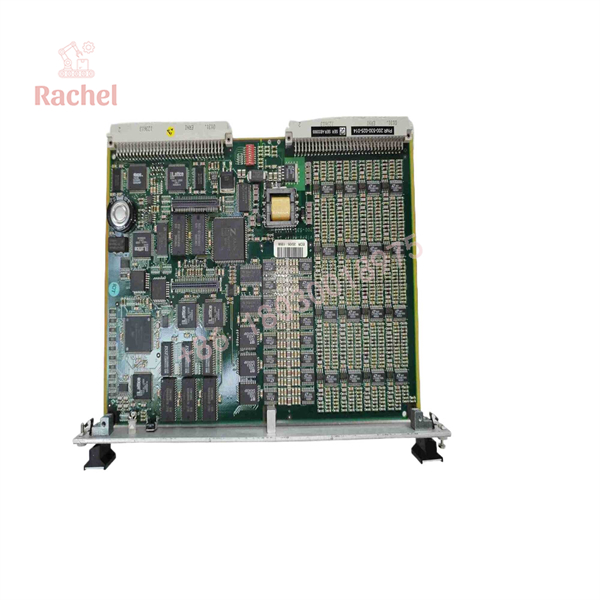
CMC16
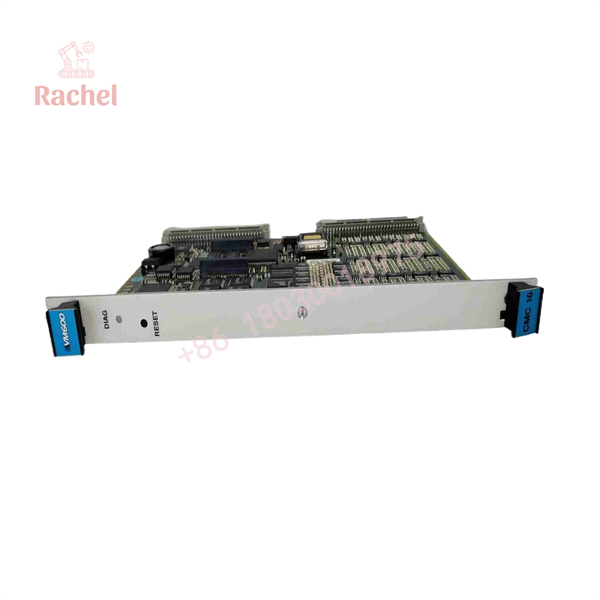
CMC16
Application Scenarios & The “Trench” Experience
A rotating machine starts vibrating more heavily after a maintenance shutdown. The DCS still displays process values, but the vibration monitoring workstation stops updating spectra. Maintenance initially suspects a sensor fault. After checking the field wiring and sensor supply, the team finds that the monitoring card is no longer communicating with the system CPU.
This is where the CMC16’s role becomes important. It handles acquisition and processing; replacing it without checking the configuration can create a second problem on top of the original failure.
- Oil and Gas — Compressor Condition Monitoring — Acquires vibration and phase-reference signals for spectral analysis and speed-related diagnostics.
- Power Generation — Steam Turbine Monitoring — Supports waveform, orbit, and frequency-spectrum analysis used to investigate rotor vibration.
- Petrochemical Processing — Process Pump Monitoring — Provides configurable measurement bands and alarm evaluation for machinery condition monitoring.
- Industrial Manufacturing — Motor and Fan Diagnostics — Supports vibration trending and frequency analysis to help identify developing mechanical faults.
- Rotating Equipment Maintenance — Startup and Transient Analysis — Captures time-dependent data during machine startup or other transient operating conditions when the installed configuration supports it.
These applications reflect the documented capabilities of the CMC 16; actual sensor compatibility depends on the input configuration and associated instrumentation.
Field case study — Illustrative replacement scenario
A plant discovers that a VM600 monitoring channel has stopped providing reliable spectral data for a critical compressor. The process remains operational, but maintenance cannot rely on the affected monitoring information to assess the machine’s condition.
The team checks the sensor wiring, CPU communication, and card diagnostics. The CMC16 becomes the leading replacement candidate after the hardware fault is isolated.
Before ordering, procurement verifies the full 200-530 ordering code, firmware suffix, hardware revision, and existing rack configuration. The replacement is then inspected and tested before installation. After the approved change, engineers confirm channel configuration, communication, and measurement behavior against the plant’s baseline.
The cost of downtime can quickly exceed the price of a monitoring card. Still, rushing an unverified replacement into service is a poor trade. Correct identification and a documented return-to-service check are essential.
This is a hypothetical maintenance scenario, not a claim of a documented customer deployment.
Transparency SOP: Quality Assurance & Testing
For legacy machinery monitoring hardware, the important question is not simply whether the card powers on. The card must be assessed for physical condition, diagnostic behavior, communication, and compatibility with the intended VM600 configuration.
A suitable inspection and testing procedure includes the following steps.
1. Inbound Inspection
- Record the complete ordering code, serial number, and hardware revision.
- Inspect the PCB, connectors, edge contacts, and component condition where accessible.
- Check labels and packaging for inconsistencies.
- Record whether the unit is new surplus, factory sealed, used, or refurbished. Do not infer condition from appearance alone.
2. Live Rig Testing
- Where a compatible VM600 test rack is available, power the card using the documented supply requirements.
- Check status indicators and available diagnostic information.
- Verify communication with the compatible CPU M and supported host interface.
- Test acquisition and processing functions using an approved test setup, where available.
3. Electrical Parameter Checks
- Verify relevant supply and electrical parameters against the applicable technical documentation.
- Inspect connectors and look for evidence of overheating or damaged components.
- Do not perform high-voltage insulation-resistance testing directly on electronic assemblies unless the OEM explicitly authorizes it.
4. Firmware Verification
- Record the embedded software revision and hardware suffix.
- Compare them with the intended rack and system configuration.
- Confirm that any configuration migration follows the applicable maintenance documentation.
5. Final QC and ESD Packaging
- Record inspection findings and test results.
- Apply appropriate electrostatic-discharge protection.
- Package the card to protect its PCB and edge connectors during shipping.
- Provide available test documentation and written warranty terms.
Procurement note: If a supplier advertises a fully tested CMC16, request evidence of the actual test performed. A power-on check is not equivalent to a complete functional test on a compatible VM600 rack.
The Veteran’s Tech Trap Guide
Warning 1: Match the complete ordering code.
The CMC16 suffix is not decorative. Documented ordering information distinguishes firmware and hardware revisions, and major hardware revisions may affect interchangeability. Photograph the nameplate before removing the old card. Do not order based on alone.
Warning 2: Check the communication path.
The CMC16 uses the VM600 architecture, with communication through the CPU M and supported serial interfaces. Do not assume that a serial connection and an Ethernet connection are interchangeable. Verify the actual rack configuration, interface path, and host software.
Warning 3: Don’t confuse acquisition settings with hardware faults.
A card can be functional while showing different results because of channel ranges, filtering, sampling settings, FFT resolution, or averaging configuration. Record the original settings before replacing the card, then compare the returned measurements against known-good references.
Warning 4: Confirm live insertion procedures.
Some published CMC16 documentation describes live insertion and removal with automatic configuration. That does not authorize live removal in every VM600 installation. Verify the applicable rack manual and plant maintenance procedure, and assess the consequences for monitoring coverage before pulling the card.
Frequently Asked Questions (FAQ for Conversion)
Q1. Is the Vibro-Meter CMC16 hot-swappable?
Published documentation describes live insertion and removal with automatic configuration. However, the approved procedure depends on the installed rack and system revision. Confirm the OEM instructions before removing the card from an energized rack.
Q2. Can I replace a CMC16 with a different firmware or hardware revision?
Not without checking compatibility. The documented ordering code includes revision information, and major hardware changes can affect interchangeability. Compare the complete ordering code and obtain confirmation for the target VM600 configuration before ordering.
Q3. Does the CMC16 support Ethernet and Modbus TCP directly?
Do not assume that it provides a native Ethernet or Modbus TCP interface directly on the card. The documented architecture uses the VMEbus connection to CPU M, with RS-485 serial communication available in supported configurations. The actual host interface and protocols depend on the system configuration and software.
Q4. Can the CMC16 monitor vibration, speed, and process signals at the same time?
Yes, within its documented channel configuration. The first four channels can be configured for speed or phase-reference inputs, while other channels can be assigned supported measurement functions. The exact allocation must follow the system configuration and input requirements.
Q5. Is a 12-month warranty standard for this card?
Not necessarily. Warranty duration depends on the supplier’s written terms. Confirm the warranty period, coverage, exclusions, return procedure, and whether the warranty covers functional failure or only specific defects. Do not assume that all surplus or refurbished cards carry a 12-month warranty.
Q6. Why is a surplus CMC16 often cheaper than buying through an OEM channel?
Surplus inventory can come from plant decommissioning, excess maintenance stock, or secondary-market suppliers. That can lower the acquisition cost, but traceability, testing documentation, and after-sales support may differ. Compare the condition, revision compatibility, test evidence, warranty, and delivery terms before deciding.
Q7. How do I verify that a CMC16 is genuine and not refurbished?
Request photographs of the actual card, its labels, complete ordering code, and serial number, along with available provenance and test records. Inspect the PCB and connectors for signs of prior use or repair. Original packaging alone does not prove that the card is unused, and a refurbished card is not necessarily counterfeit. The supplier should state the actual condition clearly.

 Start Chat


