





Description
Engineering Overview
In a turbine control cabinet, the 8200-226 sits between the supervisory/control system and the final hydraulic or pneumatic actuator. The important engineering point is that it is a closed-loop position controller, not simply a current-to-voltage signal converter.
For a replacement, the demand signal, actuator coil characteristics, feedback device type, power supply, and existing SPC configuration should all be checked before commissioning. A physically compatible unit can still require configuration or calibration before it can control the existing actuator correctly.
Technical Specifications
| Specification | 8200-226 |
|---|---|
| Manufacturer | Woodward |
| Model | 8200-226 |
| Product Family | SPC Servo Position Controller |
| Nominal Supply | 24 VDC |
| Supply Range | 18–32 VDC |
| Maximum Supply Current | 1.1 A |
| Position Demand | 4–20 mA and/or DeviceNet |
| 4–20 mA Input Impedance | 200 Ω |
| 4–20 mA Operating Range | 2–22 mA |
| Servo Output Current Range | ±10 to ±250 mA |
| Resolution | 11 bits |
| Typical Heat Load | Approximately 20 W |
| Position Feedback | Single or dual feedback arrangement |
| Feedback Application | AC position transducers or DC position device, depending on configuration |
| PC Service Interface | Serial connection |
| Service Connector | 9-pin D-sub |
| Service Software | SPC Service Tool |
| Required Tool Version | Version 1.3 or later for 8200-226 |
Woodward documentation specifies an 18–32 VDC supply and a maximum supply current of 1.1 A. Supporting technical references list the 8200-226’s 11-bit resolution, 200 Ω input impedance, 2–22 mA operating range, and ±10 to ±250 mA current range.
The SPC manual also states that the 8200-226 requires SPC Service Tool version 1.3 or later for correct operation.
What the 8200-226 Controls
The 8200-226 is intended for applications where the control system specifies a desired actuator position and the SPC regulates the actuator against feedback.
A simplified signal chain is:
Control System → 4–20 mA / DeviceNet Demand → 8200-226 SPC → Servo Actuator → Valve Position → Feedback → SPC
This makes the unit particularly relevant to turbine governor and final-control applications where accurate actuator positioning is required.
Typical Application Areas
- Gas turbine fuel-control actuator systems
- Steam turbine valve positioning
- Hydraulic proportional valve control
- Integrating servo valve applications
- Pneumatic actuator positioning
- Turbine retrofit projects replacing earlier SPC hardware
- Industrial machinery requiring closed-loop actuator positioning
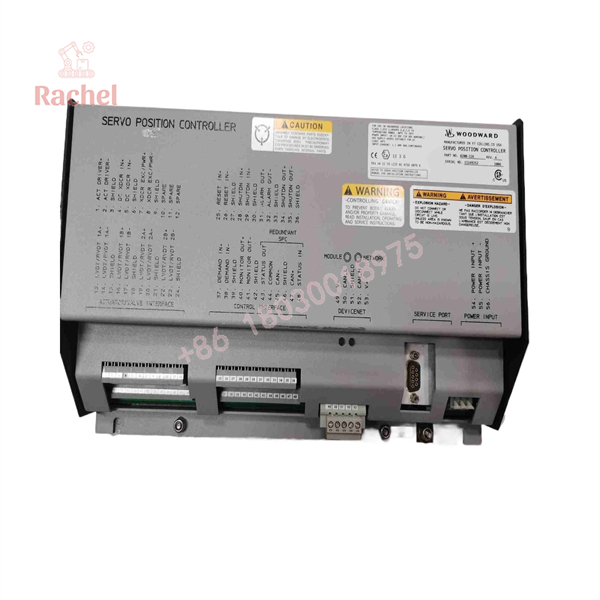
8200-226
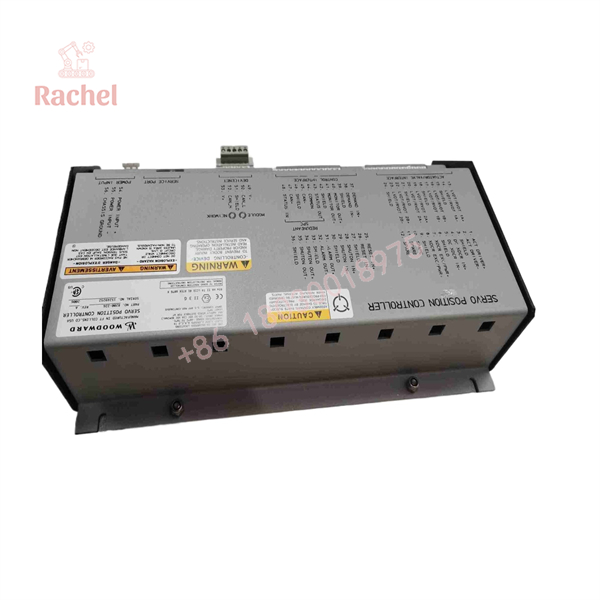
8200-226
Field Application & Trench Experience
Turbine Valve Replacement Scenario
Consider a turbine maintenance team replacing an aging 8200-224 with an 8200-226. The first mistake would be to treat the replacement as a simple “remove and replace” job.
The engineer should first capture the existing SPC configuration, including:
- Position-demand source.
- Actuator output configuration.
- Feedback device type.
- Feedback polarity and scaling.
- Zero/span calibration.
- Dynamic tuning parameters.
- Alarm and fault configuration.
The SPC Service Tool is specifically intended for configuration, calibration, adjustment, monitoring, and troubleshooting.
Why Feedback Matters
A position controller depends on the feedback loop. If the feedback polarity or scaling is wrong, the actuator can respond in the wrong direction or fail to reach the expected position.
This is why an 8200-226 replacement should be treated as a control-loop commissioning task, rather than merely a hardware replacement.
QA & Testing Procedure
For a replacement or surplus 8200-226, inspection should cover both hardware condition and configuration compatibility.
1. Identity Verification
Confirm:
- Woodward manufacturer marking
- Part number 8200-226
- Serial number
- Product revision where applicable
- Certification markings where applicable
Woodward documentation identifies the 8200-226 as available in a version associated with CE, ATEX, CSA, and Marine certifications; the exact certification marking should therefore be checked on the actual unit rather than assumed from the model number alone.
2. Electrical Inspection
Check:
- DC supply terminals
- Actuator output terminals
- Demand-input connections
- Feedback connections
- DeviceNet interface
- Serial service connector
- PCB and terminal condition
3. Functional Testing
Where a suitable test bench is available:
- Apply controlled 24 VDC power.
- Verify startup behavior.
- Test the demand input.
- Verify feedback acquisition.
- Check actuator-drive output.
- Verify fault/alarm behavior.
- Establish closed-loop response.
- Confirm configuration through the SPC Service Tool.
A seller’s statement that a unit is “tested” should not be interpreted as proof that it has been calibrated for a specific turbine actuator.
Veteran’s Tech Trap Guide
Trap 1 — 8200-226 vs. 8200-224 / 8200-225
The 8200-226 replaced the earlier 8200-224 and 8200-225 models, but replacement should still be based on the complete application configuration. The service-tool version is also important.
Trap 2 — Confusing Demand Input With Actuator Output
The 4–20 mA signal is a position-demand input. It is not the servo-valve drive output. The 8200-226 provides a separate actuator drive function, with documented current capability extending into bipolar output ranges.
Trap 3 — Installing Without Capturing Configuration
The controller can be configured and calibrated through the SPC Service Tool. Before removing an operating unit, save the existing configuration whenever the maintenance procedure permits it. This can substantially reduce commissioning time after replacement.
Trap 4 — Ignoring the 18–32 VDC Supply Requirement
The controller requires an appropriate DC supply. Woodward documentation specifies 18–32 VDC, with a maximum current requirement of 1.1 A. The manual also specifies protection requirements for the power line.
Procurement & Compatibility Notes
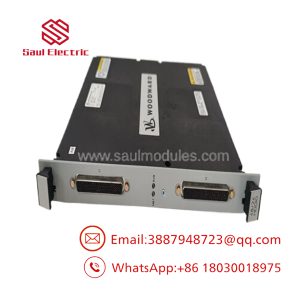
When sourcing an 8200-226, request photographs of the actual nameplate rather than relying solely on catalog photographs. For turbine-control applications, also compare the existing unit’s:
- Part number
- Revision
- Certification markings
- Connector arrangement
- Feedback configuration
- Existing SPC software/configuration
- Application-specific tuning parameters
The 8200-226 is listed by Woodward as the SPC configurable servo/actuator driver, with Product Specification 03254 and Installation and Operation Manual 26236 associated with the product.
FAQ
What is the Woodward 8200-226?
It is a Servo Position Controller (SPC) used to control the position of hydraulic or pneumatic actuators based on a control-system position demand.
What signals can the 8200-226 accept?
The SPC supports 4–20 mA and DeviceNet position-demand signals, depending on system configuration.
What power supply does the 8200-226 require?
The documented supply range is 18–32 VDC, with 24 VDC nominal.
Can it replace a Woodward 8200-224 or 8200-225?
The 8200-226 is documented as the later SPC model replacing the 8200-224 and 8200-225. However, the actual application configuration, actuator, feedback system, and commissioning requirements must still be verified before substitution.
What software is required?
The 8200-226 requires SPC Service Tool version 1.3 or later according to the installation manual. The tool communicates with the SPC through a serial connection.
How should a New Surplus 8200-226 be authenticated?
Check the actual Woodward nameplate, part number, serial information, certification markings, physical condition, and packaging. If the seller claims functional testing, request the test scope and results. “New Surplus” describes the seller’s inventory condition and should not by itself be treated as proof of current factory-new status.

 Start Chat


