





Description
Product Introduction & Engineering Value
The 8280-423 is built around a very specific marine-control problem: keeping two mechanically coupled engines coordinated while managing speed, fuel demand, clutch operation, and load distribution. It is the medium/high-speed version of the 723PLUS two-engine marine control family, rather than a general-purpose PLC or ordinary engine speed controller.
For an installed system, the controller’s programmed application matters as much as the hardware number. Woodward describes functions including mechanical load sharing by matching fuel-rack positions, clutch permissive logic, soft loading/unloading, torsional filtering, and several fuel-limiting functions.
Technical Specifications
| Parameter | Specification |
|---|---|
| Manufacturer | Woodward |
| Part Number | 8280-423 |
| Product Family | 723PLUS Digital Marine Control |
| Application | Two-engine mechanical load sharing |
| Engine Speed Category | Medium/high speed; typically above 100 rpm |
| Supply Type | Low voltage |
| Supply Voltage | 18–40 VDC |
| Nominal System Voltage | 24 VDC |
| Power Consumption | Approximately 40 W |
| Starting Surge | Approximately 7 A |
| Speed Inputs | Two MPU or proximity-switch inputs |
| Load Sharing | Mechanical load sharing |
| Clutch Control | Integrated clutch and permissive logic |
| Communication | RS-232 / RS-485 / RS-422 options; LON networking |
| Programming Interface | Watch Window / hand-held programmer |
| Update Groups | Configurable, 10–80 ms |
| Operating Temperature | −40 to +70 °C (−40 to +158 °F) |
| Environmental Classification | UL/cUL Class I, Division 2, Groups A, B, C, D |
| Approx. Dimensions | 16.25 × 11.5 × 2.375 in. |
| Approx. Weight | 6.5 lb |
The supply range, power requirement, environmental range, enclosure classification, dimensions, and weight are reported for this exact part number; Woodward’s 723PLUS literature additionally specifies two serial ports, two LON channels, configurable update groups, and Watch Window/hand-held programming.
Control Functions
The 8280-423 is not simply a speed reference device. Its application software can incorporate:
Mechanical load sharing — The two engines can share mechanical load by matching fuel-rack positions.
Clutch management — Clutch control and permissive logic are incorporated for mechanically combined engine operation.
Soft loading/unloading — Load can be introduced or removed through controlled ramps rather than an immediate step.
Fuel limiting — Torque, starting fuel, manifold-air-pressure, and external fuel-limit functions are supported.
Torsional filtering — The controller can process speed signals with filtering intended for torsional disturbances associated with engine and flexible-coupling systems.
Field Application & the “Trench” Experience
Picture a dredging vessel with two diesel engines mechanically coupled to a common propulsion system. One 723PLUS controller begins showing unstable speed feedback during a maintenance period. The replacement appears simple until the commissioning engineer checks the actual application configuration.
The two engines are not operating as independent generators. The controller has to coordinate mechanical load sharing, clutch engagement, speed sensing, fuel-rack position, and load transitions. A replacement with the correct base part number but an incorrect configuration can therefore create a much longer commissioning problem than the hardware swap itself. Woodward’s 02881 manual specifically describes 8280-423 for two-engine marine applications requiring mechanical load sharing and unit clutching.
Niche application scenarios
- Twin-engine dredging propulsion — Two diesel engines operate mechanically together while the controller manages fuel-rack matching and clutch logic.
- Marine propulsion with flexible couplings — The torsional-filtering functions are relevant where flexible mechanical coupling can introduce disturbances into the speed signal.
- Dual-engine mechanically combined propulsion — The controller supports single-throttle operation when the two engines are clutched together, along with controlled loading and unloading.
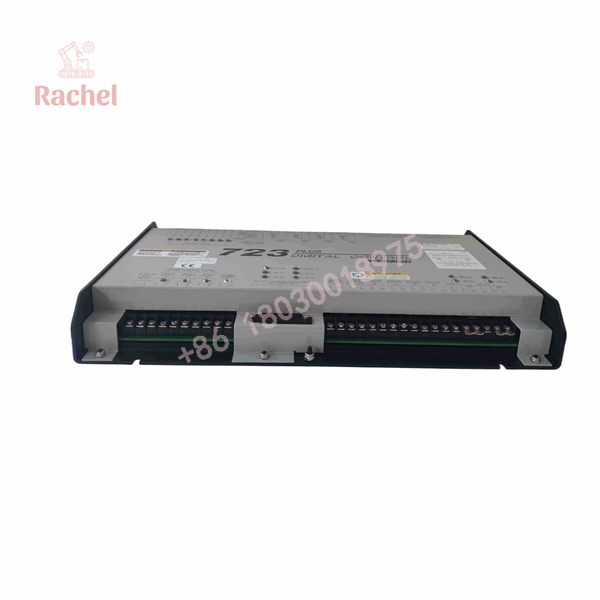
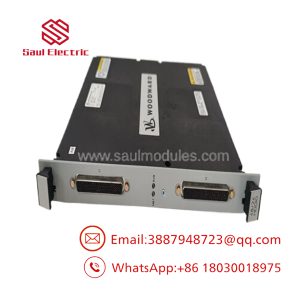
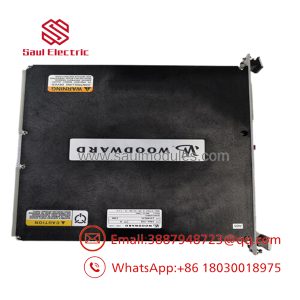
8280-423
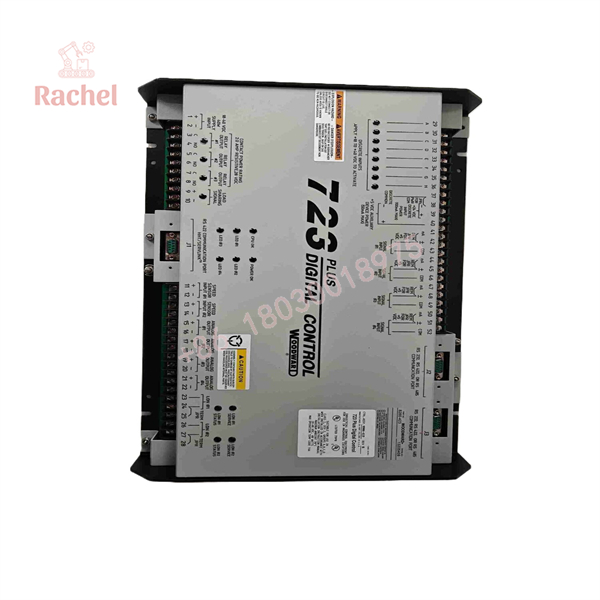
8280-423
Transparency SOP: QA & Testing
For a New Surplus or refurbished 8280-423, a visual inspection alone is not enough. The controller’s application-specific programming needs to be considered.
1. Part-number and revision check
Confirm the nameplate shows 8280-423 and document the serial number, hardware revision, and any OEM/application identification.
2. Physical inspection
Check the metal chassis, terminal strips, D-sub connectors, mounting hardware, and accessible PCB areas for corrosion, impact damage, contamination, or previous repair work.
3. DC supply test
Test using an appropriate controlled DC source. The documented low-voltage version operates from 18–40 VDC, with approximately 40 W consumption and a significant starting-current requirement.
4. Communication test
Where applicable, verify the programming/communications interface and confirm that the controller can communicate with the appropriate Woodward software or programmer.
5. Functional simulation
Before installing on a vessel, simulate appropriate MPU/proximity-switch signals and relevant control inputs. Verify speed processing, configured outputs, alarm behavior, and clutch/load-sharing functions using an approved test procedure.
6. Configuration preservation
If the original controller is still operational, extract and document its settings before replacement. Do not assume a replacement unit’s existing program matches the vessel’s propulsion system.
Woodward states that 723PLUS controllers can be adjusted through Watch Window, Control View where supported, or an optional hand-held programmer, and that standard controllers are pre-programmed while custom programming can also be supplied for specialized applications.
The Veteran’s Tech Trap Guide
⚠️ Trap #1 — Confusing 8280-423 with 8280-422
These two part numbers belong to the same 723PLUS two-engine marine control family, but they are not the same speed application. Woodward identifies 8280-422 for low-speed engines, typically below 100 rpm, while 8280-423 is the medium/high-speed version, typically above 100 rpm.
⚠️ Trap #2 — Treating the controller as a generic 24 VDC module
It is not. The 8280-423 is application-programmed and contains functions specific to dual-engine mechanical load sharing and clutch operation. A physically compatible replacement can still have the wrong application configuration.
⚠️ Trap #3 — Forgetting the two speed-sensing channels
The control uses two MPU or proximity-switch inputs for engine-speed sensing. The manual also documents torsional filtering and redundant speed-signal functions. Check the actual vessel wiring and sensor arrangement before commissioning.
PRO TIP: If you are replacing an operating 8280-423, photograph every connector and record the controller’s programmed settings before removing it. On a twin-engine marine system, the wiring diagram alone may not tell you how the controller has actually been configured.
Dynamic FAQ
What is Woodward 8280-423?
The Woodward 8280-423 is a 723PLUS Digital Marine Control designed for two-engine mechanical load-sharing applications. It is intended for medium- and high-speed diesel engines and includes speed control, load sharing, clutch control, and related engine-management functions.
Is 8280-423 a low-voltage controller?
Yes. The 8280-423 is the low-voltage version of the 723PLUS dual-engine mechanical load-sharing control. Published specifications identify an 18–40 VDC input range, with 24 VDC commonly used in the system.
What is the difference between 8280-422 and 8280-423?
The principal documented distinction is engine speed category. 8280-422 is intended for low-speed engines, typically below 100 rpm, while 8280-423 is intended for medium/high-speed engines, typically above 100 rpm.
Can 8280-423 be used for single-engine operation?
The controller’s documented standard application is two-engine mechanical load sharing. It also contains single-throttle functionality during clutched operation. Whether a particular controller can be repurposed for another application depends on its programmed software and the intended control architecture; do not assume a standard 8280-423 can simply be rewired for a different engine-control application.
What should I verify when purchasing a New Surplus 8280-423?
Request the nameplate photograph, complete part number, hardware revision, serial number, physical-condition statement, application/programming information, test report, and written warranty. For an existing vessel, also verify that the replacement corresponds to the original controller’s application program.
Is New Surplus 8280-423 the same as a new Woodward production unit?
Not necessarily. “New Surplus” normally means unused inventory that has entered the secondary market; it does not by itself establish manufacturing date, current production status, or factory warranty. For a critical marine control, obtain written condition and warranty terms from the supplier and verify the unit’s identification before purchase.
Procurement note: The key specification should read Woodward 8280-423, 723PLUS, Dual Engine Mechanical Load Sharing, Low Voltage. Do not substitute 8280-422 merely because it belongs to the same 723PLUS family. Woodward’s own 02881 manual is the appropriate reference for installation and operation of the 8280-423 application.

 Start Chat


