





Description
Product Introduction
The Woodward 5466-258 is a High-Density Discrete I/O (HDD) Module developed for the MicroNet and MicroNet Plus turbine control platforms. It provides high-speed acquisition of digital field signals while controlling discrete outputs used for turbine sequencing, compressor permissives, shutdown logic, and auxiliary equipment control. It is widely found in gas turbine, steam turbine, compressor, and generator applications.
Unlike a Field Termination Module (FTM), the 5466-258 performs the actual discrete signal processing. It contains onboard intelligence and communicates directly with the MicroNet CPU. One thing to watch out for is that this module has reached end-of-life. Woodward replaced it with the 5466-1050 (Coder 5 systems) or 5466-1158 (Coder 4 systems), depending on the controller generation and software revision. Existing FTMs remain compatible with the replacement modules.
Key Technical Specifications
| Parameter | Value |
|---|---|
| Manufacturer | Woodward |
| Model | 5466-258 |
| Product Family | MicroNet / MicroNet Plus |
| Product Type | High-Density Discrete I/O Module (HDD) |
| Configuration | Simplex |
| Discrete Inputs | 48 Channels |
| Discrete Outputs | 24 Channels |
| Signal Processing | Onboard Microcontroller |
| System Compatibility | Woodward MicroNet Control Systems |
| Mounting | MicroNet Rack |
| Application | Turbine, Compressor, Generator Control |
| Product Status | Obsolete (Replaced by HDDIO Series) |
Application Scenarios & The “Trench” Experience
A gas turbine refuses to complete its startup sequence.
Every pressure switch indicates normal.
The emergency stop circuit tests correctly.
Operators suspect the governor.
After several hours of troubleshooting, engineers discover that one discrete input group on the 5466-258 has stopped updating. The field devices never failed. The controller simply stopped seeing them.
That situation isn’t unusual on aging MicroNet systems. After years of thermal cycling, discrete I/O modules often become the weakest link before the CPU itself.
Typical Applications
Gas Turbines — Startup sequencing — Processes permissives, shutdown contacts, and auxiliary equipment status.
Steam Turbines — Protection systems — Monitors trip circuits and controls relay outputs.
Gas Compressors — Compressor automation — Interfaces field switches, valve feedback, and machine permissives.
Power Generation — Generator auxiliaries — Controls breaker status, alarms, and interlocking logic.
Oil & Gas — Rotating equipment control — Collects discrete field signals for compressor and pump packages.
Field Replacement Example
During an annual outage, a combined-cycle power plant experienced intermittent startup failures on one gas turbine. Diagnostics pointed toward inconsistent discrete input updates. Engineers swapped the 5466-258 with a verified spare, downloaded the existing configuration, and restarted the turbine without modifying the control logic. Later inspection revealed intermittent failures in the module’s input circuitry caused by long-term component aging.
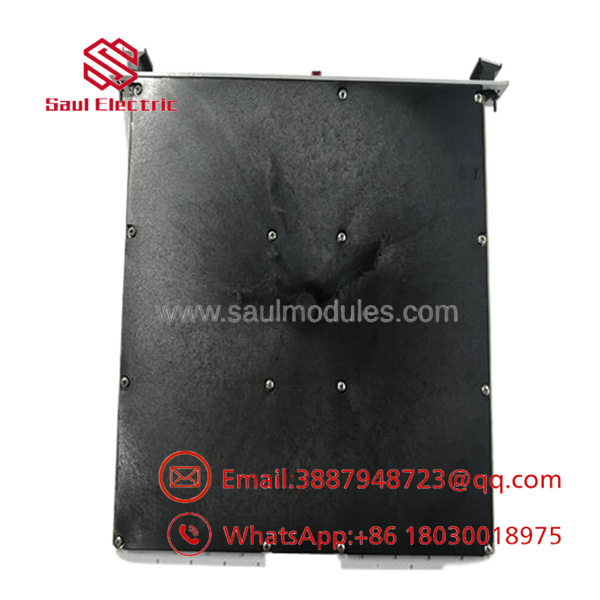
- 5466-258
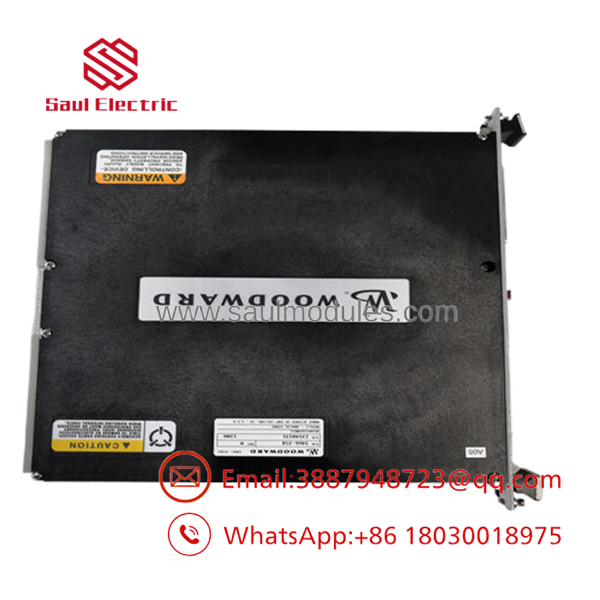
- 5466-258
Transparency SOP: Quality Assurance & Testing
We don’t just ship boxes; we test them on actual Woodward MicroNet hardware whenever practical.
- Inbound Inspection
- Verify Woodward identification labels and revision.
- Inspect PCB assemblies and backplane connectors.
- Screen for counterfeit markings and unauthorized repairs.
- Live Rig Testing
- Install the module in a compatible MicroNet chassis.
- Verify successful initialization.
- Confirm communication with the CPU.
- Simulate all discrete inputs.
- Verify operation of every discrete output.
- Electrical Parameter Checks
- Verify input isolation.
- Test output drive circuits.
- Perform extended burn-in testing.
- Monitor onboard diagnostics.
- Firmware Verification
- Record hardware revision.
- Verify compatibility with the customer’s Coder software version.
- Confirm successful module recognition.
- Final QC & Packaging
- Functional inspection report.
- ESD-safe packaging.
- Shock-resistant shipping materials.
- Full serial number traceability.
The Veteran’s Tech Trap Guide
⚠️ Don’t assume every 5466-258 can be replaced by the same part.
Woodward officially replaced the 5466-258 with different HDDIO modules depending on the CPU generation and Coder software. Systems running Coder 5.04 or later typically migrate to 5466-1050, while many Coder 4 installations use 5466-1158. Verify the controller generation before ordering.
⚠️ Verify the software version first.
Hardware compatibility is only half the job. Installing a newer module without confirming the controller’s Coder revision can prevent successful initialization.
❗ Label every field cable.
Forty-eight discrete inputs and twenty-four outputs create plenty of opportunities for wiring mistakes. Take photos before disconnecting anything. Trust me.
⚠️ Inspect the FTM and ribbon cables.
In our field experience, intermittent discrete faults are frequently caused by damaged field termination modules or connector cables rather than the I/O module itself.
Frequently Asked Questions (FAQ)
Q1. What is the Woodward 5466-258?
It is a High-Density Discrete I/O Module for Woodward MicroNet control systems, providing 48 discrete inputs and 24 discrete outputs for turbine and compressor control applications.
Q2. Is the 5466-258 still manufactured?
No. Woodward declared the module obsolete and introduced the HDDIO family as its replacement. The recommended replacement depends on the controller hardware and Coder software version.
Q3. What replaces the 5466-258?
For most 5200 and P1020 CPU systems:
- 5466-1050 — Recommended for Coder 5.04 or later
- 5466-1158 — Recommended for many Coder 4 systems
Older 040 and Pentium CPU systems require different replacement strategies and should be reviewed individually.
Q4. Can existing Field Termination Modules be reused?
Yes. Woodward states that the existing MicroNet FTMs remain compatible with the newer HDDIO replacement modules, reducing retrofit work during upgrades.
Q5. Does the module support hot swapping?
No. Removing a discrete I/O module while energized can interrupt turbine permissives, shutdown logic, or output commands. Follow Woodward maintenance procedures and isolate power before replacement.
Q6. Why is this module still widely purchased?
Many gas turbines, steam turbines, compressors, and generator control systems continue operating on legacy MicroNet platforms. Maintaining qualified spare I/O modules is usually far more economical than replacing an entire turbine control system.
Q7. What should be verified before installation?
Verify the exact 5466-258 part number, MicroNet CPU model, Coder software revision, rack slot assignment, field termination module compatibility, discrete I/O mapping, and controller configuration. Before returning the unit to service, perform a complete functional test of all 48 input channels, 24 output channels, startup permissives, trip logic, and emergency shutdown circuits. Verify every field connection against the Woodward wiring drawings before energizing the system.

 Start Chat


