





Description
Product Introduction & Engineering Value
A failed small servo axis can idle an entire machine, even when the mechanical load is only a few hundred watts. The CACR-02-KIBA solves that problem for legacy Yaskawa installations by retaining the original analog command architecture and encoder feedback scheme.
It accepts a ±10 V analog velocity or torque command from a PLC, CNC, or motion controller and drives a matched 200 W-class servo motor. The “KIBA” suffix identifies the analog-command configuration, so it is not interchangeable with pulse-train or network-interface CACR variants without verifying the control architecture.
Technical Specifications
- Input voltage: 200–230 VAC; commonly applied as 230 VAC single-phase in legacy installations.
- Rated output current: 2.47 A.
- Peak current: Approximately 5.7 A RMS for a 3-second interval, per available Sigma II technical references.
- Motor capacity: 0.2 kW / 200 W class.
- Command interface: ±10 V analog velocity or torque command.
- Feedback: Incremental A/B/Z encoder.
- Control loops: Current, velocity, and position closed-loop control.
- Motor compatibility: Matched Yaskawa Sigma II small-capacity rotary servo motors, such as SGM-02-class motors.
- Protection functions: Overcurrent, overvoltage, undervoltage, overload, overheating, and regenerative-resistor fault detection.
- Enclosure / cooling: IP20 panel-mount housing with heatsink and natural convection cooling.
- Ambient temperature: 0°C to 55°C operating range, per available product references.
Field Application & The “Trench” Experience
An electronics-assembly integrator had a dispensing head that began faulting with an overcurrent alarm after years of service. The axis used a small Yaskawa servo motor and an analog ±10 V command from the machine’s motion card. Rather than replace the controller and rework the wiring, the team matched the failed CACR-02-KIBA with a tested replacement, verified encoder wiring and motor code settings, then retuned the velocity loop. The dispenser returned to repeatable deposition without touching the upstream PLC logic.
Typical legacy applications include:
- Dispensing, glue-application, and small pick-and-place axes
- Indexing tables and rotary positioning fixtures
- Machine-tool auxiliary axes and small servo feed mechanisms
- Test benches, labeling heads, and electronic-assembly positioning equipment
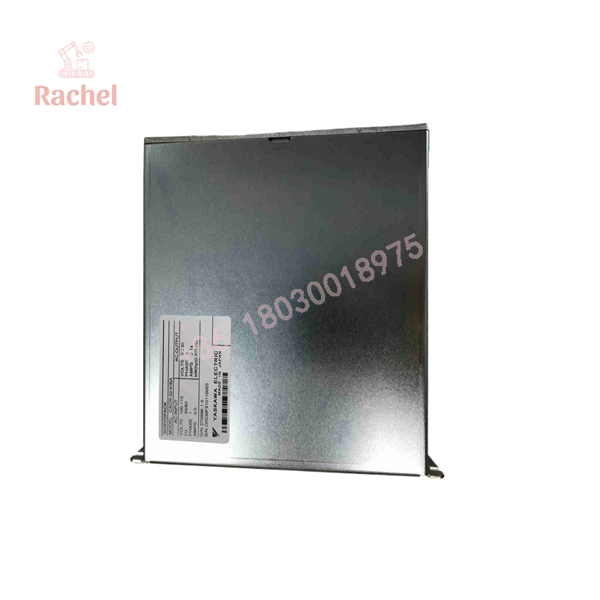
CACR-02-KIBA
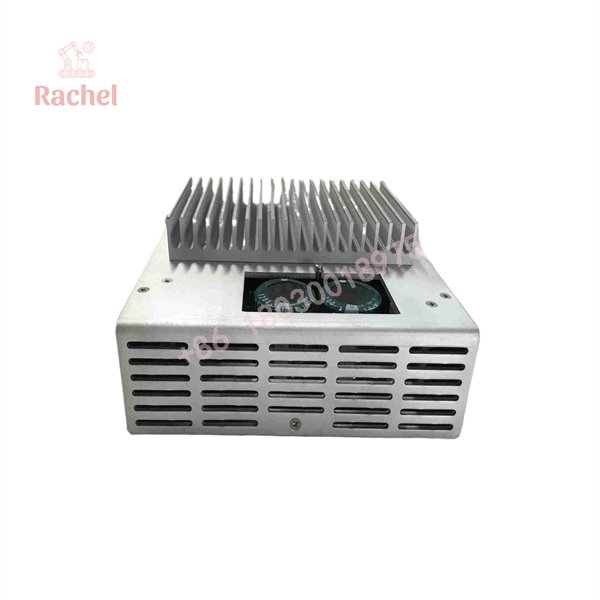
CACR-02-KIBA
Transparency SOP: QA & Testing
- Nameplate verification: Confirm exact CACR-02-KIBA marking, voltage class, current rating, and command-interface variant.
- Visual inspection: Inspect heatsink, capacitors, connectors, terminal blocks, cooling fins, and PCB for bulging, discoloration, corrosion, or prior repair damage.
- Static electrical checks: Measure input/output phase resistance and check for short circuits or abnormal insulation conditions before applying power.
- Controlled power-up: Apply the correct 200–230 VAC supply and monitor DC bus charge, status LEDs, and fault behavior.
- Command and feedback test: Apply a controlled analog command and verify amplifier response with a compatible Yaskawa servo motor or approved test load.
- Protection verification: Confirm alarm detection and shutdown behavior for key fault conditions where test capability permits.
- Final report: Record measured values, firmware/configuration notes, test results, and condition grade for traceability.
The Veteran’s Tech Trap Guide
⚠️ KIBA means analog command. This is not a pulse/direction SERVOPACK and not a Mechatrolink or serial-command unit. If the machine sends pulses or uses a network command, the KIBA variant is the wrong replacement.
⚠️ Match the motor, not just the wattage. The amplifier must be paired with the correct Yaskawa motor family, feedback type, and motor-code configuration. A 200 W motor from a different series or with a different encoder can create unstable tuning or immediate feedback alarms.
PRO TIP: Check the DC bus capacitors and heatsink before condemning the control board. On older CACR amplifiers, failed electrolytic capacitors, blocked cooling fins, and loose power terminations frequently mimic more serious drive faults.
⚠️ Observe capacitor discharge time. Wait at least five minutes after removing power before touching power terminals; the DC bus can retain a hazardous charge.
Dynamic FAQ
What motor power does the CACR-02-KIBA support?
It is intended for approximately 0.2 kW / 200 W class Yaskawa servo motors.
What is its rated current?
Available technical references list a rated output current of 2.47 A.
Does it use analog or pulse commands?
The KIBA version uses a ±10 V analog command interface for velocity or torque control.
What feedback does it require?
It uses incremental encoder feedback, typically A/B/Z signals from the matched Yaskawa servo motor.
Is this SERVOPACK still manufactured?
No. The CACR-02-KIBA is a legacy Yaskawa amplifier and is generally sourced as used-tested, refurbished, repaired, or New Surplus stock.
What warranty applies?
New Surplus and refurbished units include a stated replacement warranty; the exact term depends on condition grade and is documented on the quotation and packing paperwork.

 Start Chat


