





Description
Product Introduction
The Yaskawa CIMR-VU2A0020FAA is a V1000-series variable frequency drive designed to control the speed of compatible three-phase AC motors. It supports applications requiring adjustable motor speed, controlled acceleration and deceleration, and open-loop vector control in a compact drive package.
This model is rated for 200–240 VAC three-phase service and uses a NEMA Type 1 enclosure. For replacement work, verify the input supply, motor full-load current, duty classification, enclosure requirements, control wiring, and parameter settings before installation. A matching model number is important, but the motor and application must still be correctly sized.
Key Technical Specifications
| Parameter | Specification |
|---|---|
| Manufacturer | Yaskawa Electric |
| Model | CIMR-VU2A0020FAA |
| Product family | V1000 |
| Drive type | AC variable frequency drive |
| Input voltage | 200–240 VAC, three-phase |
| Input frequency | 50/60 Hz nominal; confirm supply tolerances in the manual |
| Output voltage | Three-phase, up to the input voltage |
| Rated output current | 19.6 A normal duty / 17.5 A heavy duty |
| Motor capacity | 5 HP normal duty; 5 HP listings are common, verify duty-specific sizing |
| Control methods | V/f, open-loop vector; supported modes depend on configuration |
| Enclosure | NEMA Type 1 |
| Approximate dimensions | 6.02 × 5.51 × 5.63 in. (H × W × D) |
| Approximate drive weight | 5.7 lb |
| Communications | RS-422/RS-485 serial communications; confirm protocol and configuration |
| Mounting | Panel mount |
Sources: Yaskawa’s V1000 mechanical drawings and technical manual, supplemented by distributor specifications. Confirm all installation values against the manual revision applicable to the drive.
Application Scenarios & Field Experience
Typical applications
- Conveyors: Adjusts motor speed to match production rates and process requirements.
- Pumps: Regulates flow where the pump, motor, and process permit variable-speed operation.
- Fans and blowers: Provides adjustable airflow and can reduce energy use at reduced speed.
- Packaging machinery: Controls motor speed during production changes and controlled stopping.
- General industrial machinery: Supports legacy motor-control systems that use three-phase AC motors and discrete or serial control interfaces.
Field troubleshooting example
Illustrative scenario, not a verified customer case.
A conveyor motor trips on overcurrent after a VFD replacement. The replacement drive powers up normally, but the fault returns during acceleration.
A technician should compare the motor nameplate data and drive duty rating, inspect the motor cable and mechanical load, and review acceleration time, current limits, and control mode. Also check whether the original drive used a particular speed reference or braking arrangement. Replacing the drive again without checking these conditions may leave the underlying fault unresolved.
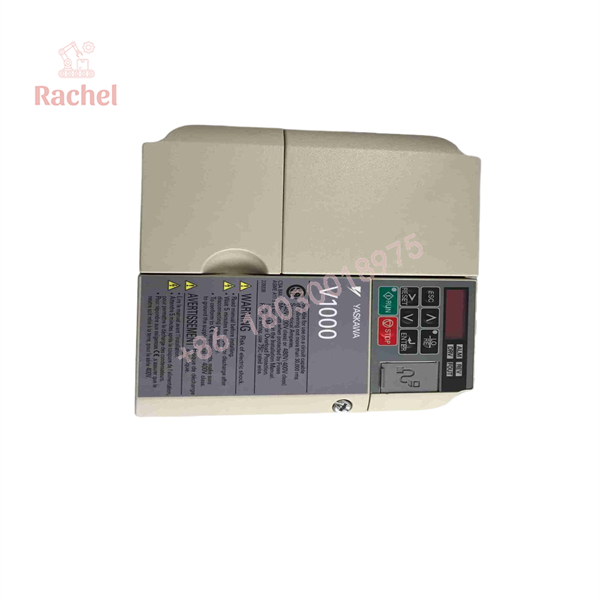
CIMR-VU2A0020FAA
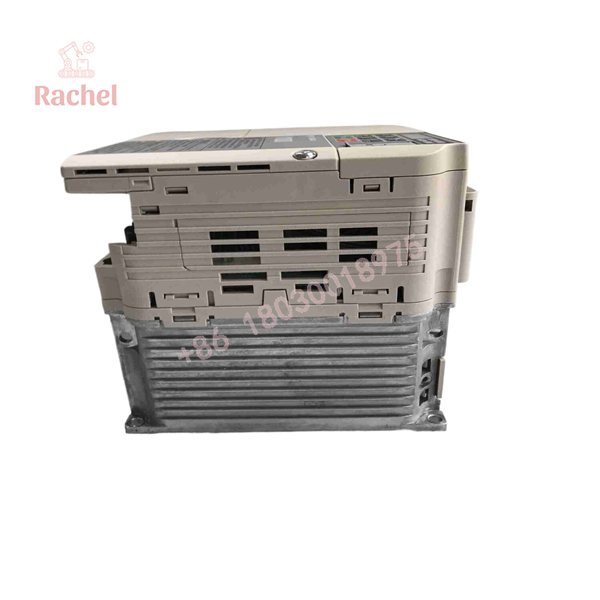
CIMR-VU2A0020FAA
Transparency SOP: Quality Assurance & Testing
The following is a recommended inspection process for a new-surplus, used, or refurbished drive. It does not represent completed testing of any specific unit.
- Model verification: Confirm the full
CIMR-VU2A0020FAAlabel, revision, and enclosure type. - Visual inspection: Check terminals, cooling fan, heat sink, housing, and circuit boards for damage, contamination, corrosion, or overheating.
- Electrical inspection: A qualified technician should inspect the supply and motor terminals and follow the manufacturer’s procedures for insulation and grounding checks. Do not apply a megohmmeter directly to the drive electronics.
- Power-up test: Energize the drive using a suitable protected test setup and verify normal startup and keypad operation.
- Parameter review: Confirm motor voltage, rated current, frequency, control mode, acceleration/deceleration times, and protection settings.
- Functional test: Where suitable equipment is available, test the drive with a compatible motor under controlled conditions. Verify speed response, direction, and fault monitoring.
- Final QC record: Document the drive’s condition, test results, observed alarms, and warranty terms.
Safety note: A VFD can retain hazardous DC-bus voltage after the input supply is disconnected. Follow the manufacturer’s discharge waiting period and verify the voltage is safe before servicing.
Veteran’s Tech Trap Guide
- ⚠️ Do not size the drive by horsepower alone. Check motor full-load current, duty rating, overload requirements, and application load. The published current ratings differ between normal-duty and heavy-duty operation.
- ⚠️ Match the supply phase and voltage. This model is a 200–240 VAC three-phase input drive. Do not substitute a single-phase-input or 380–480 V model without an engineered compatibility review.
- ⚠️ NEMA Type 1 is not a washdown rating. The enclosure is intended for suitable indoor environments, not direct water exposure or uncontrolled outdoor installation.
- ⚠️ Preserve and verify the original parameters. Incorrect motor data, control mode, braking configuration, or speed-reference settings can cause nuisance trips or unexpected machine behavior.
- ⚠️ Do not confuse the model suffixes. Yaskawa V1000 variants can have different enclosure and environmental configurations. Check the entire nameplate, not just the
CIMR-VU2A0020portion.
Frequently Asked Questions
Q1: What is the Yaskawa CIMR-VU2A0020FAA used for?
It is a V1000-series AC drive used to regulate the speed of compatible three-phase motors in applications such as conveyors, pumps, fans, and general industrial machinery.
Q2: What are its rated output current and motor capacity?
The published ratings are 19.6 A for normal duty and 17.5 A for heavy duty. Confirm the applicable motor rating against the drive manual, load profile, and motor nameplate before installation.
Q3: Can it replace another Yaskawa V1000 drive?
Potentially, but compare the complete model number, input supply, current rating, enclosure, terminals, and parameter requirements. A different suffix can indicate a materially different configuration.
Q4: Does it support Modbus communication?
The V1000 family supports serial communications. Confirm the protocol, wiring, baud rate, node address, and controller configuration in the applicable technical manual before connecting it to a PLC or supervisory system.
Q5: Is the CIMR-VU2A0020FAA suitable for outdoor use?
Do not assume so. The F enclosure designation corresponds to NEMA Type 1. Outdoor or washdown installations require an appropriately rated enclosure and an installation designed for the actual environmental conditions.
Q6: Is this model still available as new equipment?
It is a legacy V1000 model. Surplus and repair-market listings may exist, but actual stock, condition, and manufacturer support should be confirmed directly with the seller or Yaskawa.
Q7: What should I include in a purchase inquiry?
Provide the full model number, required quantity, preferred condition (new surplus, used, or refurbished), delivery location, and any test or warranty requirements. If replacing a failed drive, include the motor nameplate data and a photo of the existing drive label.

 Start Chat


