





Description
Product Introduction & Engineering Value
The CPU-30ZBE should be handled as an identification-sensitive Yaskawa legacy automation spare. The model designation alone does not provide enough information to establish its exact system compatibility, and secondary inventory references do not provide a complete engineering datasheet.
For replacement work, the safest approach is to match the complete nameplate, hardware revision, installed rack/controller family, adjacent modules, and connector arrangement. A CPU that physically fits the cabinet is not necessarily a valid functional replacement.
Technical Specifications
The following are the parameters that should be confirmed before procurement:
| Parameter | Status |
|---|---|
| Manufacturer | Yaskawa |
| Model | CPU-30ZBE |
| Product Type | CPU / controller module |
| Controller Series | Verify from nameplate |
| Supply Voltage | Verify |
| Power Consumption | Verify |
| Processor | Verify |
| Program Memory | Verify |
| Data Memory | Verify |
| I/O Capacity | Verify |
| Communication Ports | Verify |
| Programming Software | Verify |
| Backplane/Rack Compatibility | Verify |
| Operating Temperature | Verify |
| Mounting Configuration | Verify |
| Hardware Revision | Critical — verify |
I would not substitute generic Yaskawa CPU specifications into these fields because the available evidence does not establish that CPU-30ZBE belongs to a particular Yaskawa PLC family.
Field Application & the “Trench” Experience
A maintenance team finds a failed CPU in an older machine-control cabinet. The spare-parts database contains only one description: Yaskawa CPU-30ZBE.
The engineer does not immediately order a replacement from a reseller photograph. Instead, the team photographs the complete label, checks the controller rack, identifies the neighboring modules, and records every connector. They then compare the spare against the installed hardware.
That extra ten minutes prevents a common legacy-automation problem: receiving a component with a similar designation that belongs to a different hardware generation.
Potential use cases should be confirmed from the customer’s installed system, but legacy Yaskawa CPU modules may be encountered in:
- OEM machine-control cabinets
- Production machinery with legacy Yaskawa controllers
- Motion-control and drive-coordination systems
- Automated material-handling equipment
- Machine-tool control systems
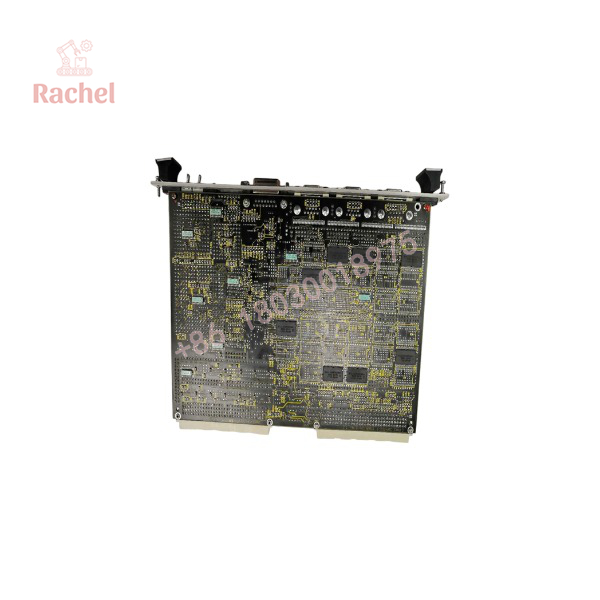
CPU-30ZBE
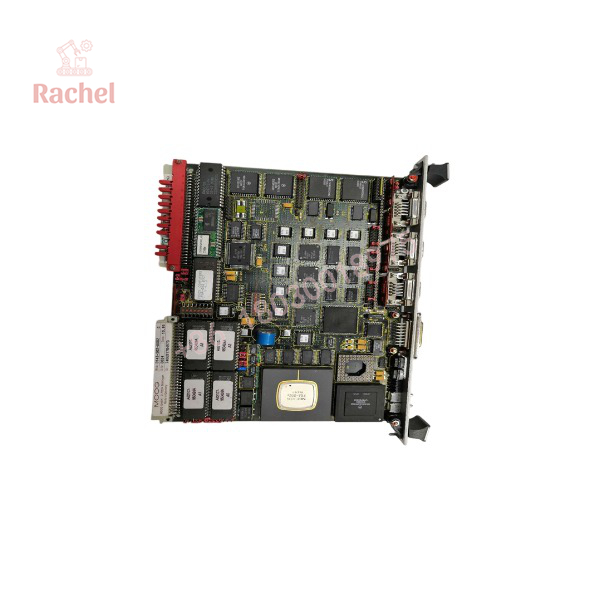
CPU-30ZBE
Transparency SOP: QA & Testing
For New Surplus or Refurbished CPU-30ZBE inventory, testing should follow the confirmed hardware documentation.
Identification first
- Photograph the complete Yaskawa nameplate.
- Record model, revision, serial number, and date codes.
- Identify the controller/rack family.
- Photograph the backplane and adjacent modules.
- Compare connectors and mechanical dimensions with the customer’s original.
Functional testing
Once the exact system family is confirmed:
- Inspect PCB and connectors.
- Perform controlled power-up.
- Confirm CPU initialization and diagnostic LEDs.
- Verify backplane/module recognition.
- Test applicable communication ports.
- Load a known-good test configuration where permitted.
- Verify I/O communication.
- Record diagnostic and fault information.
Important: A CPU that simply powers up should be described as power-on tested, not fully function tested.
The Veteran’s Tech Trap Guide
⚠️ Do not buy this part by model number alone.
With a poorly documented legacy CPU, the complete nameplate is part of the part number from a procurement standpoint. Revision information can be just as important as the base designation.
PRO TIP: Send the supplier a photograph of the CPU installed in the rack, not just a close-up of the front label. The surrounding modules can reveal the actual controller family.
⚠️ Do not assume firmware compatibility.
Even if a replacement has the same basic model designation, firmware or hardware-revision differences can affect application compatibility.
⚠️ Protect the original application before replacement.
If the existing CPU is still accessible, obtain a verified application/configuration backup before removing it. A replacement CPU does not automatically reproduce the machine’s logic, parameters, or communication configuration.
⚠️ Do not confuse “tested” with “tested in-system.”
For a legacy controller, system-level testing is substantially more meaningful than a bench power-up. Ask exactly what equipment was used during the supplier’s test.
Dynamic FAQ
Q1. What is Yaskawa CPU-30ZBE?
CPU-30ZBE is identified as a Yaskawa industrial automation CPU/controller designation. However, the publicly available information I could verify is insufficient to confidently identify its exact controller family and electrical specifications.
Q2. What voltage does CPU-30ZBE require?
The voltage should be verified from the actual nameplate or the applicable Yaskawa manual. I would not infer a voltage rating from the model number.
Q3. Which Yaskawa PLC is compatible with CPU-30ZBE?
The exact controller family needs to be established from the complete unit identification and installed rack. Do not assume compatibility with another Yaskawa CPU family.
Q4. Is CPU-30ZBE obsolete?
The part appears to be encountered primarily as legacy industrial spare inventory, but I would not make a formal discontinuation claim without an official Yaskawa lifecycle reference for this exact model.
Q5. How can I verify New Surplus authenticity?
Request photographs of the actual , including the complete model label, revision, serial/date information, PCB, connectors, and original packaging where available. New Surplus should be clearly differentiated from refurbished or previously installed stock.
Q6. What warranty should I request?
For refurbished inventory, request a written warranty covering power-up, CPU diagnostics, communication, and the functions actually tested. If the supplier has not tested the module in the correct Yaskawa system, that limitation should be stated explicitly.
Q7. What information should I provide when requesting a replacement?
Provide the CPU-30ZBE model, complete nameplate photograph, hardware revision, controller/rack model, adjacent module part numbers, and application/machine information. This gives the supplier enough context to check compatibility instead of relying on the short model designation alone.

 Start Chat


