





Description
What AFV30D-S41252 Actually Does
The AFV30D-S41252 is the field-control platform between the CENTUM VP control network and the distributed FIO field I/O architecture. It houses the processor, power-supply, and ESB-bus interface modules required to manage field I/O connected through local or remote ESB nodes.
The important characteristic is duplex operation. The S41252 configuration specifies dual-redundant Vnet/IP and dual-redundant power, while the AFV30D itself is designed around a redundant field-control architecture rather than functioning as a standalone PLC CPU.
For an existing CENTUM VP installation, that distinction matters when selecting a replacement. The correct spare must match the FCU model, processor generation, power configuration, network redundancy, and installed ESB architecture.
AFV30D-S41252 Suffix Code Breakdown
The complete model number should be read as a configuration code rather than as an arbitrary serial suffix.
| Code | Meaning |
|---|---|
| AFV30D | Duplexed Field Control Unit for Vnet/IP and FIO |
| -S | Standard type for CP461 |
| 4 | Dual-redundant Vnet/IP and dual-redundant power supply |
| 1 | Fixed code |
| 2 | 220–240 VAC power supply |
| 5 | Basic type with no explosion protection |
| 2 | Fixed code for R6.01 or later |
Yokogawa’s specification identifies the -S version as the CP461 configuration and specifies the final 2 as applicable to R6.01 or later. Yokogawa also notes that existing AFV30D-S configurations can be used with CENTUM VP R6.01 or later under the stated compatibility conditions.
Procurement note: Do not replace an AFV30D-S41252 solely with another AFV30D unit. A visually similar AFV30D with a different suffix can have a different processor generation, power input, redundancy arrangement, or hazardous-area configuration.
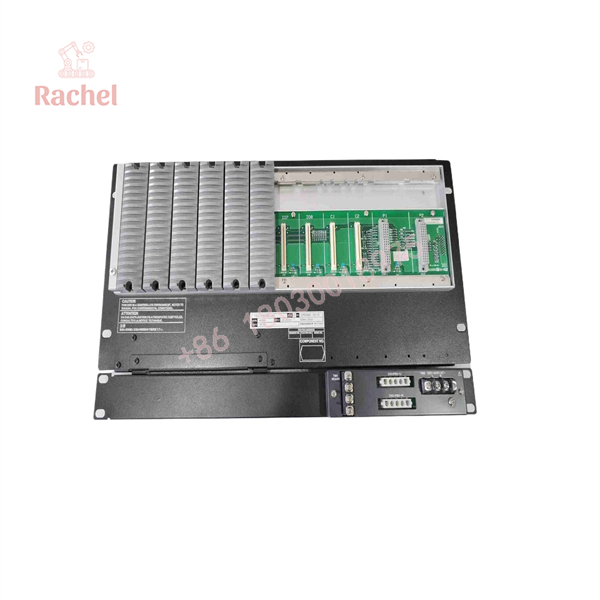
AFV30D-S41252
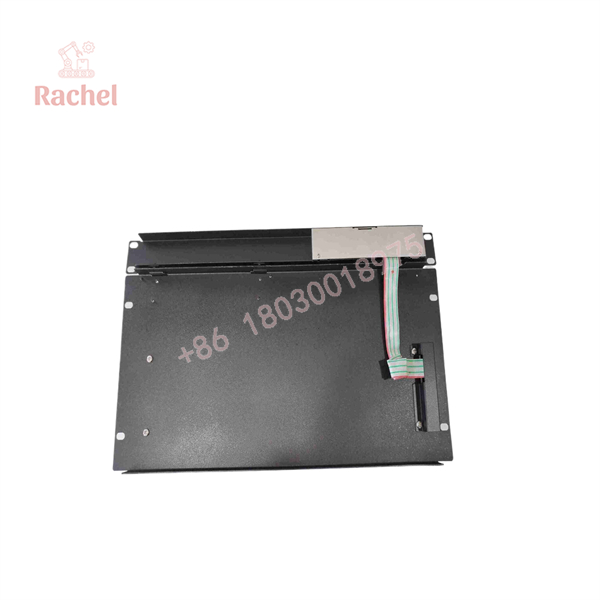
AFV30D-S41252
Technical Specifications
Field Control Unit
- Model:
- Configuration: Duplexed
- Network: Vnet/IP
- I/O system: FIO
- Rack format: 19-inch
- Processor configuration: Dual-redundant CP461
- Power-supply configuration: Dual-redundant
- Power input: 220–240 VAC
- Frequency: 50/60 Hz
- Power consumption: Approximately 230 VA
- Weight: Approximately 8.0 kg
- Mounting: 19-inch rack mounting using M5 × 8 screws
- Network connection: UTP cable, CAT5e or better
- Grounding: M4 screw terminal
- Power connection: M4 screw terminal
- READY contact: M4 screw terminal
Yokogawa specifies 100–120 VAC, 220–240 VAC, or 24 VDC as available AFV30D supply configurations; S41252 specifically selects the 220–240 VAC version. The corresponding published consumption figure is approximately 230 VA.
FIO and ESB Bus Integration
AFV30D-S41252 is not simply a processor chassis. Its field-control role depends on the ESB bus architecture connecting the FCU to FIO node units.
For a conventional ESB connection, Yokogawa specifies EC401 or EC402 ESB Bus Coupler Modules. In a dual-redundant processor configuration, the bus couplers are installed in both slots 7 and 8. With a single ESB configuration, the bus coupler is installed in slot 7 while slot 8 remains empty.
Remote FIO installations can use optical ESB architecture. Yokogawa specifies ANT401 or ANT411 Optical ESB Bus Repeater Master Modules for connecting remote optical ESB nodes. The module quantity and installation positions depend on the number of branches and whether the architecture is redundant or single.
This makes the FCU’s installed module population part of the replacement specification. A bare AFV30D chassis and a fully configured AFV30D-S41252 assembly are not necessarily equivalent procurement items.
System Architecture
A typical configuration can be represented as:
CENTUM VP Control Network
↓
Dual-Redundant Vnet/IP
↓
Field Control Unit
↓
Dual-Redundant ESB Bus
↓
ANB10-series / ANB11-series ESB Node Units
↓
FIO I/O Modules
↓
Field Instruments and Actuators
Yokogawa’s documentation shows the AFV30D connected to ESB bus node units and optical ESB node units, with field I/O signals handled downstream of the FCU.
Field Application & Trench Experience
Example: Process Plant FCU Replacement
A CENTUM VP installation experiences a failure in one of its duplexed field-control units. The maintenance team has a spare AFV30D chassis available, but the original nameplate reads .
The correct replacement check is not simply “AFV30D available.” The engineer verifies:
- CP461-compatible -S configuration.
- Dual-redundant Vnet/IP.
- Dual-redundant power supply.
- 220–240 VAC input.
- Basic non-explosion-protection configuration.
- R6.01-or-later suffix requirement.
- Existing CP461 pair and ESB coupler configuration.
- Existing FIO/ESB node architecture.
Only after these points are matched should the replacement be introduced into the maintenance plan.
Typical Applications
Continuous process control
The AFV30D provides the field-control layer for distributed process I/O in applications such as refining, chemical processing, utilities, and other CENTUM VP installations.
Large FIO installations
The unit is suited to systems where FIO modules are distributed through ESB bus nodes rather than concentrated directly beside the central controller.
Redundant process-control architectures
The S41252 configuration is specifically built around dual-redundant Vnet/IP and dual-redundant power, making the complete hardware configuration important during planned replacement.
QA & Testing SOP
A proper replacement inspection should cover both the FCU chassis and its installed configuration.
Identity Check
Record:
- AFV30D model
- S41252 suffix
- Serial number
- Style/revision
- CP461 processor modules
- Power-supply module type
- ESB coupler type
- Installed I/O modules
- Network connectors and wiring
Electrical Inspection
Verify:
- 220–240 VAC supply compatibility
- Both redundant power paths
- Grounding connection
- READY contact circuit
- Processor startup
- Network interface
- Vnet/IP redundancy
- ESB communication
Yokogawa specifies separate power, grounding, READY-contact, and network connections for the FCU.
Configuration Verification
Before shipment or installation, compare the replacement against the existing FCU configuration. Pay particular attention to CP461 processor modules and EC401/EC402 bus couplers.
The AFV30D’s installation restrictions also require attention to the quantity and allocation of I/O modules and optical ESB repeater modules.
New Surplus Verification
For New Surplus inventory, verify:
- Original Yokogawa nameplate
- ete marking
- Unused physical condition
- Correct processor/power modules if included
- Connector condition
- Original packaging where available
- Serial-number consistency
Do not describe a used or refurbished chassis as New Surplus simply because it has never been installed at the buyer’s site.
Veteran’s Tech Trap Guide
⚠️ Trap 1 — Confusing S41251 and S41252
These two order codes look almost identical, but the final digit matters. The S41252 configuration is associated with the R6.01-or-later version, whereas S41251 belongs to the earlier configuration. Yokogawa’s documentation specifically identifies the final 2 as an R6.01-or-later code.
⚠️ Trap 2 — Assuming Any AFV30D Is Equivalent
AFV30D variants can use CP461 or CP471-related configurations, different power supplies, and different environmental/explosion-protection options. The replacement must be evaluated from the complete order code, not just “AFV30D.”
⚠️ Trap 3 — Ignoring the ESB Coupler Configuration
A replacement FCU can be electrically correct but still unsuitable for the installed I/O architecture if the required EC401/EC402 arrangement is not reproduced.
PRO TIP: Photograph the entire FCU before removal. Capture both processor slots, power-supply slots, ESB couplers, optical interfaces, nameplates, and cabinet wiring. For legacy CENTUM VP systems, this gives the commissioning engineer a configuration baseline before the failed hardware leaves the cabinet.
Frequently Asked Questions
Whatk?
is a duplexed Field Control Unit for Yokogawa CENTUM VP systems using Vnet/IP and FIO. It is a 19-inch rack-mountable FCU configured for CP461-based operation.
What powery use?
The S41252 suffix specifies 220–240 VAC, 50/60 Hz. Yokogawa lists approximately 230 VA power consumption for the 220–240 VAC AFV30D configuration.
Is a redundant controller?
The S41252 configuration specifies dual-redundant Vnet/IP and dual-redundant power supply. The AFV30D is therefore designed for a duplexed field-control architecture rather than single-controller operation.
What prr use?
The -S configuration corresponds to the standard CP461 version. Yokogawa’s documentation states that the AFV30D-S version is shipped with a pair of CP461 modules in the duplexed configuration.
Does support FIO?
Yes. The AFV30D is specified as a Field Control Unit for Vnet/IP and FIO. FIO node units can be connected through ESB bus architecture, including optical ESB configurations for remote nodes.
Is explosion protected?
No. The 5 in this suffix identifies the basic type with no explosion protection. Explosion-protected AFV30D configurations use different suffix coding.
Is compatible with CP471?
The AFV30D family has CP471-compatible -A configurations, but that does not mean an S41252 should be casually converted to a CP471 configuration. Yokogawa distinguishes the -S/CP461 and -A/CP471 configurations and specifies version and service-engineer requirements for certain migrations.
What warranty should be expected for a replacement unit?
Warranty depends on the supplier and whether the hardware is new, new surplus, refurbished, or tested used. A commercial listing for this exact part currently states a 12-month supplier warranty, but that is a seller warranty rather than evidence of an active Yokogawa factory warranty.
How should New Surplus authenticity be checked?
Verify the actual nameplate against , inspect the processor and power-supply modules included with the unit, and compare the physical configuration with the installed FCU. Do not rely solely on stock photographs or a generic “AFV30D” description.

 Start Chat


