





Description
Product Introduction
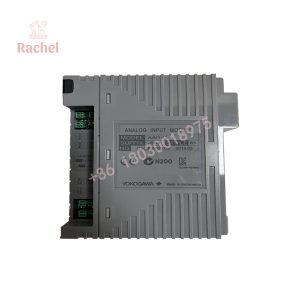
The Yokogawa AIP571 (marked BUS2) is a specialized electrical bus coupler and transceiver module developed for Yokogawa CENTUM CS 3000 and CENTUM VP Distributed Control Systems (DCS). It serves as the primary communication bridge linking Field Control Stations (FCS), Operator Human Interface Stations (HIS), and node units to Yokogawa’s deterministic V net control bus backbone.
Engineered to uphold strict real-time control loops across continuous process plants, the AIP571 BUS2 converts internal backplane data streams into noise-immune, galvanically isolated V net signals. When configured in dual-redundant pairs, it supports uninterrupted automatic bus switching without losing active control packets or dropping field I/O synchronization during network disturbances.
Key Technical Specifications
| Parameter | Value |
|---|---|
| System Architecture | Yokogawa CENTUM CS 3000 / CENTUM VP V net |
| Module Type | V net Electrical Bus Interface / Coupler Board |
| Bus Topology | Redundant dual-ring / linear coaxial or twisted-pair V net |
| Transmission Rate | 10 Mbps real-time deterministic V net protocol |
| Isolation | Transformer/Galvanic isolation (500V AC withstand) |
| Power Supply | +5V DC internal backplane supply |
| Current Consumption | 0.8 A typical |
| Redundancy Support | Dual-redundant bus coupler configuration supported |
| Operating Temperature | 0°C to +55°C (32°F to 131°F) |
| Operating Humidity | 20% to 80% RH (non-condensing) |
Application Scenarios & The “Trench” Experience
In continuous process applications—such as petrochemical cracking units, LNG regasification facilities, and thermal power plants—loss of the primary DCS control bus paralyzes operator visibility and freezes automated valve positioning. If an aging bus transceiver board suffers signal degradation or impedance drift, the FCS controller drops offline from the V net domain, triggering network fault alarms across operator screens.
Swapping out a failing board with a certified AIP571 BUS2 module instantly re-establishes physical bus alignment and signal integrity. The redundant V net architecture allows technicians to hot-swap the module online in supported node chassis without taking down adjacent controller nodes or interrupting running process loops.
- Petrochemical Refining – High-speed communication links between FCS field controllers and central HIS stations.
- Power Generation Rigs – Redundant control bus synchronization across turbine panels and boiler control racks.
- Chemical Synthesis Plants – Real-time process variable data transfer between distributed I/O racks and safety controllers.
- Offshore Oil & Gas Platforms – Compact, noise-immune DCS node communication across platform control cabinets.
Transparency SOP: Quality Assurance & Testing
We don’t just ship boxes; we test them on actual Yokogawa CENTUM V net test racks. Every surplus or refurbished AIP571 BUS2 card undergoes a strict 5-stage verification process before shipping:
- Inbound Physical Inspection: Complete audit of edge connector gold fingers, bus transformer components, front-panel coaxial connectors, and side card latches.
- Backplane Power-On Diagnostic: Card inserted into an active Yokogawa node chassis; verified onboard power rails, logic initialization, and heartbeat status.
- Active V net Packet Loopback Test: Connected across dual V net bus segments; executed continuous high-throughput communication scripts to verify sub-microsecond packet transmission and zero frame errors.
- Redundant Bus Failover Test: Simulated live primary bus line disconnection; confirmed instant automatic switchover to the secondary redundant V net link with zero data loss.
- Memory Clear & Anti-Static Packaging: Node configuration parameters cleared, edge connectors cleaned, and unit sealed in anti-static ESD shielding bags.
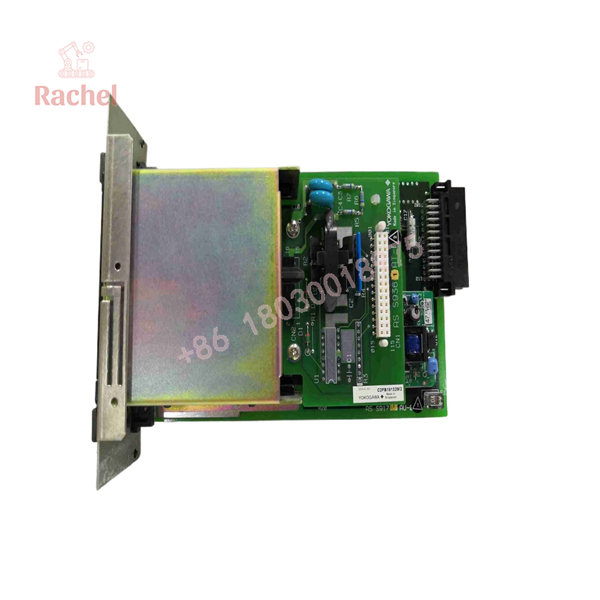
AIP571 BUS2
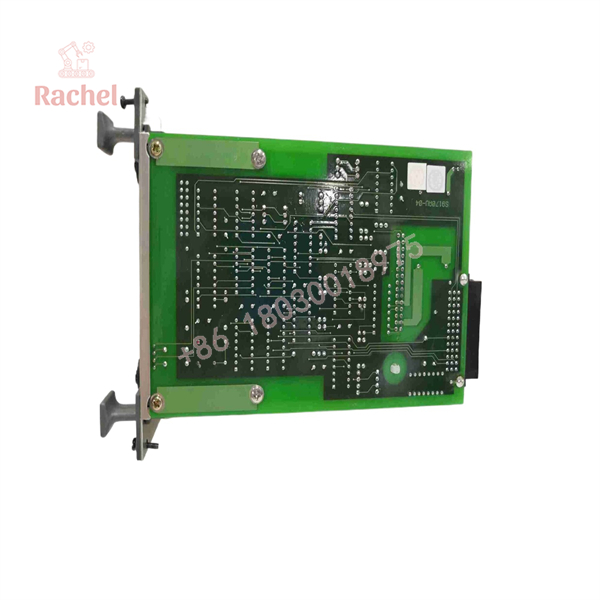
AIP571 BUS2
The Veteran’s Tech Trap Guide (Crucial Value-Add)
⚠️ Verify Model Labeling (AIP571 vs AIP572 / BUS1 vs BUS2): Ensure your hardware replacement strictly matches the BUS2 marking on the AIP571 module. Mixing different bus transceiver revisions (e.g., mixing older BUS1 boards with BUS2 boards on the same node rack) can cause signal impedance imbalances and intermittent line-reflection errors across the V net segment.
❗ Check Bus Cable Termination & Impedance: V net electrical buses require proper 75 Ω coaxial termination resistors at both physical ends of the segment. Missing or damaged terminators will cause signal reflections that lead to packet retry storms on the AIP571 module.
⚠️ Observe ESD Handling Precautions: The high-frequency transceiver circuits on the AIP571 are sensitive to static discharge. Always wear a grounded wrist strap when handling the card or connecting field bus cables to prevent silent breakdown of input protection diodes.
❗ Proper Chassis Latch Seating: Ensure the top and bottom card retention levers click fully into place when inserting the module into the rack. Poor pin alignment with the backplane connector can cause intermittent power loss or drop one channel of a redundant V net pair.
Frequently Asked Questions (FAQ for Conversion)
Q: Is the AIP571 BUS2 module compatible with both CENTUM CS 3000 and CENTUM VP? A: Yes. The AIP571 is designed for standard Yokogawa V net architectures and is fully supported across both CENTUM CS 3000 and CENTUM VP systems utilizing V net electrical buses.
Q: Can the AIP571 BUS2 be replaced online without shutting down the controller? A: In dual-redundant V net configurations, you can hot-swap a faulty AIP571 module while the host node remains powered and active, as long as proper ESD precautions are taken and the redundant bus carries active control traffic.
Q: What is the main difference between optical V net modules and electrical V net modules like the AIP571? A: Electrical V net modules (like the AIP571) use coaxial or shielded twisted-pair cables for intra-cabinet or short-distance control room links. Optical V net modules (such as the AIP531/AIP578) use fiber optic cables for long-distance inter-building communication.
Q: Is the Yokogawa AIP571 BUS2 still available for maintenance replacements? A: Yes. While Yokogawa continuously updates its network interfaces (such as VnetIP), our fully bench-tested New Surplus and refurbished AIP571 BUS2 units allow plants to maintain existing V net installations without needing full network infrastructure upgrades.
Q: What warranty is provided with this module? A: All our new surplus and bench-tested refurbished Yokogawa modules come backed by a full 12-month direct replacement warranty. If a unit fails under standard operating conditions within one year, we replace it immediately from stock.

 Start Chat


