





Description
Product Introduction
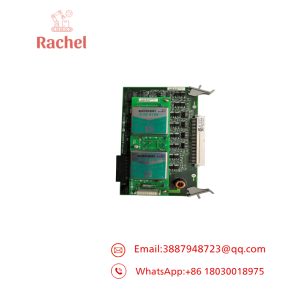
The Yokogawa AIP512 is a specialized Remote I/O (RIO) bus connection module designed for Yokogawa CENTUM CS 3000 and CENTUM VP DCS architectures. Installed directly into the Field Control Unit (FCU) or node interface units, the AIP512 manages high-speed serial bus communications, translating internal backplane data into robust RIO bus signals for downstream process I/O sub-assemblies.
Engineered for critical industrial automation processes in oil refining, chemical processing, and power generation, the AIP512 supports dual-redundant bus configurations. If a primary communication path encounters interference or wire degradation, the module automatically routes telemetry through the secondary bus line to maintain uninterrupted closed-loop control.
Key Technical Specifications
| Parameter | Value |
| Manufacturer | Yokogawa Electric Corporation |
| Part Number / MPN | AIP512 (Suffixes: AIP512-S1, AIP512-S2) |
| Module Type | RIO Bus Connection Module |
| System Compatibility | Yokogawa CENTUM CS 3000, CENTUM VP |
| Communication Bus | Remote I/O (RIO) Bus Interface |
| Redundancy | Dual-Redundant Bus Line Support |
| Status Diagnostics | Front Panel LEDs (SND, RCV, RIO Bus Status) & Ground/Shield Terminals |
| Operating Temperature | 0°C to +55°C (32°F to 131°F) |
Application Scenarios & The “Trench” Experience
During a scheduled maintenance cycle at a petrochemical cracking plant, an FCU rack reported intermittent node communication retries on its primary field bus network. Diagnostics indicated signal attenuation on a legacy RIO interface channel. Swapping in a bench-tested Yokogawa AIP512 card restored clean signal levels across both primary and redundant RIO channels, clearing all bus communication alarms without interrupting master controller operations.
- Oil & Gas Refineries – Coordinates high-density remote I/O node telemetry across hazardous process units.
- Power Generation Facilities – Interfaces field signals from turbine auxiliary systems to central control racks.
- Chemical Synthesis Plants – Ensures deterministic data throughput for batch reactor temperature and pressure control loops.
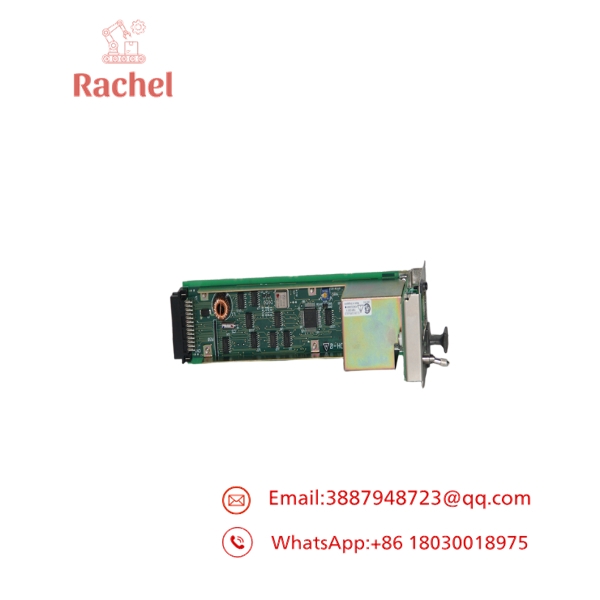
AIP512
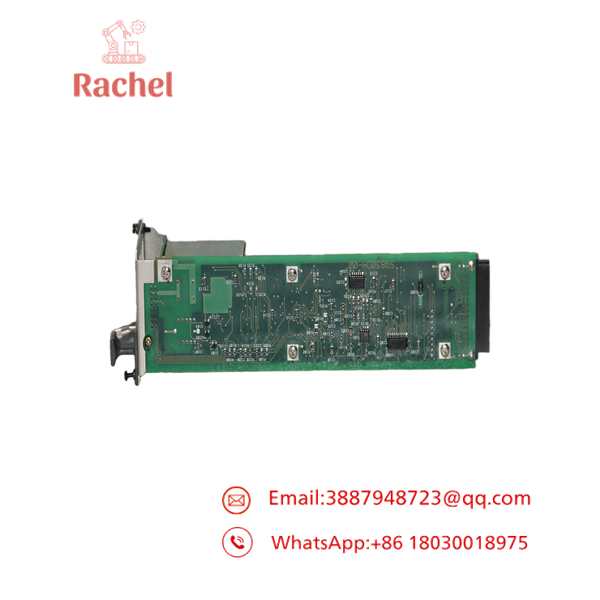
AIP512
Transparency SOP: Quality Assurance & Testing
- Visual & Board-Level Inspection: The circuit board assembly, backplane multi-pin connectors, solder joints, and front-panel hardware are thoroughly inspected for physical wear or thermal stress.
- Rack Power & Initialization Test: The module is seated in an active Yokogawa FCU test rack to verify proper power rail distribution, system bus recognition, and firmware boot completion.
- Dual-Redundant Bus Loop Test: Both RIO bus communication channels are exercised under high signal loads to verify transmission speed, packet integrity, and seamless redundancy failover.
- ESD Protective Packaging: Cleared modules are cleaned, sealed inside static-shielding moisture-barrier bags, and packed with customized foam protection for shipping.
The Veteran’s Tech Trap Guide
- ⚠️ Observe proper slot position and bus termination! Ensure the AIP512 is inserted into the designated RIO bus slot per system topology, and confirm that external RIO bus line terminators are properly installed at both ends of the segment.
- ❗ Verify suffix compatibility before installation. Check whether your application requires AIP512-S1 or AIP512-S2 variants to match existing backplane hardware revisions and cable interface types.
- ⚠️ Use ESD precautions. High-density logic components on the exposed circuit card are sensitive to static discharge. Always wear a grounded wrist strap when handling the card by its front-panel latches.
Frequently Asked Questions
- Q: What is the primary difference between AIP511 and AIP512?
A: While both are Yokogawa bus connection modules, the AIP512 is specifically tailored for higher-density RIO bus configurations and revised backplane interfaces in CENTUM CS 3000 / VP systems.
- Q: Does the AIP512 support hot-swapping?
A: Module replacement procedures depend on system architecture and whether dual redundancy is active. In a redundant pair configuration, hot replacement can be performed following Yokogawa’s standard DCS maintenance SOPs.
- Q: Are these genuine Yokogawa parts?
A: Yes, 100%. We supply original OEM Yokogawa DCS hardware, fully bench-tested and verified prior to shipment.

 Start Chat


