





Description
Product Introduction
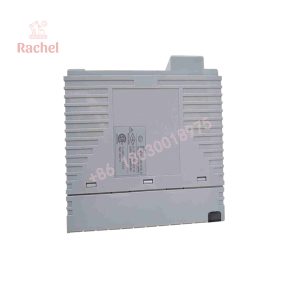
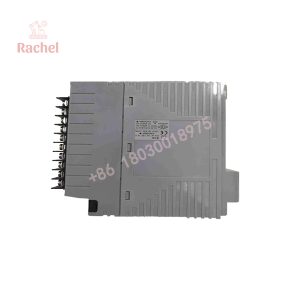
The Yokogawa ALE111-S51 is a standard, non-explosion-protected Ethernet communication module for Yokogawa FIO systems. It gives a Field Control Station one 10BASE-T RJ-45 interface for communication with subsystems such as FA-M3, Modbus devices, MELSEC controllers, YFGW equipment, and DAQSTATION/SMARTDAC+ products.
The suffix breaks down as -S for standard type, 5 for no explosion protection, and 1 for ISA Standard G3 compliance. Unlike the SCS-oriented ALE111-S01, the S51 is documented for FIO field control units and ESB/ER bus node units, making it the relevant variant for many CENTUM VP and CS3000 FIO installations.
Key Technical Specifications
| Parameter | Value |
|---|---|
| Manufacturer | Yokogawa |
| Model | ALE111-S51 |
| Product type | Ethernet communication module for FIO |
| Physical layer | IEEE 802.3 10BASE-T |
| Transmission speed | 10 Mbps |
| Transmission method | Half-duplex, CSMA/CD |
| Connection method | Point-to-point |
| Connector | RJ-45, one port |
| Cable | 100-ohm unshielded twisted-pair cable |
| Maximum distance | 100 m in one segment between FCS and subsystem, or hub and subsystem |
| Communication functions | FA-M3, Modbus, MELSEC, YFGW, DARWIN/DAQSTATION/SMARTDAC+, and PLC-5/SLC500 |
| Communication protocol | TCP/IP |
| Mounting locations | ANB10, ANB11, ANR10, AFF50, AFV10, AFV30, and AFV40 |
| Redundancy | Two ALE111 modules can be installed in adjacent odd/even slots of the same node unit for dual redundancy |
| Current consumption | 0.5 A |
| Weight | Approximately 0.30 kg |
| Suffix code | -S51: standard type, no explosion protection, ISA Standard G3 |
| Compliance | ISA Standard G3 |
Application Scenarios & The “Trench” Experience
A CENTUM VP FCS stops reading data from a legacy Mitsubishi MELSEC or Modbus subsystem after a cabinet maintenance shutdown. The I/O modules look healthy, but the external subsystem data remains frozen. Before rewriting logic or replacing the PLC, check the ALE111-S51: a marginal RJ-45 link, failed module, or incorrect node-slot configuration can isolate the FCS from the subsystem.
- Oil and gas – FCS-to-PLC integration for compressor, separator, and process-unit control – Required for Modbus and MELSEC communication from a Yokogawa FIO node.
- Chemical and petrochemical – CENTUM VP/CS3000 integration with FA-M3, PLC-5, SLC 500, and third-party controllers – Required for TCP/IP-based subsystem data exchange without an external gateway.
- Power generation – Auxiliary-system and balance-of-plant subsystem integration – Required for reliable 10BASE-T communication and dual-redundant module support.
- Water and wastewater – SCADA, RTU, and DAQSTATION integration – Required for YFGW, Modbus, and DAQ/SMARTDAC+ communication functions.
- Legacy FIO modernization – Replacement of a failed ALE111-S51 in an existing ANB10/ANB11/ANR10 or AFV-series node – Required because mounting location, style code, and redundancy arrangement are system-specific.
Field case study: A refinery’s CENTUM VP node intermittently lost Modbus communication with a legacy PLC during hot afternoons. The cable tested fine at room temperature, but heat expansion in a poorly secured RJ-45 boot caused an intermittent link failure. Replacing the ALE111-S51 restored stable communication; the real root cause was connector mechanical integrity. Check the physical layer before blaming protocol configuration.
Transparency SOP: Quality Assurance & Testing
We don’t just ship boxes; we test them in a compatible Yokogawa FIO node or equivalent communication rig where available.
- Inbound inspection: Verify model marking, suffix code S51, RJ-45 condition, backplane connector integrity, PCB damage, and evidence of prior repair.
- Anti-counterfeit check: Compare label format, housing construction, connector hardware, and PCB layout against known Yokogawa ALE111 examples.
- Live rig testing: Install in a compatible ANB10, ANB11, ANR10, AFF50, AFV10, AFV30, or AFV40 node; verify module recognition and communication initialization.
- Protocol testing: Exercise Modbus, MELSEC, FA-M3, YFGW, and DAQ/SMARTDAC+ communication where the test environment supports them; confirm stable polling and error-free data exchange.
- Link testing: Verify 10BASE-T link establishment, half-duplex operation, and stable communication over a known-good 100 m twisted-pair run.
- Redundancy verification: Where configuration permits, install two modules in adjacent odd/even slots and verify failover from the control module to the standby module.
- Final QC and packaging: Record test results, protect the RJ-45 and backplane connectors, and ship in anti-static packaging.
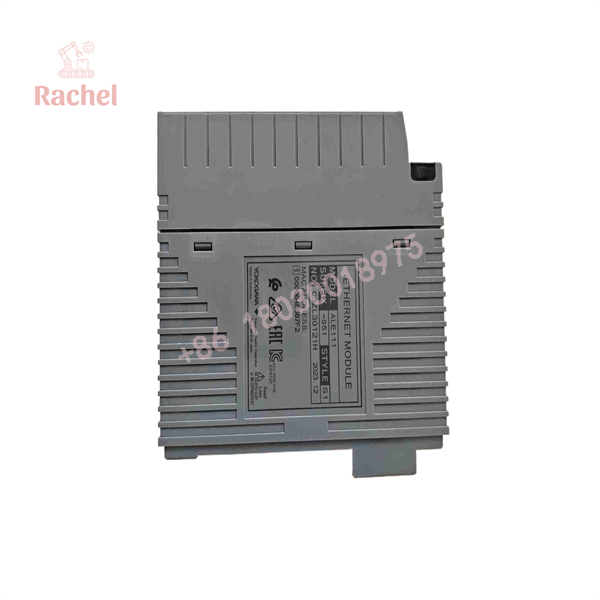
ALE111-S51
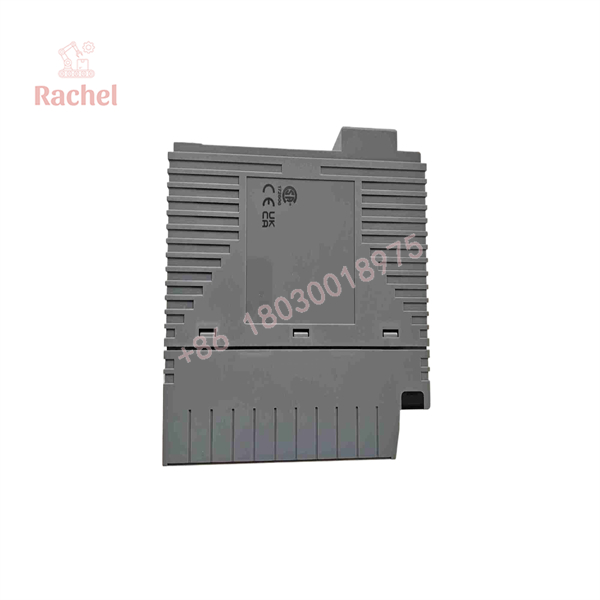
ALE111-S51
The Veteran’s Tech Trap Guide
- ⚠️ Do not assume it is a 10/100 Mbps module. The Yokogawa specification is IEEE 802.3 10BASE-T, 10 Mbps, half-duplex. Reseller pages claiming 10/100 Mbps auto-negotiation are not consistent with the OEM data sheet.
- ❗ Check the suffix carefully.
-S51means standard type, no explosion protection, and ISA Standard G3. It is not the same configuration as the SCS-oriented ALE111-S01. - ⚠️ Use a point-to-point or properly segmented 10BASE-T link. The OEM documentation allows communication between FCS and subsystem, or hub and subsystem, over one 100 m segment—not an arbitrary modern switched network topology.
- ❗ Verify redundancy slot positions. For dual redundancy, the two ALE111 modules must occupy adjacent odd- and even-numbered slots in the same node unit. A wrong slot pairing can defeat the failover arrangement.
- ⚠️ Inspect the RJ-45 latch and cable boot first. Vibration, heat, and repeated patching commonly cause intermittent links that mimic protocol or PLC faults.
Frequently Asked Questions
Q: Is the ALE111-S51 hot-swappable?
A: Treat it as a powered-down replacement unless your specific Yokogawa FIO system documentation explicitly authorizes online replacement. Removing it can interrupt Modbus, MELSEC, FA-M3, or YFGW communication.
Q: Does it support Modbus TCP?
A: The Yokogawa data sheet identifies TCP/IP as the communication protocol and lists Modbus among the supported communication functions. Confirm the exact firmware, license/package, and system configuration before relying on a specific Modbus implementation.
Q: Can I use it with an AFV30 or AFV40 controller?
A: Yes. The OEM documentation lists AFV30 and AFV40, along with AFV10, AFF50, ANB10, ANB11, and ANR10, as valid mounting locations.
Q: Can it be made redundant?
A: Yes. Install two ALE111 modules in adjacent odd- and even-numbered slots of the same node unit. The FCS uses the control module and switches to the standby module when it detects a control-module or subsystem-communication failure.
Is the sameE111-S01?
A: No. The S51 is an FIO-oriented standard module with ISA Standard G3 compliance, while the S01 is documented for safety control station and SNB10D applications. Match the exact suffix and installed system architecture.
Q: Why is surplus stock cheaper than direct OEM supply?
A: Surplus suppliers source retired DCS inventory, excess project stock, and decommissioned systems. The lower price reflects limited availability and variable cosmetic condition, not necessarily poor electrical performance—provided the module passes link, protocol, and redundancy testing.
Q: What warranty should I expect?
A: For a tested refurbished or surplus unit, 12 months is a reasonable baseline. Some suppliers offer two-year coverage; confirm whether it covers functional failure, replacement, repair labor, and exclusions for incorrect configuration or physical damage.

 Start Chat


