





Description
Product Introduction & Engineering Value
Upgrading or maintaining a high-availability CENTUM VP node requires processing hardware that won’t skip a scan cycle under heavy bus traffic. The Yokogawa CP461-50 processor module delivers the raw computational power and network bandwidth required for high-density field control units managing demanding process loops.
Engineered as a direct evolution in the Yokogawa controller lineup, the CP461-50 provides robust execution of complex multi-loop control strategies and rapid alarm handoffs. For plant engineers managing critical uptime, its seamless hot-standby redundancy architecture ensures that a hardware transition never compromises process safety or throughput.
Technical Specifications
- Processor Core: Advanced high-speed RISC architecture optimized for real-time control algorithms.
- Supported System Platform: Yokogawa CENTUM VP control systems.
- Control Bus Communication: Dual-redundant Vnet/IP (100 Mbps high-speed control bus).
- Execution Period: Deterministic scan cycles scalable down to 10 ms for fast regulatory loops.
- Redundancy Configuration: Pair-redundant slot arrangement with automatic hot-standby failover.
- Diagnostic Suite: Front-panel LED indications including STATUS, ACT, RDY, FAIL, and NET-OK.
- Power Standard: Internal backplane-supplied power from node power supply module.
- Operating Environment: 0°C to +50°C standard cabinet ambient temperature range.
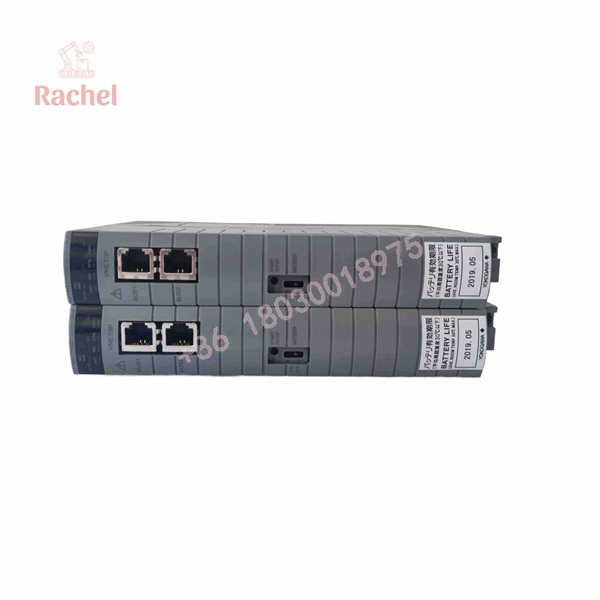
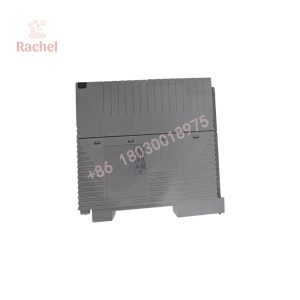
CP461-50
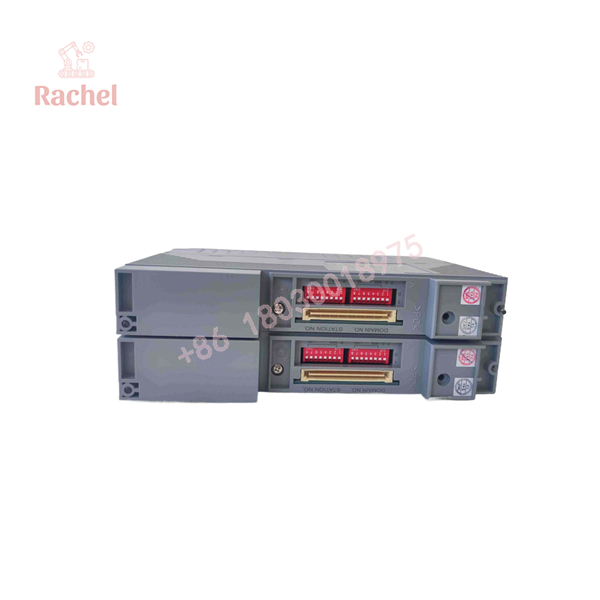
CP461-50
Field Application & The “Trench” Experience
During an unplanned load drop at a major Gulf Coast chemical refining unit, an aging processor card in the main reaction train lost bus synchronization, throwing a cascade of network alarms across the operator station. The plant couldn’t afford a full shutdown to re-architect the rack. A technician retrieved a pre-tested, surplus CP461-50 module from local emergency stock, set the hardware DIP switches to match the node configuration, and seated the module directly into the redundant slot. The active partner controller instantly recognized the unit, synced system registers over the internal bus, and stabilized the control loop in under two minutes without dropping a single automated safety block.
Targeted Application Scenarios:
- Ethylene Cracker Quench Tower Pressure Control: Managing high-speed pressure interlocks where loop execution delays could trigger flare events.
- Continuous Pharmaceutical Batch Reactor Temperature Profiling: Executing tight multi-stage PID algorithms across dense I/O racks.
Transparency SOP: QA & Testing
Step 1: Visual & Mechanical Inspection Microscopic check of all backplane gold fingers, board-level capacitors, and SMD solder joints for stress signs or thermal discoloration.
Step 2: Live Rack Power & Bus Initialization Installation into a live CENTUM VP test chassis to verify power rail stability, internal clock timing, and clean boot-sequence completion.
Step 3: Dual-Redundant Failover Test Paired with a benchmark card on a closed Vnet/IP test loop; forced failover commands are issued to confirm sub-second database handoff without packet loss.
Step 4: Full Environmental Burn-In 48-hour continuous operation test under ambient thermal load to eliminate latent micro-component failure risks prior to shipment.
The Veteran’s Tech Trap Guide (Crucial Value-Add)
⚠️ VNET/IP NETWORK DOMAIN MISMATCH: When dropping a CP461-50 into an established control network, verify that the domain and station address DIP switches on the side of the card match the exact project hardware assignment. An incorrect station address will cause network conflicts or prevent the module from being discovered by the engineering station.
PRO TIP: Do not mix CP451 and CP461 cards within the same dual-redundant slot pair! While both are CENTUM processors, their internal hardware execution architectures differ. Redundant pairs must consist of identical model numbers and compatible hardware revision suffixes.
Dynamic FAQ
- Q: Can a CP461-50 directly replace an older CP451-50 card?
- A: While both are designed for CENTUM VP architectures, you must verify system software build compatibility and node model definitions before swapping across module families.
- Q: Does the CP461-50 support hot-swapping in a running system?
- A: Yes, when configured in a dual-redundant CPU pair, a faulty card can be extracted and replaced while the online module continues process execution without interruption.
- Q: Are these units tested under live DCS network conditions?
- A: Absolutely. Every CP461-50 unit is bench-tested in an active Yokogawa node rack connected to a Vnet/IP network environment to confirm communication, memory integrity, and redundancy logic.
- Q: What warranty coverage is provided with this item?
- A: All our New Surplus and reconditioned CP461-50 modules come standard with a comprehensive 12-month full replacement warranty.

 Start Chat


