





Description
Product Introduction
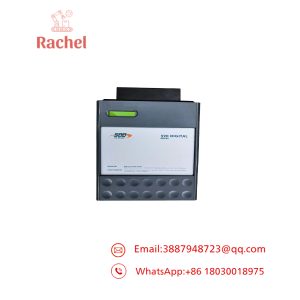
The Yudian AI-7021 is a compact dual-channel smart temperature transmitter and signal converter designed for industrial process automation. Operating as an intelligent remote I/O module, it accepts direct connections from standard thermocouples (K, E, J, N, Pt100) across two independent channels, digitizing high-accuracy analog signals right at the field termination enclosure.
Unlike basic analog 4-20mA transmitters that require separate analog input channels on your PLC, the AI-7021 communicates directly over an isolated RS485 serial bus running standard MODBUS-RTU protocol. This enables plant engineers to daisy-chain dozens of temperature points onto a single twisted-pair network cable, significantly reducing field wiring costs while shielding small millivolt signals from ambient electromagnetic noise.
Key Technical Specifications
| Parameter | Value / Feature |
| Manufacturer | Yudian Automation |
| Product Family | AI Series Remote I/O Modules |
| Model Code | AI-7021 |
| Input Channels | 2 Independent Channels |
| Input Types | Thermocouples (K, S, R, E, J, T, N) / RTD (Pt100, Cu50) |
| Communication Interface | RS485 (Isolated) |
| Supported Protocol | MODBUS-RTU / AIBUS (Yudian Native) |
| Power Supply | 100–240 VAC or 24 VDC (Model dependent) |
| Measurement Accuracy | ±0.2% FS ± 1 digit |
| Isolation Voltage | 1000 VDC power-to-signal galvanic isolation |
| Mounting Style | 35mm Standard DIN Rail Mount |
Application Scenarios & The “Trench” Experience
A plastic extrusion plant experiences erratic temperature spikes across a multi-zone barrel heating line. Investigation reveals that long analog thermocouple wire runs pulled through a shared wireway are picking up heavy 480V VFD noise, causing false high-temperature alarms and tripping heating zones. Replacing individual analog lines with local DIN-rail mounted Yudian AI-7021 transmitters converts those delicate millivolt signals into noise-immune RS485 digital frames right inside the junction box, stabilizing temperature readings instantly.
- Plastic Extrusion & Injection Molding: Monitors multi-zone barrel heaters and nozzle temperatures over noise-resistant serial networks.
- Industrial Heat Treatment Ovens: Tracks furnace thermocouple channels in real-time for precise heat-soak profile execution.
- Cold Storage & HVAC Systems: Reads dual-point Pt100 RTD signals to log ambient and duct temperatures back to a central PLC.
- Chemical Batching Tanks: Collects dual-probe thermal readings across jacketed reaction vessels for process safety tracking.
Transparency SOP: Quality Assurance & Testing
- Inbound Mechanical Audit: Inspect the DIN rail housing latch, check screw terminal blocks for damaged threads, and verify intact model specification stickers.
- Power Supply & Diagnostic Boot: Apply rated operating power (24 VDC or 120 VAC); verify internal logic bootup and front-panel power/comm LED activity.
- Dual-Channel Calibration Check: Attach a precision decade box and thermocouple simulator to Channels 1 and 2; sweep input values across low, mid, and high ranges to verify ±0.2% measurement accuracy.
- RS485 Communication Test: Connect the module to a Modbus master test station; verify address setting responses, baud rate changes (up to 19200 bps), and register data polling stability.
- ESD & Protective Packaging: Enclose inside anti-static shielding bags, cushion with high-density shipping foam, and enclose in heavy-duty cardboard boxes before dispatch.
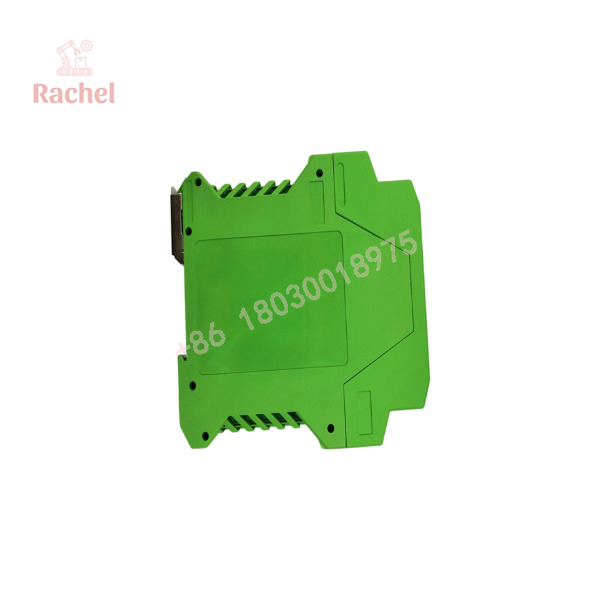
AI-7021
The Veteran’s Tech Trap Guide (Crucial Value-Add)
- ⚠️ Observe DIP Switch Node Settings: The module’s RS485 Modbus node address and baud rate are set via internal hardware jumpers or software parameters. If swapping out a unit, confirm your replacement module’s address matches the original unit’s Modbus address in your PLC polling schedule.
- ❗ Verify Sensor Lead Compensation: When wiring 3-wire Pt100 RTDs to the AI-7021, ensure all three lead wires have matching resistance values. Using mismatched wire lengths will introduce systematic temperature offsets on the converted digital reading.
- ⚠️ Install RS485 Bus Termination: RS485 networks require a 120-ohm termination resistor across the D+ and D- lines at both physical ends of the cable loop. Omitting termination causes signal reflection errors that result in intermittent Modbus timeout faults.
- ❗ Double-Check Input Sensor Coding: The AI-7021 must be configured for the exact thermocouple type wired to its terminals (e.g., Type K vs. Type J). Feeding a Type K signal into a channel programmed for Type J will produce wildly inaccurate temperature readings.
Frequently Asked Questions (FAQ)
Q: Can I mix different sensor types on Channel 1 and Channel 2 of the AI-7021?
A: Yes. The two channels are independently configurable, allowing you to connect a Type K thermocouple to Channel 1 and a Pt100 RTD to Channel 2 simultaneously.
Q: Does the AI-7021 require special software to configure Modbus parameters?
A: No. Parameters can be set over the RS485 serial connection using any standard Modbus configuration software (such as Modbus Poll) or Yudian’s proprietary setup software.
Q: What is the main difference between AIBUS protocol and MODBUS-RTU on this module?
A: AIBUS is Yudian’s native high-speed protocol optimized for connection to Yudian human-machine interfaces (HMIs). MODBUS-RTU is the open standard protocol used when connecting the module to third-party PLCs like Siemens, Allen-Bradley, or Schneider Electric.
Q: What happens if a thermocouple breaks while connected to the AI-7021?
A: The module detects open-circuit burnouts automatically, setting the corresponding Modbus register to a designated high-scale fault value (e.g., 9999) to trigger alarm logic in your master controller.
Q: What warranty coverage applies to this unit?
A: Every clean surplus and fully bench-tested Yudian AI-7021 transmitter module carries a comprehensive 12-month replacement warranty from the date of purchase.

 Start Chat


