





Description
Key Technical Specifications
| Parameter | Specification |
|---|---|
| Part Number | 57160001-ABD |
| Module Type | Connection Unit with 8 Integrated Relay Channels |
| Control / Input Voltage | 24 V DC nominal (from S100 active I/O card) |
| Output / Switching Voltage | 24 V to 250 V AC or DC |
| Continuous Load Current | Max 3 A (depending on voltage/resistive profiles) |
| Minimum Load Current | 0.1 A at 24 V (low-current variant configurations support down to 1 mA / 0.05 VA) |
| System Host | MasterPiece 200 / Advant Controller 410, 450 |
| Cable Interface | High-density ribbon cable link to active S100 digital output card |
| Net Weight | 0.20 kg |
| Dimensions | Standard S100 rear cabinet-mount footprint |
| Country of Origin | Sweden |
Product Introduction
The ABB DSTD108 (part number 57160001-ABD) is an 8-channel relay connection unit designed for the S100 I/O platform within MasterPiece 200 and Advant OCS systems. This unit acts as a rugged physical and electrical barrier, routing low-voltage digital control signals from active PLC/DCS output modules to heavy-duty field devices. By utilizing onboard electromechanical relays, the DSTD108 safely switches loads from 24 V up to 250 V AC/DC, isolating vulnerable solid-state processor components from high-energy field transients.
Mounting to the rear of cabinet enclosures, the passive DSTD108 interface routes field wiring directly through robust screw terminal clamp blocks. It links back to the main active card cage via specialized flat ribbon cables, preserving cabinet organization and simplifying maintenance. Because the S100 system is obsolete, sourcing these reliable relay termination cards is key to extending the lifecycle of working Advant-era plants and marine power-management frameworks.
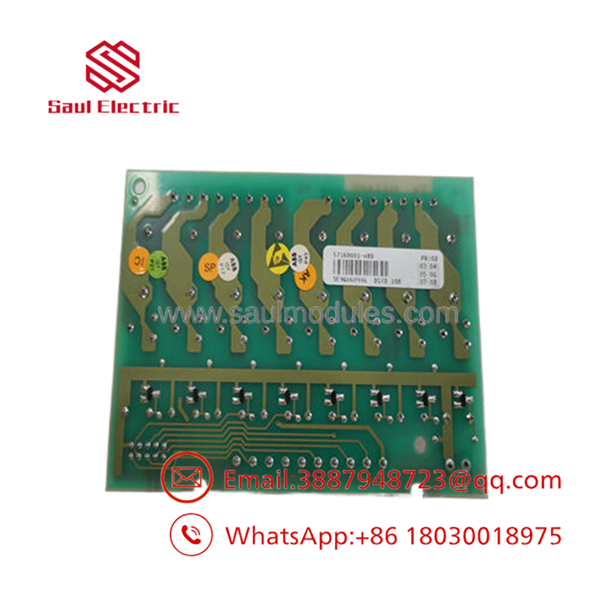
- DSTD108
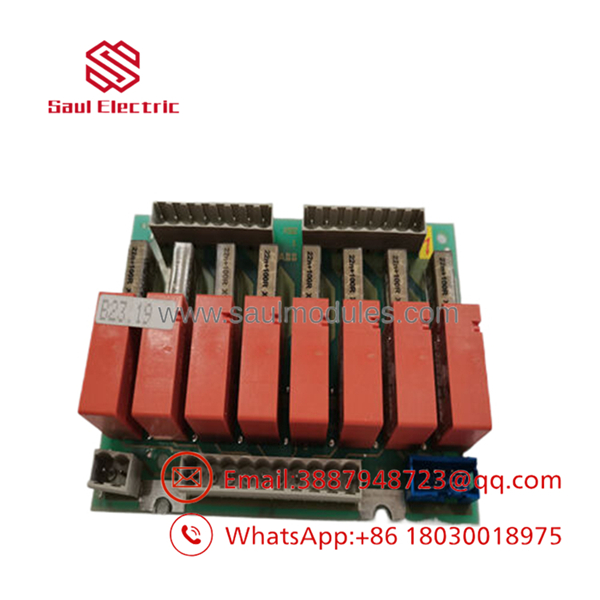
- DSTD108
Troubleshooting Quick Reference
| Symptom | Possible Cause | Relevance to this Part | Quick Check Method | Recommendation |
|---|---|---|---|---|
| Field device does not activate when output state is commanded | Loose ribbon cable or broken relay coil winding | ✅ High | Check that the channel status LED is lit. If lit, measure voltage across the field output screw terminals. If 24 V DC is present at the input but the relay contact remains open, the relay is damaged. | Replace the DSTD108 board or the affected relay channel if socketed. Ensure the ribbon cable is locked into place. |
| Intermittent switching on a specific relay channel | Carbon buildup or pitting on the physical relay contacts | ✅ High | Isolate external loop power and use a Fluke 115 multimeter to measure contact resistance across the closed relay terminals. A reading > 1Ω indicates pitted contacts. | Replace the unit to prevent contacts from welding closed under load. |
| All 8 channels fail to respond simultaneously | Lost 24 V DC logic side supply voltage | ❌ Low | Measure the incoming logic power supply terminal on the S100 active digital output card feeding this connection block. | Inspect the primary cabinet 24 V DC distribution fuses and active I/O card status; do not pull the connection unit. |
| Arcing or rapid relay cycling | Severe inductive kickback from field solenoid or coil | ❌ Low | Use an oscilloscope or fast multimeter to check for voltage spikes on the output terminals during switching. | Install appropriate external RC snubbers or freewheeling diodes across the inductive load to protect the contacts. |
Frequently Asked Questions (FAQ)
Can I wire different voltage sources to different channels on the same ?
Yes, you can. The relay channels on the are completely isolated from one another. This allows you to switch a 120 V AC solenoid on Channel 1 while using Channel 2 to switch a 24 V DC signal back to an independent annunciator panel, provided each external circuit is properly fused.
What is the purpose of using a passive instead of wiring directly to output cards?
Active digital output cards in the rack (such as the DSDO series) utilize low-power solid-state transistors designed for high density, not raw switching power. Direct connections to heavy solenoids or motor starters would instantly destroy these expensive cards. The isolates the active electronics by using relays to handle the physical wear and high current of industrial loads.
Is the hot-swappable while the cabinet is powered?
Since the is a passive connection card with no processor bus interface, removing it will not crash the controller rack. However, pulling the high-density ribbon cable while the system is online will instantly drop all 8 control loops. This can cause critical valves, motors, or safety systems to trip. Always isolate field power and coordinate with operations before disconnecting the unit.
Can I plug standard commercial ribbon cables into the ?
No. system ribbon cables are specifically designed with shielding configurations and molded strain reliefs to withstand electromagnetic noise inside heavy motor control centers. Using generic computer ribbon cables can introduce signal crosstalk and capacitive noise, potentially causing erratic switching behavior on neighboring channels.
How do you verify the quality of your surplus units?
Because this line is obsolete, we rigorously inspect all incoming New Surplus and refurbished modules. We check the PCB traces for micro-fractures, inspect terminal clamp threads for stripping, and perform continuity and coil resistance tests on all 8 relay channels to ensure they switch cleanly within OEM parameters. Every module we sell includes our comprehensive 1-year replacement warranty.

 Start Chat


