





Description
Key Technical Specifications
| Parameter | Specification |
| Part Number | 57120001-HA |
| Module Type | S100 I/O Bus Terminal Unit |
| System Host | MasterPiece 200, Advant Controller 410 / 450 |
| Bus Interface | Parallel I/O Backplane Bus (S100) |
| Chaining Port | Ribbon cable connection headers for multi-rack extension |
| Termination | Built-in passive/active termination resistor network for data line balancing |
| Mounting Position | Slots into the dedicated termination/extension bay of S100 sub-racks |
| Net Weight | 0.28 kg |
| Country of Origin | Sweden |
Product Introduction
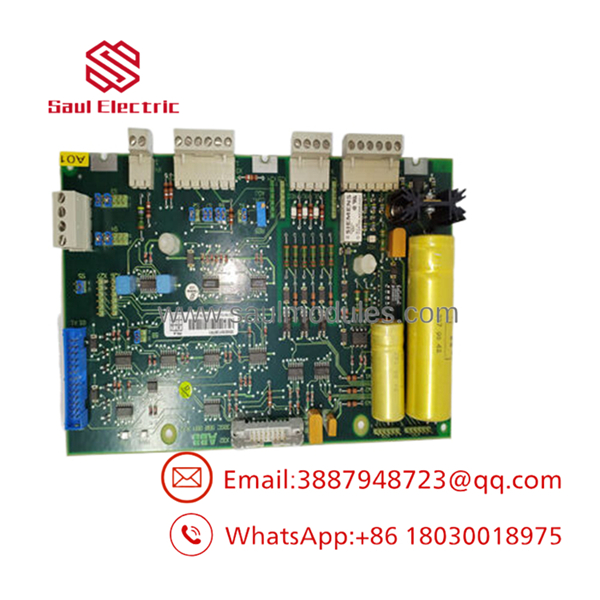
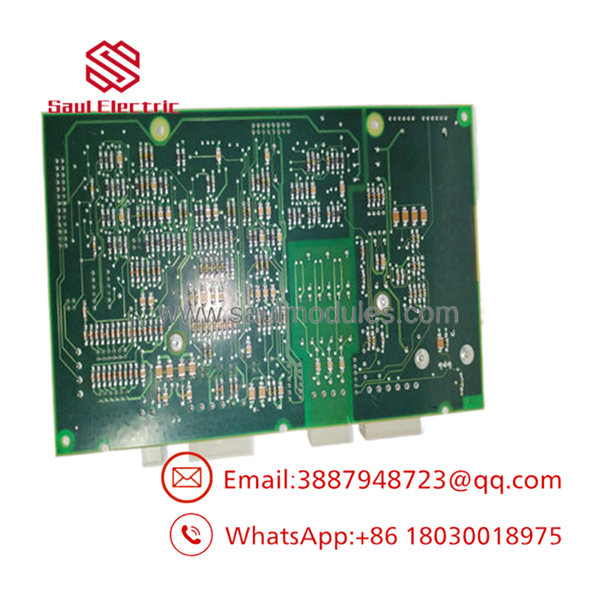
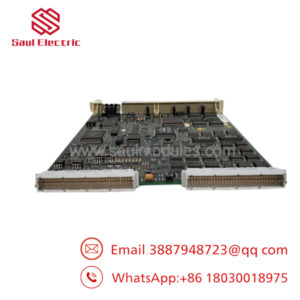
The ABB DSTS106 (part number 57120001-HA) is a specialized bus terminal and expansion unit designed for the S100 I/O system, utilized across legacy MasterPiece 200 and Advant OCS distributed control platforms. When a process automation system requires more physical I/O modules than a single chassis card cage can hold, the DSTS106 acts as the critical bridge. It links the master controller’s parallel backplane bus data lines cleanly from the primary rack down to subsequent expansion sub-racks via high-density ribbon cables.
Beyond simple signal pass-through, the DSTS106 serves as a bus termination module. In high-speed parallel architectures, unterminated data lines cause signal reflections, which lead to data packet corruption and random I/O module timeouts. The DSTS106 balances impedance across the backplane structure to maintain digital signal integrity over the entire length of the expansion chain. Because this system has been phased out by the OEM, keeping verified DSTS106 modules on hand is a critical strategy for maintaining older control infrastructure without full platform migration.
- DSTS106
Troubleshooting Quick Reference
| Symptom | Possible Cause | Relevance to this Part | Quick Check Method | Recommendation |
| Entire expansion rack drops offline simultaneously | Loose or unlatched expansion ribbon cable; failed terminal board trimpot/resistor network | ✅ High | Verify that the multi-drop ribbon cable running between the master rack and the is seated flat and locked. Inspect the for cold solder joints or burnt components. | Reseat the expansion cables. If adjacent racks work but this specific rack fails to initialize, swap the board. |
| Random, intermittent I/O errors on various cards in the rack | Missing or faulty bus termination (signal reflections) | ✅ High | Check if the is installed at the absolute end of the physical bus chain as specified by the ABB hardware manual. | Ensure the termination module is present and functioning at the end of the line. If signal reflections continue to corrupt data, replace the board. |
| Individual I/O point or channel fails to update | Field loop fuse blown or single component failure on that specific I/O module | ❌ Low | Review the controller diagnostic registers to isolate if the fault signature is systemic to the rack bus or bound to a single slot. | Do not pull the . Focus troubleshooting on the specific analog/digital I/O card or field instrument loop. |
| System backplane voltage dips or registers high ripple noise | Failing or overloaded sub-rack power supply module | ❌ Low | Measure the 5 V DC logic rail voltage directly on the sub-rack backplane pins using a Fluke 115 multimeter. | The issue lies within the primary power supply unit or excessive card load; the passive terminal unit is likely fine. |
[!NOTE]
When troubleshooting systemic bus errors across multiple I/O racks, always document your physical rack address configurations and supply diagnostic logs to our engineering desk before replacing parts.
Frequently Asked Questions (FAQ)
Can I plug or unplug the bus terminal unit while the system is powered?
Absolutely not. Unplugging the or its connected extension cables while the backplane bus is live will instantly interrupt the parallel data lines. This will crash communications for all downstream I/O racks, trigger an emergency system halt, and can introduce inductive voltage spikes that permanently fry the bus transceivers on adjacent active cards. Always isolate power to the sub-racks completely before servicing the bus connections.
Does it matter where the is placed in a multi-rack S100 I/O layout?
Yes, placement is critical. Parallel buses require precise termination to manage impedance and prevent signal reflections from corrupting data. The must be positioned according to the specific configuration rules in your Advant Controller or MasterPiece installation manual—typically acting as either the intermediate link or the end-of-line terminator for the sub-rack chain. Incorrect placement will cause random, hard-to-trace module communication timeouts.
What is the purpose of the 57120001-HA part number suffix variations?
The “-HA” or similar suffix designations represent the specific manufacturing layout revision, component sourcing batches, or minor PCB trace updates authorized by ABB during the extended production lifecycle of the S100 catalog. A with an “-HA” suffix maintains direct form, fit, and functional compatibility with older revisions of the same model number, allowing direct substitution in legacy panels.
Do I need to load software configuration parameters or settings onto the ?
No. The is a hardware-level bus interface and termination module. It does not contain an active microprocessor, application memory, or firmware EPROMs. It operates entirely on passive and hardware-routed logic pathways. All rack addressing and card scanning sequences are handled directly by the master processor board and its software configuration.
How do you verify the reliability of your surplus inventory?
Since these modules are completely obsolete at the OEM factory level, we test all incoming New Surplus and refurbished inventory. We inspect the high-density connection pins for physical alignment or oxidation, check the onboard resistor networks for correct value parameters, and visually verify that there are no signs of overheating or trace degradation. Every card is backed by our full 1-year replacement warranty.

 Start Chat


