





Description
3. Key Technical Specifications
| Parameter | Value |
|---|---|
| Housing | 19-inch rack mount, 3 HU (4 HU with Magnos27) |
| Protection Rating | IP20 (IP40 for CEMS version) |
| Power Supply | 100–240 V AC, 50/60 Hz, max. ~187 VA |
| Measurement Components | Up to 5 per analyzer (with multiple modules) |
| Analyzer Modules | Uras26 (NDIR), Limas, Magnos, Caldos, etc. |
| Interfaces | Analog outputs, digital I/O, Modbus, Profibus, Ethernet |
| Operating Temperature | +5 to +45 °C (typical) |
| Sample Gas | Non-flammable or flammable versions available |
| Calibration | Automatic with internal cells or test gases |
| Weight | Approx. 7–15 kg depending on configuration |
| Dimensions | 483 mm W x 357 mm D x 132 mm H |
4. Product Introduction
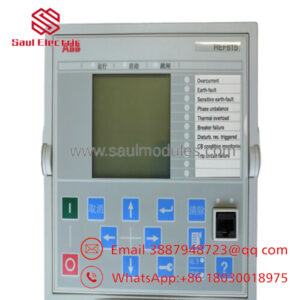
The ABB EL3020 is a 19-inch rack-mount continuous gas analyzer from the EasyLine EL3000 series. It supports up to two analyzer modules for simultaneous measurement of multiple gas components such as CO, CO₂, NO, SO₂, and O₂ in process control and emission monitoring applications.
This model provides reliable performance in industrial environments with its modular design, menu-driven interface, and options for automatic calibration. It is commonly selected for CEMS and process applications where compact rack integration and straightforward maintenance are priorities.
5. Installation & Configuration Guide
Stage 1: Pre-Installation Preparation (15-20 minutes) ⚠️ Safety First: Isolate power and process lines. Verify safe state and apply lockout/tagout. Tools Required: ESD protection, screwdrivers, multimeter, tubing tools, laptop for configuration. Data Backup: Record current configuration, calibration data, and photograph all connections and module positions.
Stage 2: Removing the Old Unit (10-15 minutes)
- Power down and disconnect electrical supply.
- Isolate and vent sample gas lines.
- Label and disconnect all gas tubing and electrical cables.
- Remove rack mounting screws and slide unit out carefully. ⚠️ Note: Cap open gas lines to prevent contamination. Keep the old unit for reference.
Stage 3: Installing the New Unit (15-20 minutes)
- Use ESD precautions. Verify model and configuration match requirements.
- Slide the EL3020 into the 19″ rack and secure with mounting hardware.
- Reconnect gas lines using correct fittings (⅛ NPT or hose nozzles).
- Reconnect power and signal cables. Self-Checklist: [ ] All gas connections leak-free, [ ] Electrical secure, [ ] Modules properly seated.
Stage 4: Power-On & Testing (20-30 minutes) Pre-Power Check: Confirm correct voltage and no gas leaks. Power-On Steps:
- Apply power and observe boot sequence on the display.
- Check status messages and LED indicators.
- Perform zero and span calibration if required.
- Verify measurement values against known references.
- Test communication interfaces and outputs. ⚠️ Troubleshooting Note: Persistent “Maintenance Request” often indicates calibration due or flow issues. Check sample gas path and filters first.
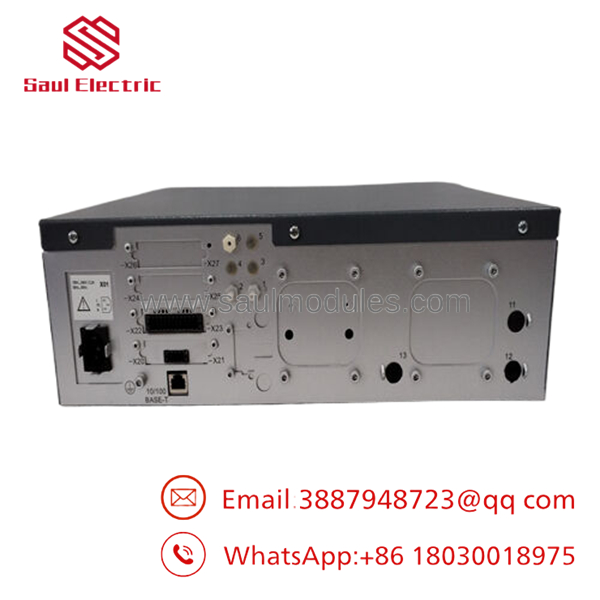
- EL3020
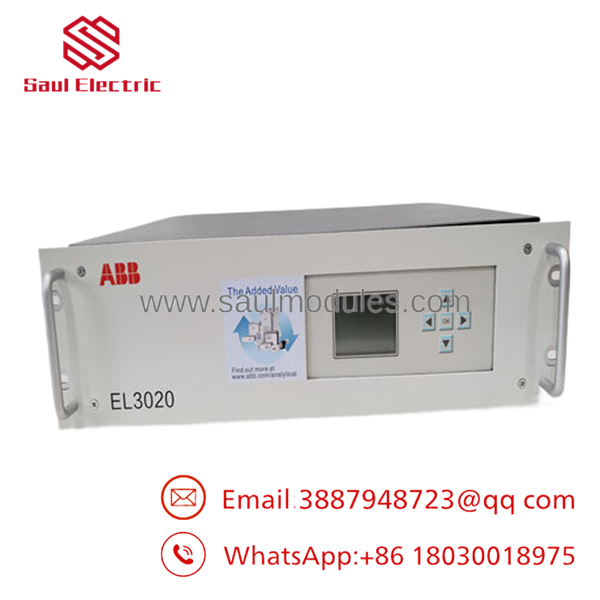
- EL3020
6. Frequently Asked Questions (FAQ)
Can the EL3020 be installed in an existing 19″ rack? Yes. It is designed as a direct 19-inch rack-mount unit with 3 height units. Ensure adequate ventilation and support rails for the weight.
Is the EL3020 obsolete? The EasyLine EL3000 series is mature. New surplus units remain available for ongoing support of installed bases. Confirm current analyzer module availability and firmware compatibility with your application.
What modules can be installed in the ? Up to two analyzer modules such as Uras26 (NDIR), Magnos206/27 (paramagnetic O₂), Caldos (thermal conductivity), or Limas (UV). Maximum of five components total depending on combination.
Will I lose calibration data when replacing the unit? Parameters and calibration data are stored in the unit. Upload and save settings via the operator interface or ECT software before removal. Reload on the new unit.
Why is your price lower than current list? These are new original surplus units. They undergo full incoming inspection, functional testing, and gas path verification. This provides cost savings versus new production while maintaining OEM quality.
Does the support QAL3 and emission monitoring? Yes, performance-tested versions are available for emission monitoring per relevant directives, with optional QAL3 functionality for automated validation. Verify the specific configuration for your regulatory needs. Test reports available upon request.


 Start Chat


