





Description
Product Introduction & Engineering Value
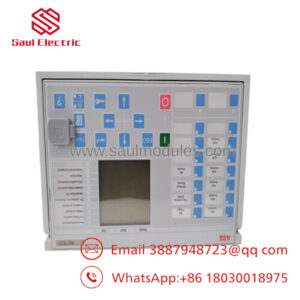
When an industrial DC drive drops off the bus or loses field excitation control, continuous rolling mills or heavy extrusion lines grind to a sudden halt. The ABB FIS-13 interface board serves as a core communication and signal conditioning link within classic ABB DC drive systems, bridging low-voltage control logic with power-stage excitation circuits.
Engineered with high noise-immunity isolation barriers, the FIS-13 filters out severe electromagnetic interference (EMI) generated by high-power SCR/thyristor switching. Replacing a degraded FIS-13 restores precise firing pulses and stable feedback tracking without requiring modifications to existing drive parameters or main power wiring.
Technical Specifications
- Nominal Logic Voltage: 24 V DC (supplied via drive internal power bus)
- Board Architecture: Multi-layer PCB with conformal coating against industrial airborne contaminants
- Signal Channels: Integrated firing/pulse feedback channels with optic-electronic isolation
- Isolation Rating: Galvanic isolation up to 500V between control circuits and power section
- Operating Temperature Range: -10°C to +55°C (14°F to 131°F)
- Humidity Tolerance: 5% to 95% non-condensing
- Mounting Style: Direct card-cage chassis mount within drive electronics enclosure
- Diagnostic Indicators: Onboard status LEDs for power rail verification and signal passage
Field Application & The “Trench” Experience
The Trench Story
A cold-rolling metal facility was experiencing random overcurrent trips on its primary stand DC drive during heavy load acceleration. Initial troubleshooting pointed toward faulty thyristors, but replacing the SCR blocks didn’t clear the fault. Scope traces revealed intermittent gate pulse distortion originating from an aging interface board whose bypass capacitors had thermally degraded.
The maintenance engineer pulled the cabinet card cage, swapped the faulty board with a tested FIS-13 spare, and re-secured the ribbon bus connectors. The clean pulse firing was instantly restored, clearing the trip fault and bringing the mill back to full production speed within two hours of downtime.
Specific Niche Applications
- Hot & Cold Metal Rolling Mills: Managing gate trigger pulse isolation and field current feedback under extreme switching transients.
- Paper Machine Sectional Drives: Interfacing control commands to heavy-duty wire section DC motors requiring tight torque regulation.
- Cement Kiln Main Drives: Providing robust control-to-power isolation in high-dust, high-vibration power conversion cabinets.
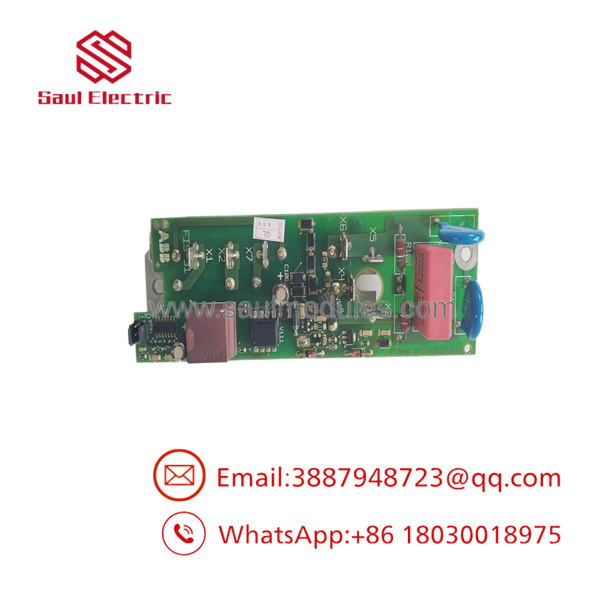
- FIS-13
Transparency SOP: QA & Testing
- Visual & Microscopic Inspection: Clean PCB with solvent bath and inspect all solder joints, bus pin headers, and trace paths under magnification for micro-cracks or heat damage.
- Component-Level Passive Verification: Meter key diodes, power resistors, and ceramic capacitors across the board to ensure values match factory tolerances.
- Bench Power-Up & Rail Check: Mount board on an active test rack; verify stable internal supply rails across test points.
- Signal Integrity & Pulse Testing: Inject simulated firing pulses and evaluate waveform rise/fall times on a dual-trace oscilloscope to verify zero distortion through isolation stages.
- Thermal Bake Test: Run the board inside an environmental chamber under continuous simulated signal load for 12 hours at elevated temperature to rule out heat-induced failures.
The Veteran’s Tech Trap Guide
- ⚠️ Ribbon Cable Seating: The multi-pin ribbon cables connecting the FIS-13 to main processor cards can lock in place while failing to make complete contact on corner pins. Always double-check connector latch alignment; an unseated pin can lead to missing gate pulses and immediate arm-circuit trips.
- PRO TIP: Electrostatic Discharge (ESD) Sensitivity. This card houses sensitive high-frequency optocouplers and ICs. Always use a grounded wrist strap when pulling or inserting the card from the drive card cage—a static arc will compromise input channels silently.
- ⚠️ Verify Part Revisions: Check the revision suffix printed on your board edge (e.g., SDCS-FIS variant extensions). Mixing incompatible board revisions across older and newer drive control cages can cause signal timing mismatches.
Dynamic FAQ
Q: Is the ABB board directly hot-swappable while the drive is energized? A: No. Always disconnect and lock out main 3-phase incoming AC power and 24V control power to the drive before inserting or removing the board to prevent arc flash or permanent IC damage.
Q: How do I know if my drive issue is the board or the main processor board? A: If the drive reports gate drive faults, missing pulse warnings, or field loss errors while main supply voltages and thyristors test healthy, the signal isolation path on the is typically the root cause.
Q: Are these units supplied as original ABB factory stock? A: Yes. We supply authentic OEM ABB / SDCS series boards available in fully tested New Surplus or certified Refurbished conditions.
Q: What warranty coverage comes with the ? A: Every module comes backed by a standard 1-year comprehensive replacement warranty covering all operational and electrical components.

 Start Chat


